Why Uniform Tires Are Critical for Your Safety
Tires are engineered to work as a matched set, and mixing different brands, sizes, tread patterns, or wear levels disrupts that balance. The result? Unpredictable handling, compromised traction, uneven braking, and a greater risk of losing control—especially in wet or emergency situations. Inconsistent tires can also strain your suspension and drivetrain, leading to premature wear and costly repairs. For the safest, smoothest ride, it’s always best to replace tires in sets or at least in matching pairs on the same axle.
For those looking for a quick answer, here’s why you should avoid mixing tires:
| Problem | Impact |
|---|---|
| Unpredictable Handling | Vehicle may respond differently during turns or emergency maneuvers |
| Compromised Braking | Uneven stopping power and increased braking distance |
| Uneven Tread Wear | Premature tire replacement and higher long-term costs |
| Drivetrain Damage | Especially in AWD/4WD vehicles, can lead to expensive repairs |
| Voided Warranties | Many manufacturers won’t honor warranties with mismatched tires |
Like wearing two different shoes while running, mixing tires creates an imbalance that affects your vehicle’s stability. When it comes to tires, your car was designed to perform with a matched set.
A difference in tread depth of just 2/32″ between tires (about the thickness of a penny) can significantly impact your vehicle’s handling. This seemingly small variance becomes critical during wet conditions, where one tire might grip while another hydroplanes.
Most manufacturers and tire experts strongly recommend using identical tires on all four wheels—same brand, size, tread pattern, load index, and speed rating. This uniformity ensures predictable performance in all driving conditions and helps maintain the safety systems your vehicle relies on, like ABS and stability control.
What Does “Mixing Tires” Really Mean?
Ever looked at your car and wondered if those tires actually match? When we talk about “mixing tires,” we’re not just being picky about brand names. It’s about whether the four tires on your vehicle are truly compatible with each other in ways that affect your safety.
Think of your tires as a team that needs to work together. When team members have different skills, strengths, or even “speak different languages,” coordination breaks down. That’s exactly what happens when you mix tires.
Mixing can happen in several ways – you might have different brands (like Michelin up front with BFGoodrich in back), different models even from the same manufacturer, or tires with different tread depths due to uneven wear. Some drivers unknowingly mix different sizes, while others combine summer tires with all-seasons or even winter tires.
Your vehicle manufacturer didn’t choose your original tire specifications by accident. Those OEM (Original Equipment Manufacturer) specs came after extensive testing to match your car’s weight, suspension, braking system, and handling characteristics. Even performance vehicles with “staggered fitment” (wider tires in the rear) use carefully matched tire construction and compounds.
Types of Tire Mismatch: Brand, Tread, Size, Season
When it comes to brand differences, it’s not just about the name. Each manufacturer uses their own special rubber compounds and construction techniques. These differences might seem small on paper but can create noticeable handling imbalances when you’re making a sudden turn or emergency stop.
Tread patterns aren’t just for show – they’re engineered with purpose. Directional treads excel at channeling water away, while asymmetrical patterns balance dry grip with wet performance. When you mix these designs, one tire might grip while another slides in the same conditions.
Size variations create even more obvious problems. That code on your sidewall (like “P215/65R16”) tells you the tire’s dimensions, and mixing sizes affects the tire’s overall diameter. This means each wheel travels a different distance with each rotation – confusing your car’s systems that rely on consistent wheel speeds.
Perhaps the most dangerous mix is combining seasonal tires. Winter tires use softer compounds that grip in cold temperatures but get mushy when warm. Summer tires provide excellent warm-weather grip but turn hard as hockey pucks in freezing temperatures. Imagine driving with two hockey pucks and two sticky tires – that’s a recipe for a spin-out.
Mixing run-flat tires with standard tires is another common mistake. The reinforced sidewalls of run-flats create significant differences in stiffness and handling compared to standard tires.
The golden rule? Identical tires on each axle at minimum, and ideally on all four wheels.
How to Spot a Mismatch at a Glance
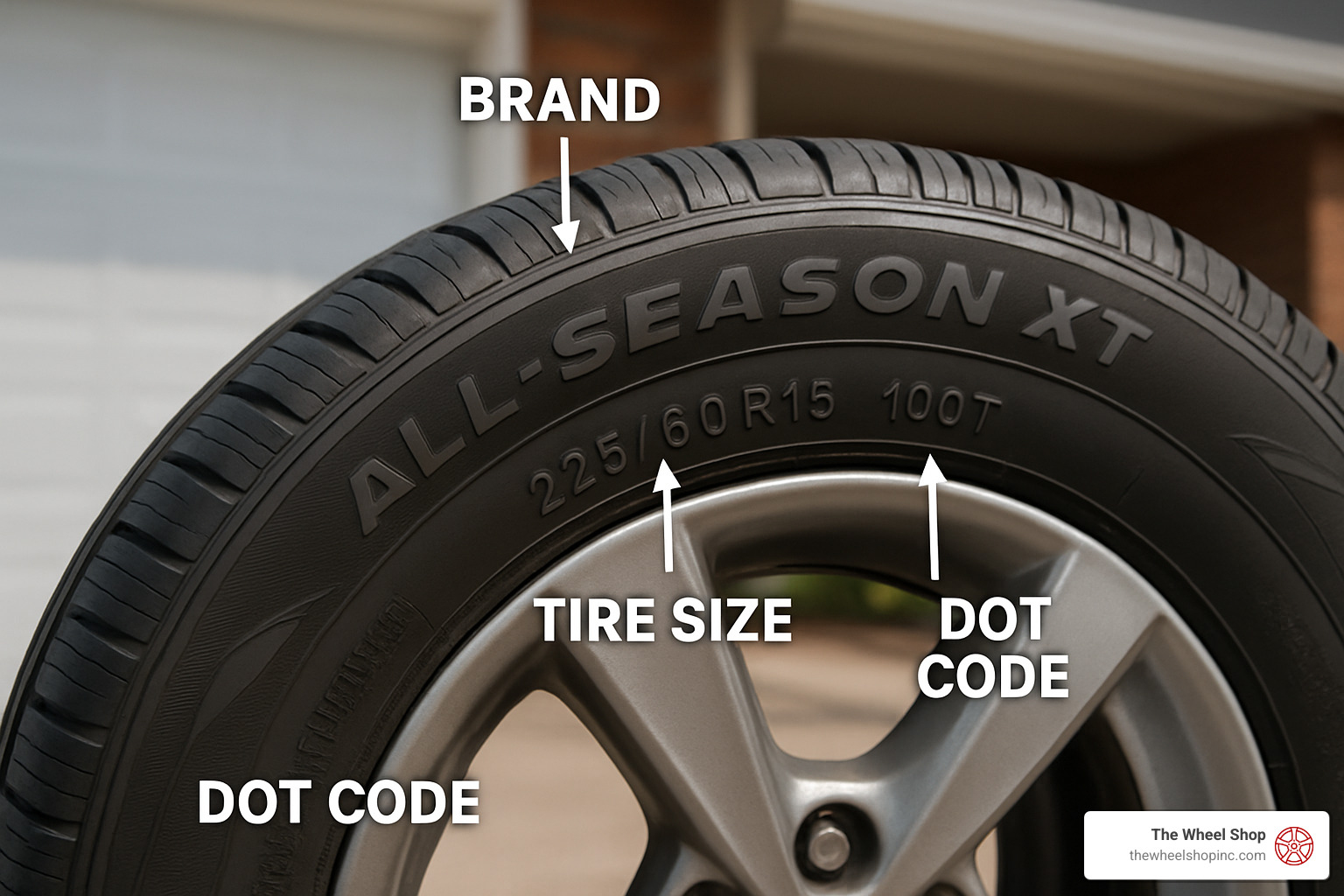
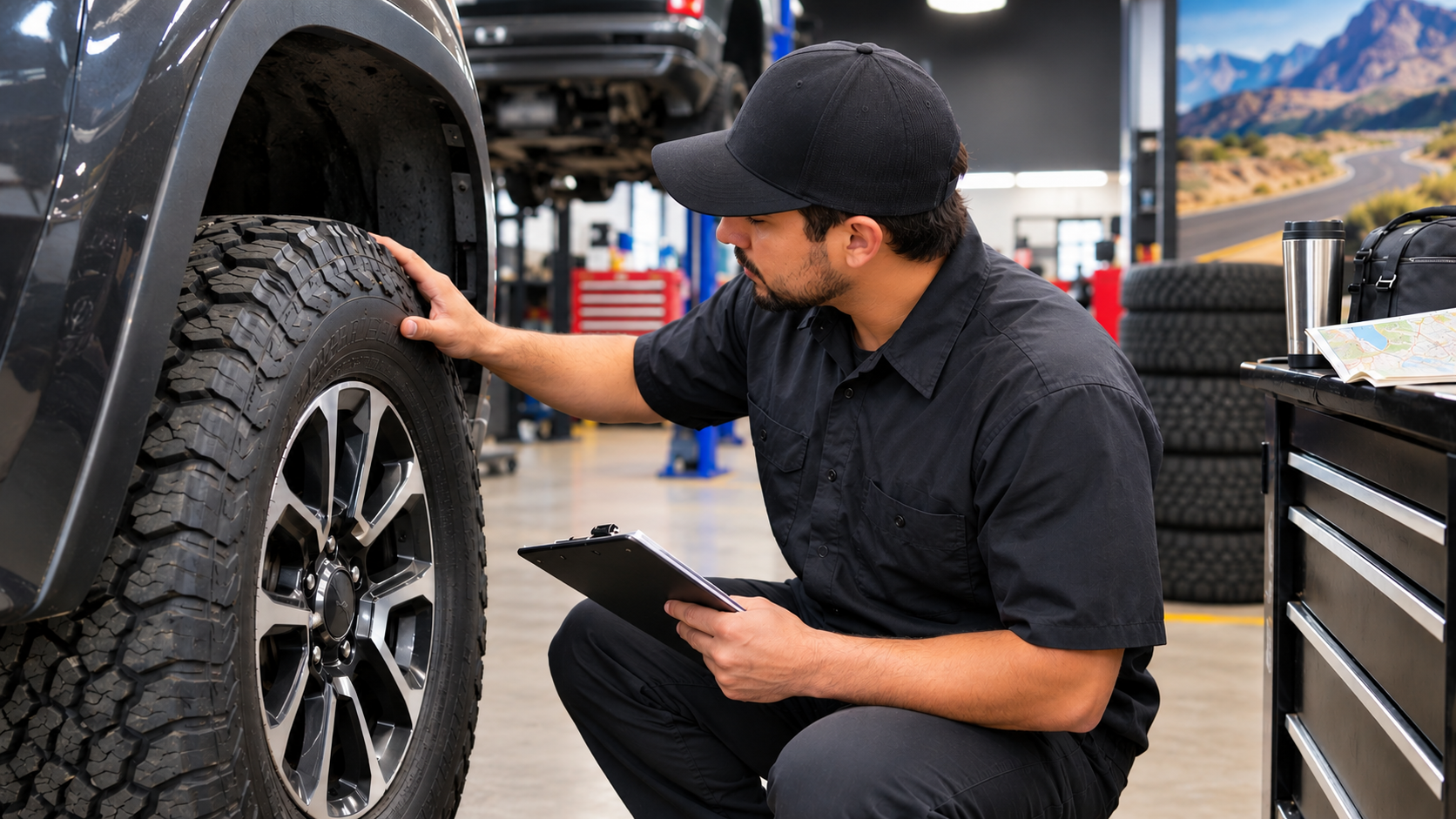
You don’t need to be a tire expert to spot mismatches. Just take a quick walk around your car and check these key things:
First, look at the sidewall information. The size code (like P215/65R16) should match on all four tires unless your vehicle specifically calls for different front and rear sizes. While you’re looking at the sidewall, check the brand and model name molded into the rubber.
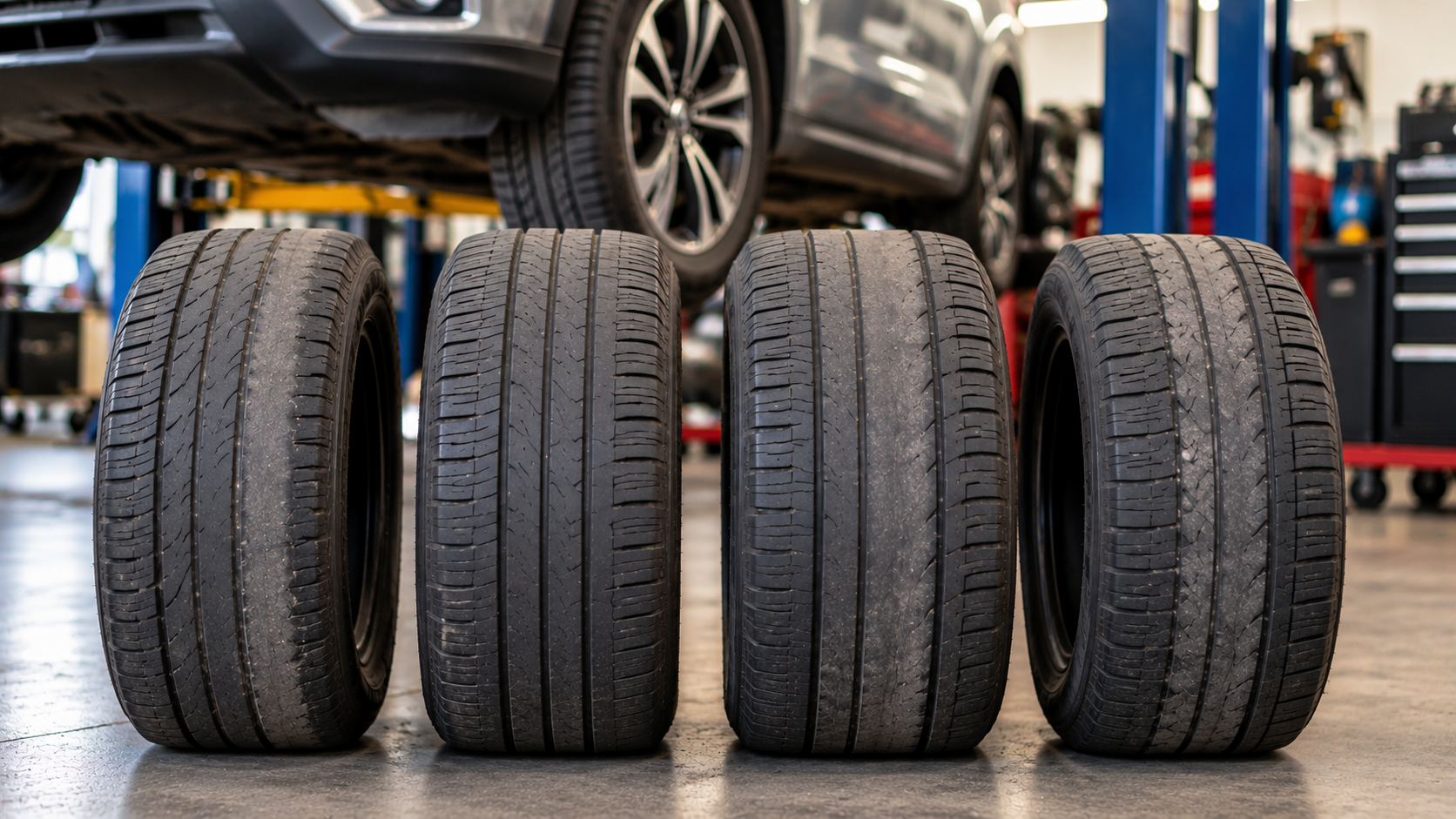
Take a moment to compare the tread patterns. Do they all have the same arrangement of grooves and blocks? Different patterns are easy to spot even to an untrained eye.
For the more detail-oriented, check the DOT date code – a four-digit number following “DOT” on the sidewall. For example, “2119” means the tire was made in the 21st week of 2019. Tires manufactured years apart might use different compounds, even in the same model.
Wear bars are small raised sections at the bottom of tread grooves. When your tread wears down to these bars (2/32″), the tire is legally worn out. If some tires show these bars while others don’t, you’ve got a serious mismatch.
Also look for seasonal designations like the snowflake symbol (winter tires) or M+S marking (Mud and Snow, typically all-season tires). Finally, check the speed and load ratings after the size (like “91H”) – these letters and numbers should match across all tires.
A five-minute inspection focusing on these elements could reveal mismatches that might be putting you at risk every time you drive. At The Wheel Shop, we see these mismatches regularly and understand how they can impact your vehicle’s performance and safety.
Why Mixing Tires on Your Car Is a Mistake
Let’s be honest – we’ve all been tempted to save a few bucks by replacing just one or two tires instead of the whole set. But mixing tires on your car is a mistake that can cost you far more in the long run – not just in dollars, but in safety too.
Compromised Handling and Stability
Imagine trying to run with one basketball shoe and one dress shoe. Awkward, right? Your car feels the same way with mismatched tires.
Different tires create different levels of grip and responsiveness, creating an imbalance that affects your vehicle in critical ways. When you’re cruising down the highway or making a quick turn, your car might suddenly understeer (push forward instead of turning) or oversteer (the rear end swings out) without warning.
This unpredictability becomes downright dangerous during emergency maneuvers when you need your car to respond exactly as expected. That split-second of unexpected behavior could be the difference between avoiding an accident and being in one.
Braking Problems and Increased Stopping Distances
Your brakes might be in perfect condition, but they’re only as good as the tires they’re working with. When you mix tires, you’re essentially telling your car to stop unevenly:
One end of your vehicle might grab the road firmly while the other slides. This creates uneven braking force and significantly longer stopping distances. Consumer Reports found that vehicles with mismatched tires can take up to 30% longer to stop in wet conditions. That’s not just a number – it’s the margin between a near-miss and a collision.
Confused Vehicle Safety Systems
Modern cars are smart, but they’re not mind readers. Your vehicle’s safety systems rely on consistent information from all four wheels:
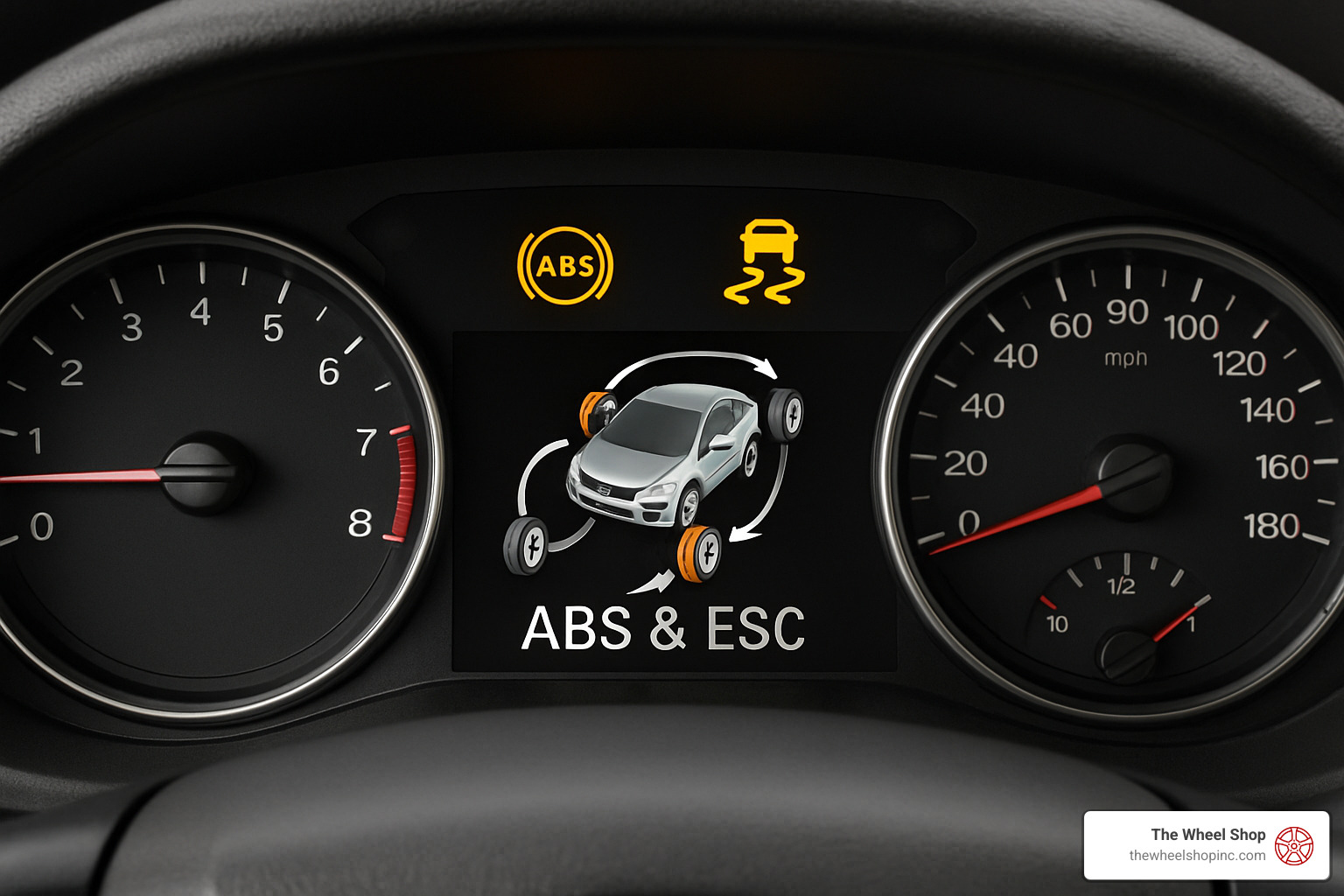
Your Anti-lock Braking System (ABS) monitors wheel speeds to prevent lockup. Electronic Stability Control uses individual wheel braking to keep you stable. Traction Control watches for wheel slip to manage power delivery.
When your tires have different grip levels or diameters, these systems receive conflicting signals. It’s like trying to follow directions from four different GPS systems at once – confusion ensues, potentially reducing the effectiveness of these life-saving technologies.
Accelerated and Uneven Tire Wear
Mixed tires wear at different rates, creating a frustrating cycle of problems. Tires with different characteristics carry uneven portions of your vehicle’s weight, leading to premature wear. Plus, different-sized tires can’t be rotated properly, eliminating one of the most effective ways to extend tire life.
The result? You’ll be shopping for new tires much sooner than necessary, and your wallet won’t thank you for it.
Why Mixing Tires on Your Car Is a Mistake: Manufacturer Perspective
Car manufacturers aren’t just being picky when they recommend matching tires. They have solid reasons:
Your vehicle was designed as a complete system where tire performance is factored into everything from suspension tuning to brake sizing. Engineers spend thousands of hours perfecting this balance.
The industry’s “2/32″ rule” exists because testing shows that tread depth differences exceeding 2/32″ (about the thickness of a penny) significantly impact vehicle stability. It’s not an arbitrary number – it’s based on real-world safety testing.
Load and speed ratings aren’t just numbers on your sidewall – they ensure your tires can safely handle your vehicle’s weight and intended speeds. Mixing ratings means some tires may be pushed beyond their design limits.
For more information about proper tire replacement, check out this helpful guide.
Why Mixing Tires on Your Car Is a Mistake in Poor Weather
If mismatched tires are problematic in ideal conditions, they become downright dangerous when the weather turns:
On wet roads, different tread patterns and depths evacuate water differently. One tire might channel water effectively while another hydroplanes. This imbalance is particularly treacherous during sudden maneuvers or emergency braking.
In snow and ice, the difference between winter tires and all-season tires is dramatic – up to 50% more traction with proper winter rubber. Mixing these creates a dangerous situation where one end of your vehicle grips while the other slides unpredictably.
Temperature changes make matters worse because tire compounds are temperature-sensitive. Winter compounds become too soft and wear quickly above 45°F, while summer compounds become hard and lose grip below that temperature. This means seasonal tire mixes perform even more unpredictably as temperatures change.
Cost Consequences & Early Wear
Beyond the safety concerns, mixing tires hits your wallet hard in ways you might not expect:
Accelerated wear happens because mismatched tires distribute load unevenly. Rotation limitations mean you can’t properly maintain tires of different sizes. Your fuel economy drops by 1-3% due to inconsistent rolling resistance. Drivetrain stress in AWD/4WD vehicles can lead to expensive repairs. And more frequent replacements become necessary as the fastest-wearing tire dictates when you need new rubber.
What seems like a money-saving shortcut today often leads to significantly higher costs down the road. Sometimes being penny-wise with tires makes you pound-foolish with repairs.
Special Scenarios & High-Risk Vehicles
Not all vehicles face the same level of risk when it comes to mismatched tires. Some configurations are particularly vulnerable to the problems we’ve discussed – and the consequences can be severe.
AWD & 4WD: Tiny Diameter Changes, Huge Bills
If you drive an all-wheel-drive or four-wheel-drive vehicle, pay extra attention. These systems are engineering marvels, but they’re also particularly sensitive to tire mismatches.
Here’s the issue: AWD and 4WD systems constantly distribute power to all four wheels, assuming they’re all the same size. When one tire has a different diameter – even just from wear differences – it creates a domino effect of problems.
Your center differential (the component that allows wheels to rotate at different speeds during turns) ends up working overtime, even when you’re driving straight down the highway. This constant activity generates excessive heat that breaks down lubricants and damages precision components.
The financial impact can be staggering. What started as saving a few hundred dollars on tires can lead to complete differential failure with repair costs often ranging from $1,500 to $5,000. That’s why manufacturers like Subaru, with their sophisticated multi-differential systems, are so adamant about tire matching.
Most AWD vehicle manufacturers specify that all four tires must be within 2/32″ of tread depth of each other and identical in size and type. Some even recommend replacing all four tires if just one is damaged beyond repair – a recommendation that suddenly makes a lot more sense when you understand the potential consequences.
Mixing Tires Across Seasons or Run-Flat/Non-Run-Flat
Some mixing scenarios create particularly dangerous driving conditions. Combining winter tires with summer or all-season tires is like wearing a snow boot on one foot and a sandal on the other – it creates a fundamental imbalance in grip.
In cold conditions, your winter tires will grip while the others struggle. In warm weather, your summer/all-season tires provide confident handling while the winter tires feel soft and unresponsive. This imbalance makes your vehicle prone to spinning during acceleration, braking, or cornering – exactly when you need predictable handling the most.
Similarly, mixing run-flat and standard tires creates a recipe for trouble. Run-flat tires have reinforced sidewalls designed to remain rigid even without air pressure. When combined with standard tires, you’ll experience different ride heights, inconsistent sidewall stiffness, and unpredictable handling during emergency maneuvers.
Your tire pressure monitoring system may also become confused, potentially missing dangerous pressure drops. It’s no wonder manufacturers explicitly warn against this combination.
Legal, Insurance & Warranty Implications
Beyond the immediate safety and performance issues, mixing tires can have serious downstream consequences that many drivers don’t consider.
Legal requirements shouldn’t be overlooked. Many states enforce minimum tread depth laws (typically 2/32″). If you’re mixing worn and new tires, some of your tires might fall below the legal limit, potentially resulting in tickets or failed inspections.
After an accident, insurance adjusters may note mismatched tires as a contributing factor. While not automatically disqualifying your claim, it could complicate matters, especially if the tire mismatch contributed to the accident.
Your tire warranty may also be at risk. Most treadwear warranties require proper rotation and maintenance. Mismatched sets that prevent normal rotation patterns may void these warranties, leaving you without coverage for premature wear.
Perhaps most concerning for expensive vehicles, some manufacturers specify that drivetrain warranty coverage requires maintaining matched tires within certain tread depth tolerances. That means your mismatched tires could void coverage for some of the most expensive components in your vehicle.
Always check your vehicle’s owner’s manual for specific requirements. This is especially crucial for AWD/4WD models, where the requirements tend to be strictest and the consequences of ignoring them most severe.
If you’re unsure about your specific vehicle’s requirements, the experts at The Wheel Shop can help you understand exactly what your car needs to stay safe, legal, and protected by your warranty.
Safe Replacement Strategies & Emergency Work-Arounds
Let’s face it—sometimes life throws you a curveball. Maybe you’ve got a damaged tire but can’t afford a full set, or perhaps you’re stuck with a flat in the middle of nowhere. While we’ve made it clear that matching tires is always best, we understand that real-world situations sometimes require compromise.
The Safest Partial Replacement Strategy
If your budget only stretches to replacing two tires instead of all four, there’s a right way to do it:
Always replace tires in pairs—never just one, if you can help it. Your car will handle much more predictably with matching tires on each axle.
Find exact matches to your existing tires. Same brand, same model, same everything. This might take a bit more effort, but your safety is worth it.
Here’s something that surprises many drivers: new tires should typically go on the rear axle, even if you have a front-wheel-drive vehicle. This helps prevent the rear end from sliding out during emergency maneuvers or when you hit a patch of water. It’s counterintuitive, but it’s safer.
Before installing new tires, check that your remaining tires have at least 4/32″ of tread left and are within 2/32″ of your new tires’ depth. That penny test your grandpa taught you? It’s still relevant!
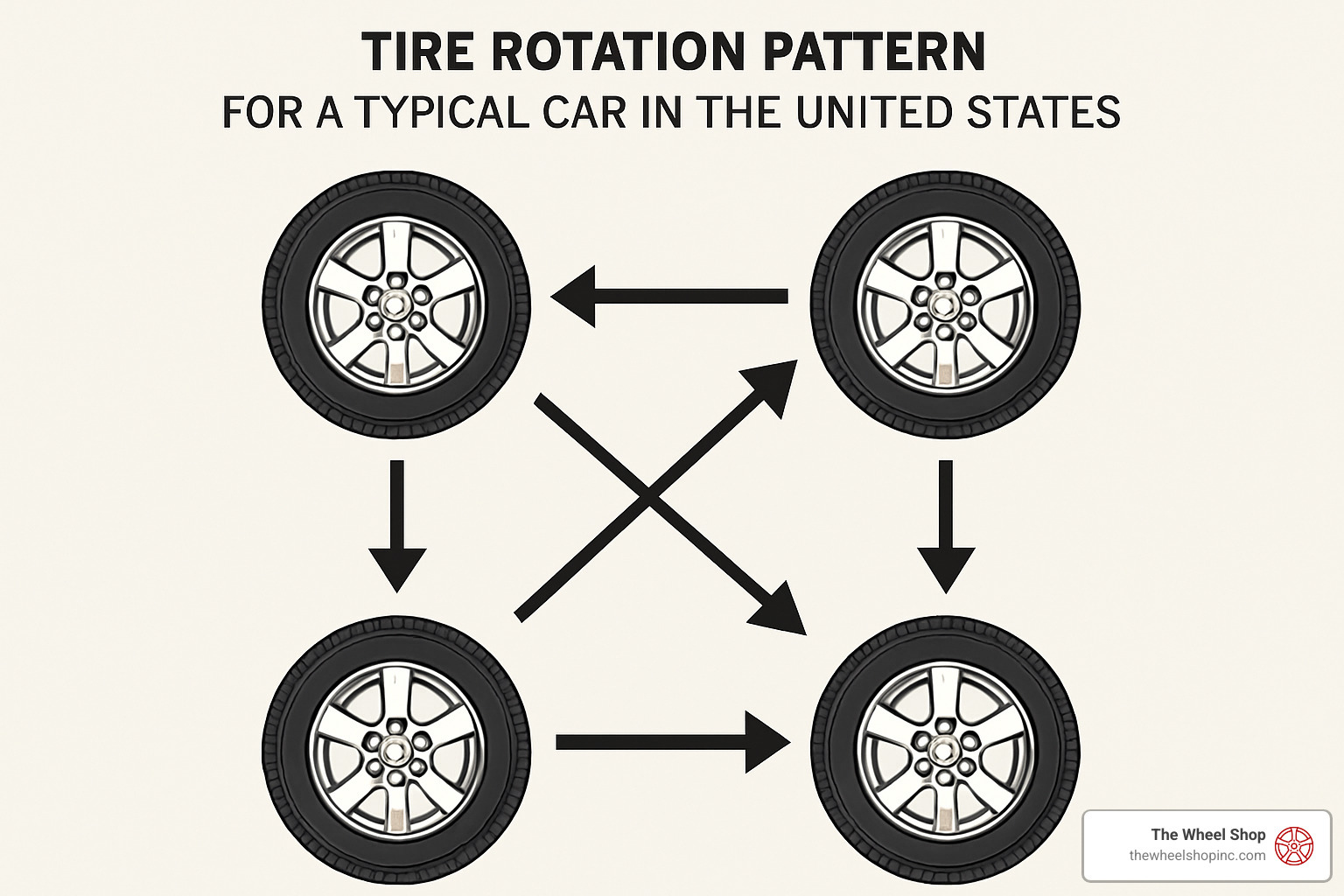
After installation, don’t skip the alignment check. This ensures your new tires wear evenly from day one. And plan a regular rotation schedule to eventually balance out the wear across all four tires.
Guidelines When You Can’t Afford Four New Tires
We get it—tires aren’t cheap, and sometimes the budget just won’t stretch to a full set. When that happens, here’s how to make the best of it:
Hunt for identical replacements to your existing tires. At The Wheel Shop, we often help customers track down specific models to match their current set, even if it means searching beyond our immediate inventory.
If your exact tire model has been discontinued (manufacturers love doing that, don’t they?), look for the same brand’s replacement model. Tire companies typically design newer models to have similar performance characteristics to the ones they replace.
Can’t find the same brand? Stay in the same performance category. A touring tire should be replaced with another touring tire, not a high-performance or off-road model. And always match the size, load, and speed ratings exactly.
Pay attention to tread patterns too. If your current tires have a directional V-pattern, try to find replacements with a similar design. This helps maintain consistent water evacuation and road grip.
Most importantly, plan to complete the set as soon as your budget allows. Think of the mismatched set as a temporary solution, not a permanent fix.
Emergency Only: Temporary Mixing Protocol
Sometimes emergencies happen when we least expect them. If you find yourself with a blown tire miles from the nearest service center, or you need to get to work tomorrow but the exact replacement won’t arrive until next week, here’s how to minimize the risks:
Consider any mismatched tire a temporary solution. This isn’t something you want to live with long-term.
Slow down—seriously. Keep your speed under 50 mph when possible with mismatched tires. Your car won’t handle the same way at higher speeds, especially during emergency maneuvers.
Drive like there’s an egg between your foot and the pedals. No hard braking, rapid acceleration, or sharp turns. Gentle inputs help compensate for the different grip levels of mismatched tires.
Limit your driving distance to only what’s absolutely necessary. That weekend road trip? Maybe postpone it until you can get properly matched tires.
If it’s raining or snowing, consider whether your trip is truly essential. Poor weather conditions dramatically increase the risks associated with mismatched tires.
And if you share your car with a spouse, teenager, or roommate, make sure they know about the temporary tire situation and understand the need for extra caution.
These emergency guidelines aren’t ideal—they’re just designed to help you safely reach a service facility where The Wheel Shop can help you get properly matched tires installed as soon as possible. Your safety is too important to compromise on for long.
Frequently Asked Questions About Mixing Tires
Is it ever acceptable to mix tire brands or types?
The short answer? Almost never. But life isn’t always black and white, and there are a few rare exceptions to this rule.
If your vehicle came from the factory with a staggered setup (wider tires in the rear than the front), that’s completely fine. These setups are carefully engineered as a complete system, with tire sizes specifically chosen to work together.
In a pinch, using a full-size spare that closely matches your other tires can get you home safely. Just remember this is a temporary solution – not a permanent fix!
And sometimes, life throws you a curveball. If you’re stranded with a damaged tire and the exact match isn’t available, a temporary mismatch is better than being stuck on the roadside. Just drive cautiously until you can get a proper matching set.
Even in these exceptional cases, your goal should be to restore a matched set as soon as your schedule and budget allow. Your safety is worth the investment.
What happens if I replace only one tire on an AWD vehicle?
Replacing just one tire on an AWD vehicle is like putting one hiking boot and one flip-flop on a marathon runner – technically possible, but asking for trouble!
Drivetrain Binding becomes your first major problem. Different tire diameters force your center differential to work overtime, even when driving straight. This isn’t what engineers designed it to do.
This constant strain generates excessive heat, which leads to Component Damage. Over time, this can wreck expensive parts like your center differential, transfer case, or viscous coupling. These repairs often run into thousands of dollars – far more than the cost of proper tire replacement.
Many people don’t realize they might face Warranty Issues too. Check your owner’s manual – many AWD manufacturers specifically state that mismatched tires can void your drivetrain warranty coverage. That’s a costly surprise nobody wants.
If you absolutely must replace only one tire on your AWD vehicle, ask about tire “shaving.” This special service, offered at some specialty tire shops like The Wheel Shop, removes tread from a new tire to match the depth of your existing tires. It’s not ideal, but it’s far better than risking your expensive drivetrain components.
Should deeper-tread tires go on the front or rear axle?
Here’s a surprising fact that goes against what many drivers assume: always put your deeper-tread tires on the rear axle – regardless of which wheels drive your car.
This recommendation often confuses front-wheel-drive vehicle owners. “Shouldn’t my best tires go where the power is?” Actually, no, and here’s why.
When your front tires lose traction (imagine hydroplaning on a rainy day), your vehicle continues moving forward while you steer. Not ideal, but manageable. But when your rear tires lose grip, your vehicle can spin out completely – a much more dangerous situation that happens quickly and is difficult for even experienced drivers to correct.
By placing deeper-tread tires on the rear, you reduce the likelihood of that rear traction loss. This improves your overall stability, especially in wet conditions where hydroplaning becomes a serious risk.
This recommendation isn’t just our opinion – it’s backed by extensive safety research and adopted by tire professionals nationwide. Your safety is always the top priority, which is why this counterintuitive advice has become standard practice.
The Wheel Shop Difference
At The Wheel Shop in Riverside, CA, we’ve seen what happens when tires don’t match up. From strange wear patterns to damaged drivetrain components that leave customers with repair bills in the thousands, the consequences are real. With over twenty years in the business, we’ve developed an eye for spotting potential problems before they become roadside emergencies.
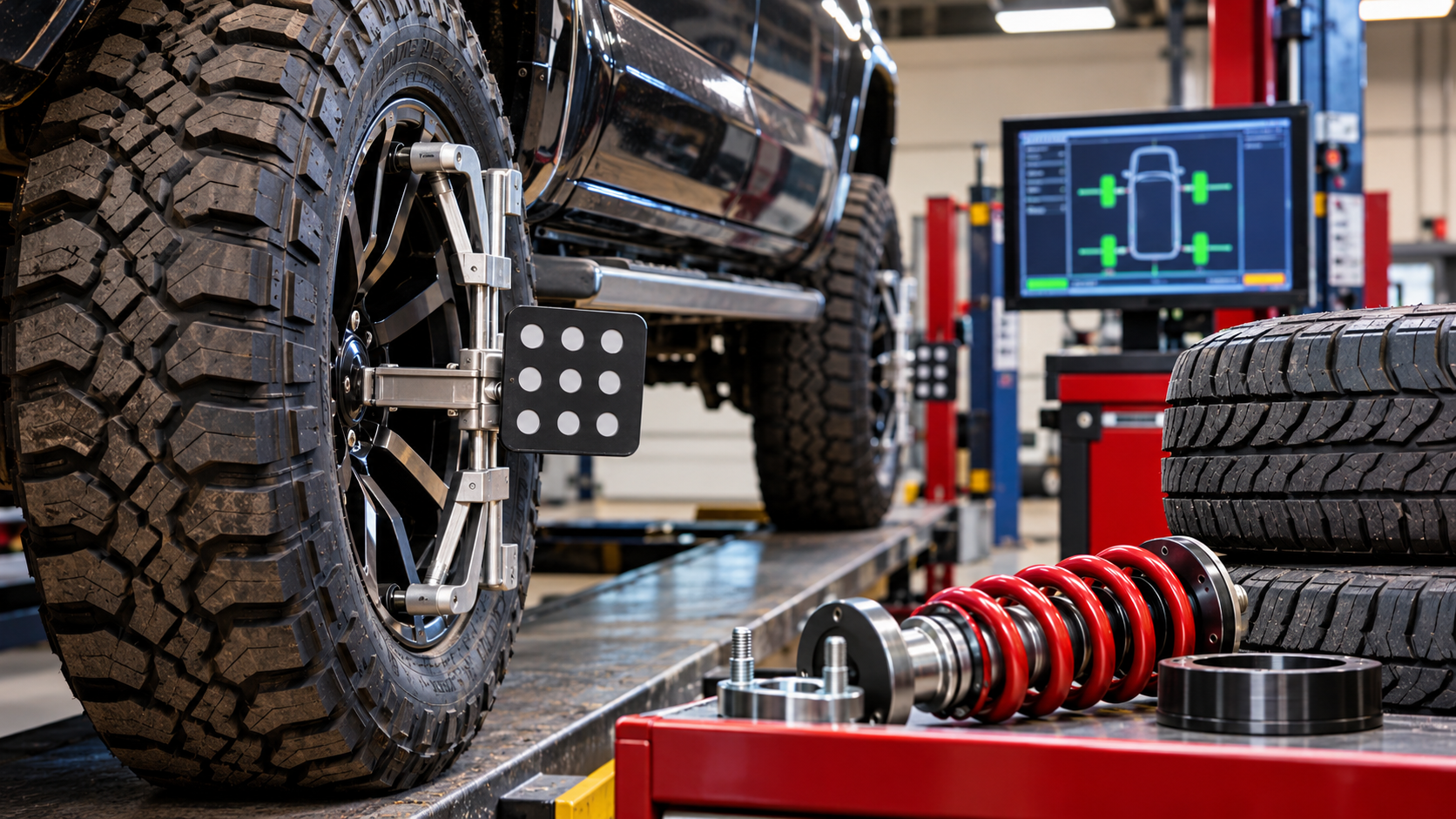
Whether you’ve got a flat that needs immediate attention or you’re looking to upgrade your entire set for better performance, The Wheel Shop has your back. Our expertise goes beyond just tires—our wheel repair, custom suspension work, and precision alignments all complement our tire services to keep your vehicle performing at its best.
When it comes to tires, uniformity isn’t just about looking good in the parking lot—it’s about keeping you and your loved ones safe on every journey. More info about wheel repair services is just a click away, or better yet, stop by and see what makes The Wheel Shop different. Your safety is worth the right set of shoes for your ride.