When drivers want to improve ride comfort, they often focus on a single upgrade. Some immediately think about installing new shocks or suspension components, while others look at larger wheels or premium tires. The reality is that ride quality is not determined by one part alone—it is the result of how your wheels, tires, and suspension work together as a complete system.
Every bump, crack, pothole, and expansion joint travels through your tires first, then your wheels, before finally being managed by the suspension. If one part of that system is poorly matched, even the highest-quality components elsewhere cannot deliver their full potential. Likewise, when all three are carefully selected to complement one another, the difference in comfort, handling, and overall driving experience can be remarkable.
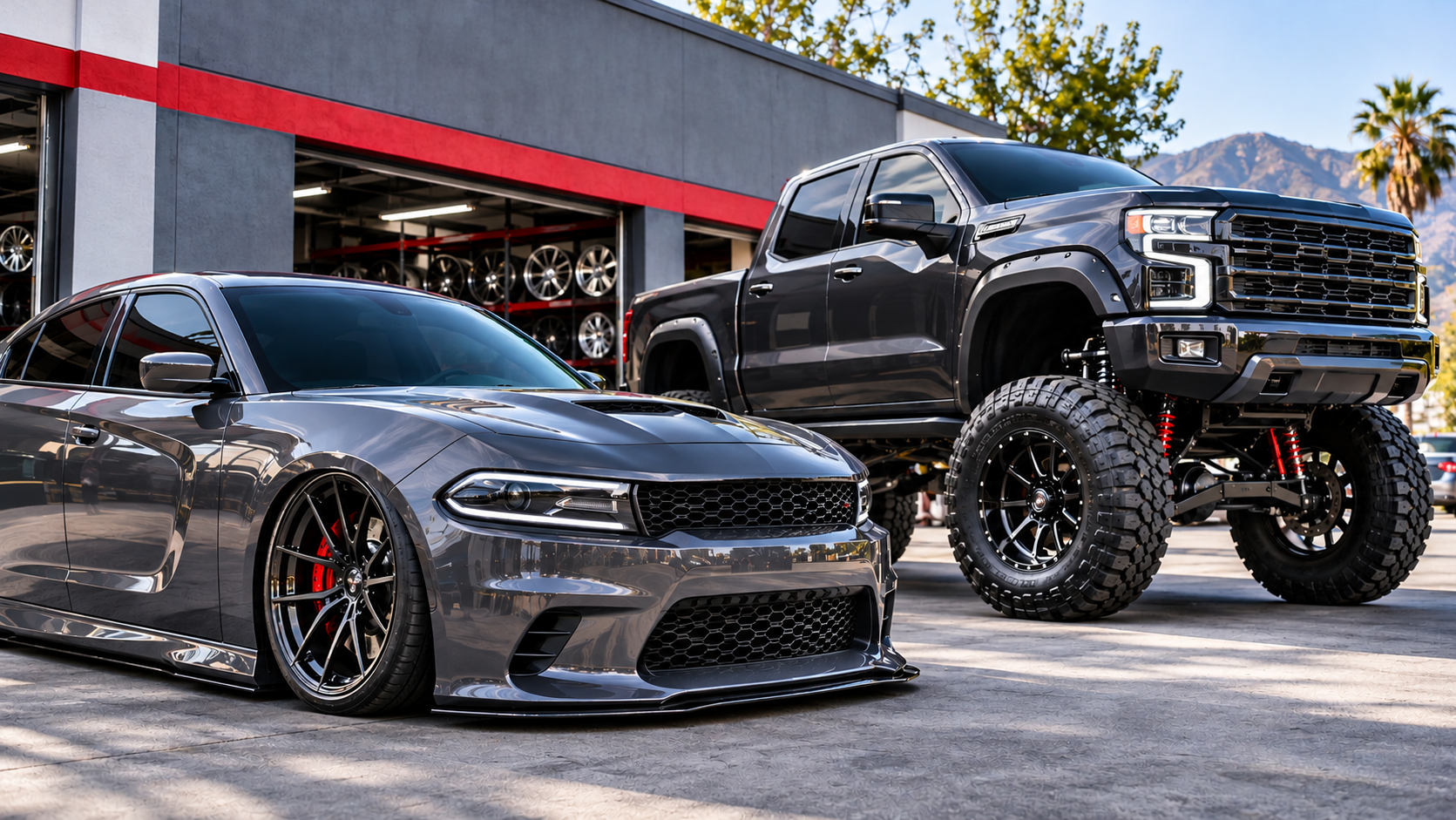
Whether you drive a daily commuter, luxury SUV, lifted truck, or performance car, understanding how these components interact can help you make smarter upgrade decisions. At The Wheel Shop, we help customers choose combinations that deliver the appearance they want while maintaining the comfort, control, and performance they expect every time they get behind the wheel.
Ride Quality Starts Where the Road Meets Your Vehicle
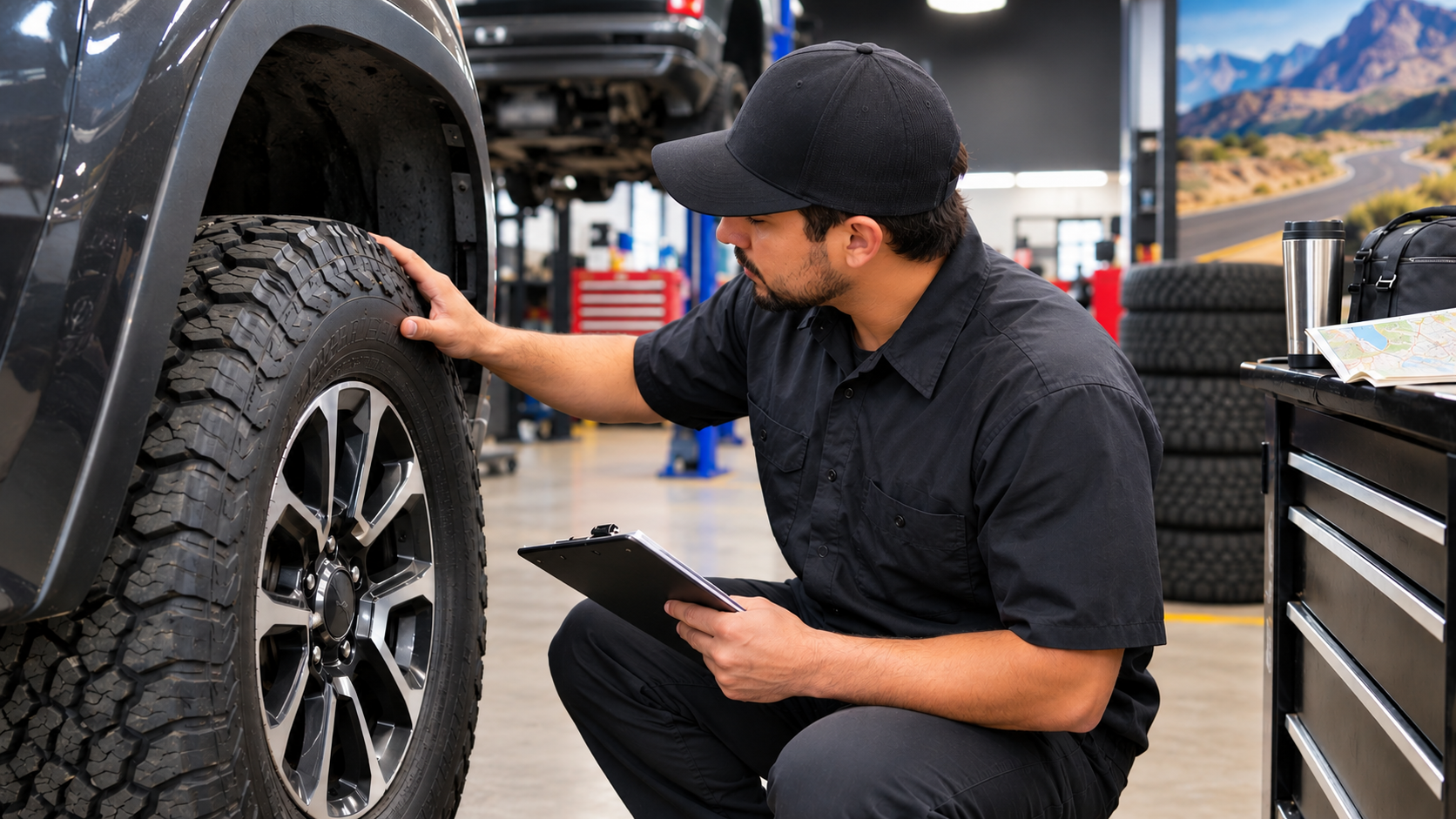
Although the suspension receives much of the attention when discussing ride quality, every bump is actually encountered by the tires first. Before the shocks, struts, or springs have an opportunity to react, the tire absorbs the initial impact and begins managing the forces generated by the road surface.
Think of the tire as the first cushion between your vehicle and the pavement. As it rolls over uneven surfaces, the sidewall flexes while the air inside the tire compresses slightly. This flexibility softens impacts before they are transferred into the wheel and suspension. The suspension then works to control the remaining movement, keeping the tires planted on the road while minimizing how much vibration reaches the passenger compartment.
A tire with a taller sidewall generally contains more air volume and offers greater flexibility, allowing it to absorb imperfections more effectively. By comparison, ultra-low-profile tires have less room to flex, meaning more of the road’s harshness is transferred directly into the rest of the vehicle.
This is one reason why luxury vehicles often balance wheel size with tire profile rather than simply installing the largest wheels possible. According to the National Highway Traffic Safety Administration (NHTSA), choosing the proper tires and maintaining them correctly plays an important role in both ride quality and vehicle safety.
Understanding that the tires, wheels, and suspension all share responsibility for absorbing road impacts makes it much easier to choose upgrades that improve the driving experience instead of unintentionally making it harsher.
Bigger Wheels Do Not Always Mean Better Comfort
Oversized wheels have become increasingly popular because they create an aggressive, custom appearance. However, many drivers are surprised to discover that larger wheels often produce a firmer ride.
When wheel diameter increases, tire sidewall height usually decreases to maintain the overall tire diameter. That reduction in sidewall means less cushioning between the wheel and the road.
For example, moving from an 18-inch wheel with a comfortable sidewall to a 22-inch wheel wrapped in ultra-low-profile tires dramatically changes how the vehicle reacts to rough pavement. Small bumps become more noticeable. Expansion joints become sharper. Potholes create stronger impacts.
This does not mean larger wheels are a poor choice. Many customers love their appearance and improved steering response. The key is selecting a wheel size that matches your driving habits rather than simply choosing the largest option available.
Finding the right balance between appearance and comfort is where experienced professionals make a significant difference. Choosing the proper custom wheels, Riverside drivers trust often involves much more than selecting a design that looks good.
Tire Sidewall Height Makes a Bigger Difference Than Most People Realize
If there is one specification that dramatically influences ride comfort, it is tire sidewall height.
Think of the tire as an air-filled cushion. More sidewall equals more flexibility. Less sidewall equals less ability to absorb impacts.
A taller sidewall provides several benefits:
- Better absorption of potholes and road imperfections
- Reduced vibration entering the cabin
- Lower risk of wheel damage from impacts
- More forgiving ride during daily commuting
Lower-profile tires provide different advantages:
- Sharper steering response
- Reduced sidewall flex during aggressive cornering
- Sportier appearance
- Improved handling during spirited driving
Neither option is universally better. Instead, the right choice depends on how the vehicle is used. Someone driving hundreds of freeway miles every week will often prioritize comfort, while a sports car enthusiast may willingly accept additional firmness in exchange for more responsive handling.
Choosing the correct tire profile is one of the most effective ways to improve ride comfort without replacing expensive suspension components.
Wheel Weight Influences More Than Performance
Wheel weight is another factor that often goes unnoticed.
Every wheel belongs to what engineers call “unsprung weight,” meaning it sits below the suspension rather than being supported by it. The heavier that weight becomes, the harder the suspension must work to control it.
Lighter wheels allow the suspension to react more quickly to bumps because there is less mass moving up and down. That can improve ride comfort while also enhancing steering feel, acceleration, and braking performance.
Heavier wheels, particularly inexpensive oversized cast wheels, may create a slower suspension response that can make the vehicle feel less refined over uneven pavement.
Many premium aftermarket wheels are engineered to reduce weight while maintaining strength. The difference may not seem dramatic when looking at one wheel, but removing several pounds from each corner of the vehicle can noticeably change how it feels on the road.
Drivers searching for wheels near me frequently focus on appearance first. However, understanding wheel construction and weight often leads to a much more satisfying upgrade.
Tire Construction Is Just as Important as Tire Size
Not all tires with identical dimensions perform the same.
Manufacturers design tires for very different purposes. Some prioritize comfort, while others focus on maximum grip, extended tread life, winter traction, or off-road capability.
Comfort-oriented touring tires often feature:
- Softer tread compounds
- Flexible sidewalls
- Noise-reducing construction
- Improved vibration absorption
Ultra-high-performance tires typically feature:
- Stiffer sidewalls
- More rigid tread blocks
- Enhanced cornering stability
- Increased steering precision
The result is that two vehicles wearing identical wheel sizes can feel completely different simply because they are equipped with different tire models.
Testing conducted by organizations such as Consumer Reports consistently shows measurable differences in ride comfort, road noise, and handling among tires that appear very similar on paper.
Selecting the proper tire often delivers a more noticeable improvement in daily driving comfort than replacing suspension components alone.
How Suspension Completes the System
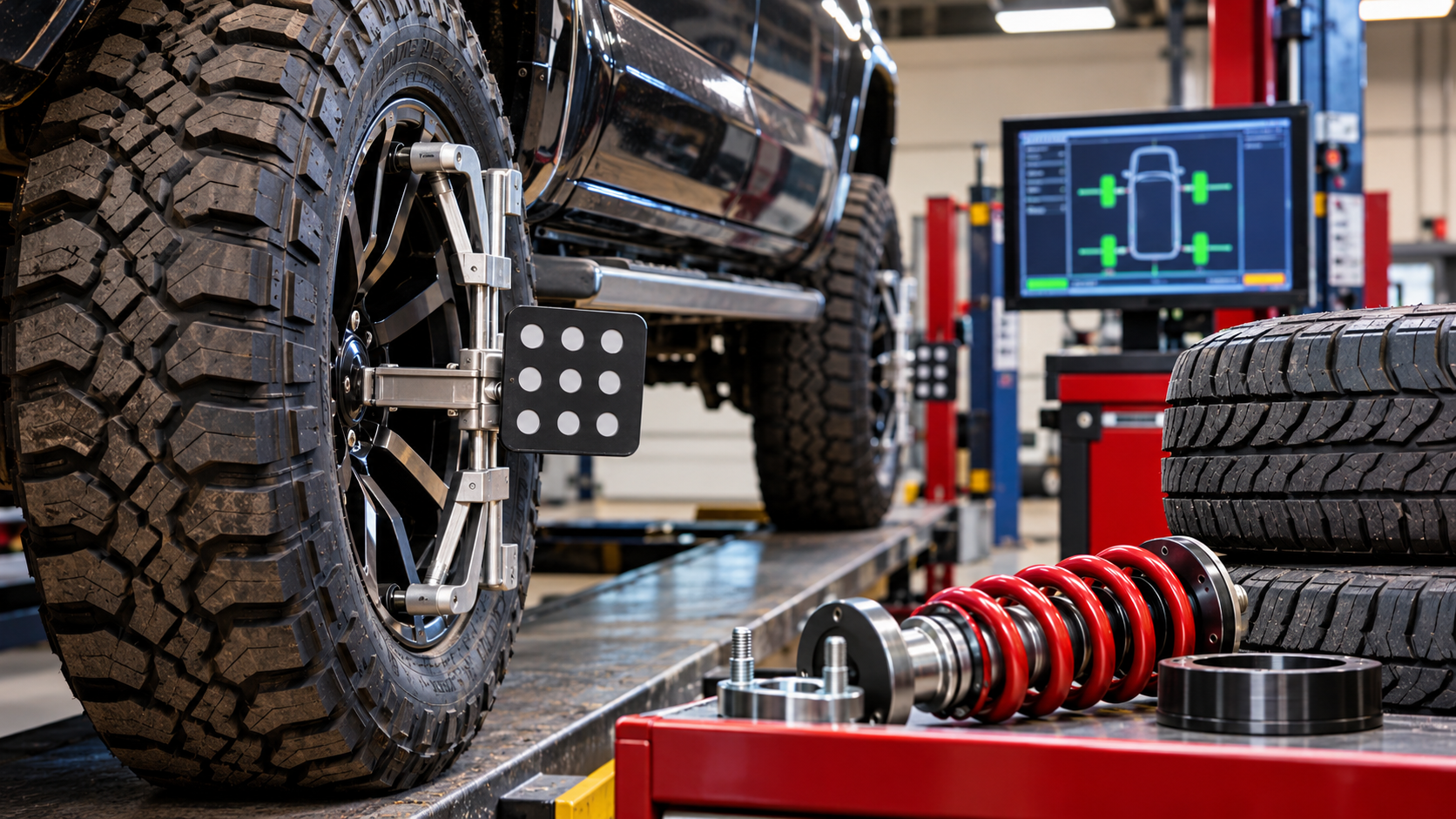
Once the tires and wheels have absorbed the initial impact from the road, the suspension takes over. Springs support the vehicle’s weight, while shocks and struts control the movement created when the suspension compresses and rebounds. Together, these components help keep the tires firmly planted on the pavement while reducing excessive bouncing, body movement, and vibration inside the cabin.
A properly functioning suspension is essential for both comfort and safety, but it performs best when paired with the right wheels and tires. For example, installing premium shocks on a vehicle equipped with oversized wheels and extremely low-profile tires may improve handling, yet the ride can still feel noticeably firm because the tires simply cannot absorb as much of the road surface. On the other hand, combining quality suspension components with appropriately sized wheels and well-matched tires creates a balanced system that delivers smoother rides without sacrificing control.
This is especially important when making multiple upgrades at once. A lift kit, lowering springs, or performance suspension can all change how a vehicle behaves, but selecting compatible wheels and tires ensures those modifications perform as intended. When each component complements the others, drivers enjoy better ride quality, improved handling, and greater confidence behind the wheel.
Tire Pressure Has an Immediate Effect on Ride Quality
One of the easiest ways to influence ride comfort requires no new parts at all.
Incorrect tire pressure changes how the tire absorbs impacts.
Overinflated tires become stiffer and transfer more vibration into the vehicle. They can make every crack in the pavement feel sharper while also reducing the tire’s contact patch.
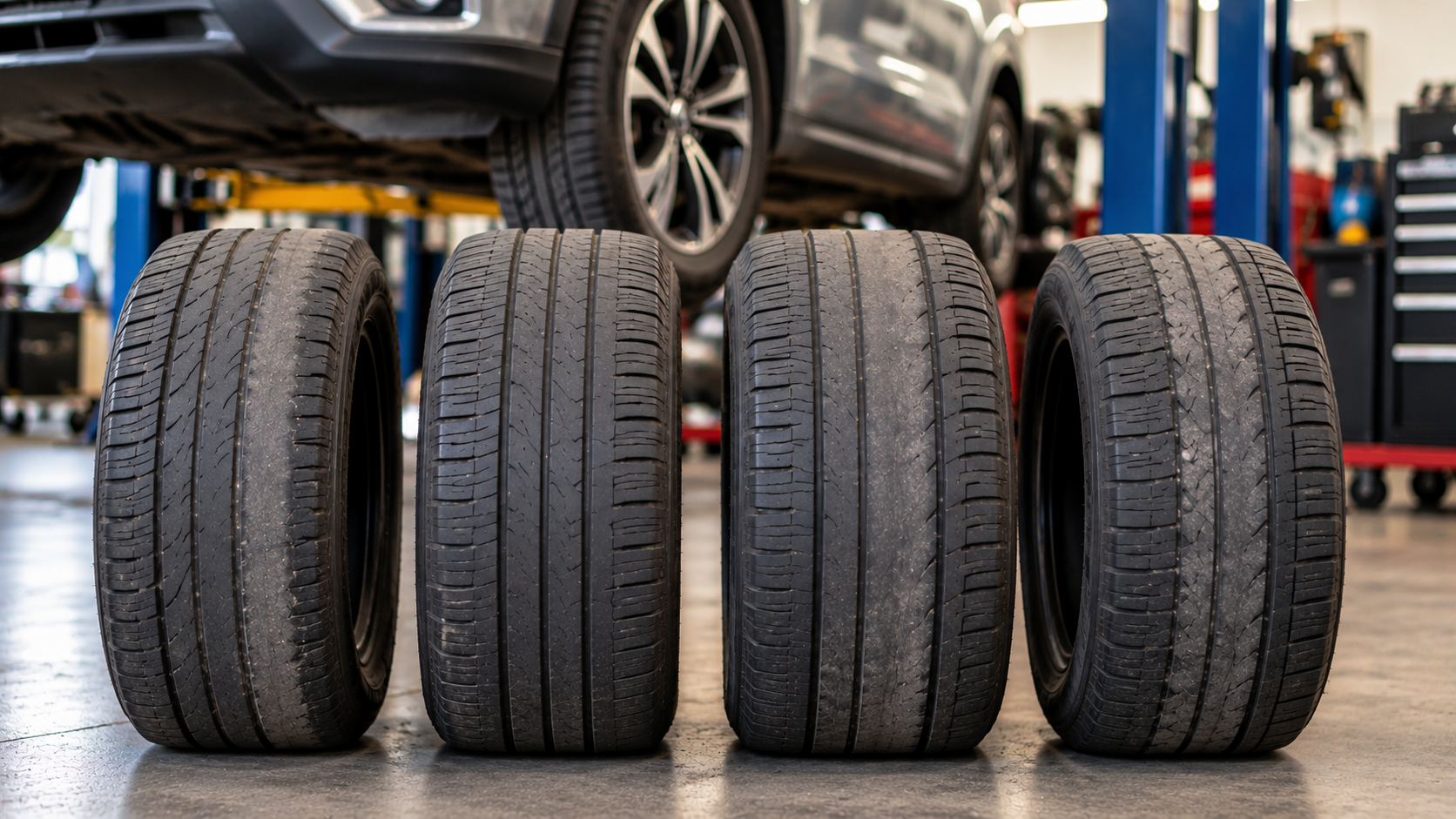
Underinflated tires may initially feel softer but can create excessive heat, uneven tread wear, reduced fuel economy, poor handling, and increased risk of tire failure.
The ideal tire pressure is determined by the vehicle manufacturer—not by the maximum pressure listed on the tire sidewall.
Regular pressure checks help maintain both comfort and safety while maximizing tire life.
The Best Ride Quality Comes From Balance
Suspension upgrades absolutely have their place. New shocks, struts, springs, lift kits, leveling kits, and performance suspension systems can dramatically improve how a vehicle responds to changing road conditions. However, they are only one part of a much larger equation.
Likewise, upgrading to premium wheels and tires without considering the suspension may also produce disappointing results. Oversized wheels, incorrect tire profiles, or excessive wheel weight can change how the suspension behaves, reducing some of the comfort and handling benefits the suspension was designed to provide.
The most comfortable and confidence-inspiring vehicles are those where the wheels, tires, suspension, and wheel alignment after tires all work together. Rather than treating each component as a separate upgrade, experienced professionals evaluate the entire package to ensure every part complements the others. This balanced approach often produces a more noticeable improvement than focusing on any single modification alone.
Finding the Right Balance Between Appearance and Comfort
There is no single “perfect” wheel-and-tire combination.
Instead, the best setup depends on your priorities.
If appearance comes first, larger wheels with lower-profile tires may be the right choice.
If long highway commutes are common, slightly smaller wheels paired with premium touring tires often deliver a noticeably smoother experience.
Truck owners may want larger wheels while still maintaining enough tire sidewall for comfort during daily driving and occasional off-road use.
Families often benefit from tire choices that reduce cabin noise while maintaining predictable handling in wet weather.
The goal is not simply installing bigger wheels or more aggressive tires. The goal is creating a combination that matches how you actually use your vehicle every day.
That personalized approach helps drivers enjoy both the visual upgrade and the driving experience that comes with it.
Frequently Asked Questions
Choosing wheels and tires involves far more than selecting a style you like. Because every vehicle and driver has different priorities, customers often have questions about how various combinations affect ride comfort. Below are answers to some of the most common questions we receive.
Will smaller wheels always ride more comfortably?
Not always, but they generally provide more room for taller tire sidewalls, which absorb road imperfections more effectively. Tire construction, air pressure, wheel weight, and suspension condition all contribute to the final ride quality.
Can new tires make my vehicle feel smoother even if I do not replace the suspension?
Yes. In many cases, replacing worn or poorly matched tires with high-quality touring tires can significantly reduce road noise, vibration, and harshness. Many drivers notice an immediate improvement without changing any suspension components.
Are expensive wheels worth the investment?
Higher-quality wheels are often engineered to be lighter, stronger, and more precisely manufactured than lower-cost alternatives. While appearance is certainly important, premium wheels can also improve steering response, ride quality, and long-term durability.
Should I get an alignment after installing new wheels and tires?
Absolutely. Even if your vehicle drove straight beforehand, installing new wheels or tires is an excellent time to verify alignment. Proper alignment helps maximize tire life, improves handling, and ensures your new investment performs as intended.
The Wheel Shop Difference
For more than twenty years, The Wheel Shop has helped drivers throughout Riverside find wheel and tire combinations that enhance both appearance and driving comfort. Our certified mechanics bring years of experience and specialized industry training to every installation, repair, and upgrade. Whether you are searching for new aftermarket wheels, premium tires, wheel repair, alignments, OEM wheels, or custom accessories, we take the time to understand how you drive before recommending a solution.
We know that every vehicle and every driver are different. Some customers want sharper handling, while others are looking for a quieter, smoother daily commute. By considering wheel size, tire construction, suspension compatibility, and overall vehicle performance together, we help you avoid costly mistakes and choose upgrades you will enjoy for years to come.
In addition to wheels and tires, we specialize in Powdercoating, Truck & Car Accessories, Suspension, Calipers, Chrome Plating, and professional installation services performed to the highest standards. Our goal is not simply to install parts—it is to help you build a vehicle that performs as well as it looks.
If you are ready to improve your vehicle’s ride quality or explore the best wheel and tire options for your needs, contact The Wheel Shop today. Call (951) 588-1222 to speak with our experienced team or email info@thewheelshop.com to schedule your visit. We look forward to helping you create the perfect balance of comfort, performance, and style.