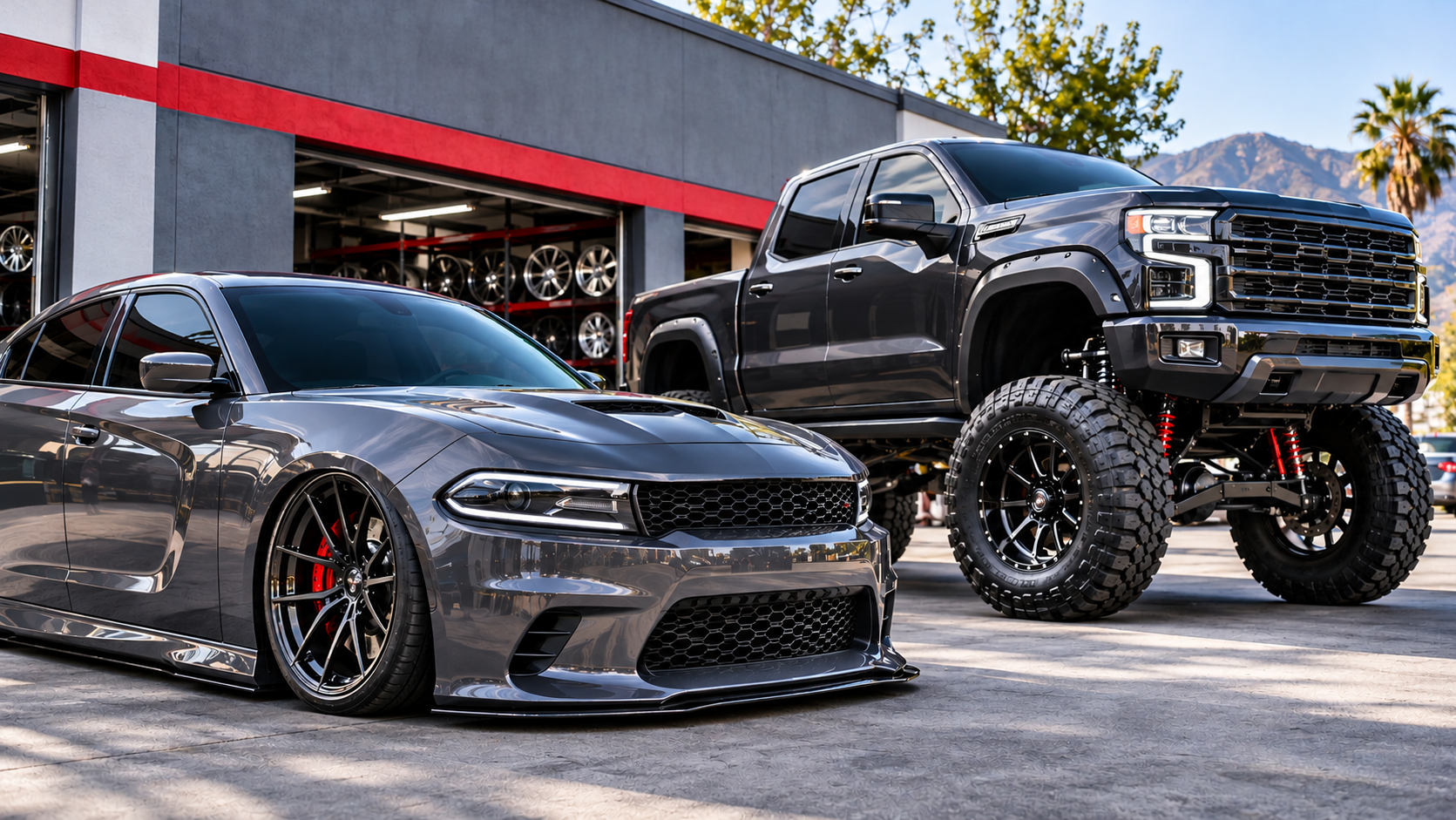
Low-profile tires have become increasingly popular among drivers who want a sportier appearance, sharper handling, and improved cornering performance. Whether installed on a luxury sedan, sports car, or lifted truck with large aftermarket wheels, these tires create an aggressive look that many vehicle owners appreciate. However, they also demand a higher level of precision during installation and maintenance. One area that is often overlooked is wheel balancing.
Unlike taller sidewall tires that can absorb minor imperfections, low-profile tires leave very little room for error. Even a slight imbalance that might go unnoticed with a standard tire can quickly become obvious through steering wheel vibration, road noise, uneven tread wear, or reduced ride quality. This is why precision wheel balancing is one of the most important services you can invest in when upgrading your vehicle.
At The Wheel Shop, we regularly help customers maximize the performance of their vehicles by ensuring every wheel and tire assembly is balanced to extremely tight tolerances. Whether you have factory wheels or have upgraded to aftermarket wheels, proper balancing protects your investment while creating the smooth, confident driving experience you expect.
Understanding What Wheel Balancing Actually Does
Wheel balancing is the process of evenly distributing the weight of the complete wheel and tire assembly as it rotates. Even brand-new wheels and tires are never perfectly uniform. Tiny differences in the manufacturing process create heavier and lighter spots around the assembly. During balancing, specialized equipment identifies these variations so small weights can be strategically placed to compensate.
When the assembly spins at highway speeds, those tiny differences become much larger forces. A wheel that is only slightly out of balance at 20 mph may create noticeable vibration at 70 mph. The faster the wheel rotates, the more pronounced the imbalance becomes.
According to the National Highway Traffic Safety Administration (NHTSA), properly maintained tires contribute significantly to vehicle safety, handling, and overall performance. While tire pressure often receives the most attention, proper balancing plays an equally important role in allowing tires to perform as designed.
Modern computerized balancing machines measure these differences with incredible accuracy. Precision balancing goes a step further by minimizing vibration to extremely small tolerances, resulting in smoother operation throughout the vehicle’s entire speed range.
Why Low-Profile Tires Amplify Every Small Problem
Low-profile tires contain much shorter sidewalls than conventional tires. While this improves steering response and creates a more direct connection to the road, it also reduces the tire’s ability to absorb imperfections.
Think of the tire sidewall as a cushion. A taller sidewall naturally flexes and absorbs small irregularities during rotation. A shorter sidewall is much stiffer, transmitting more of those forces directly into the suspension, steering components, and ultimately the driver’s hands.
That means even minor balancing errors become much more noticeable.
Drivers frequently describe symptoms such as:
- Steering wheel vibration
- Seat vibration at highway speeds
- Dashboard rattles
- Uneven tire wear
- Increased road noise
- Driver fatigue during long trips
These symptoms often become more apparent after installing larger wheels with lower-profile tires because the reduced sidewall offers less forgiveness for any imbalance.
Larger Wheels Increase Rotational Forces
Many customers upgrade to 20-inch, 22-inch, or even larger wheels to improve both appearance and handling. These larger wheel packages can dramatically transform a vehicle, but they also increase the importance of balancing accuracy.
As wheel diameter increases, weight is positioned farther away from the center of rotation. This increases rotational force, meaning a small imbalance creates greater vibration than it would on a smaller wheel.
This is especially important for drivers purchasing custom wheels or wheels and tires packages. Larger aftermarket wheel combinations often represent a significant investment, and protecting that investment begins with proper installation and balancing.
Precision balancing helps ensure that larger wheel packages deliver the premium driving experience customers expect rather than introducing unwanted vibration.
Precision Balancing Protects More Than Your Tires
Many people assume balancing only affects tire wear. While that is certainly true, the benefits extend much further throughout the vehicle.
An out-of-balance wheel continuously transfers vibration into the steering system, wheel bearings, hubs, suspension components, and even interior trim. Over thousands of miles, these repeated vibrations increase stress on multiple systems.
Maintaining proper balance helps reduce unnecessary wear on:
- Suspension components
- Steering linkages
- Wheel bearings
- Shocks and struts
- Tire tread
- Wheel mounting hardware
Reducing vibration also creates a more comfortable driving experience, particularly on longer trips where constant steering wheel movement can become tiring.
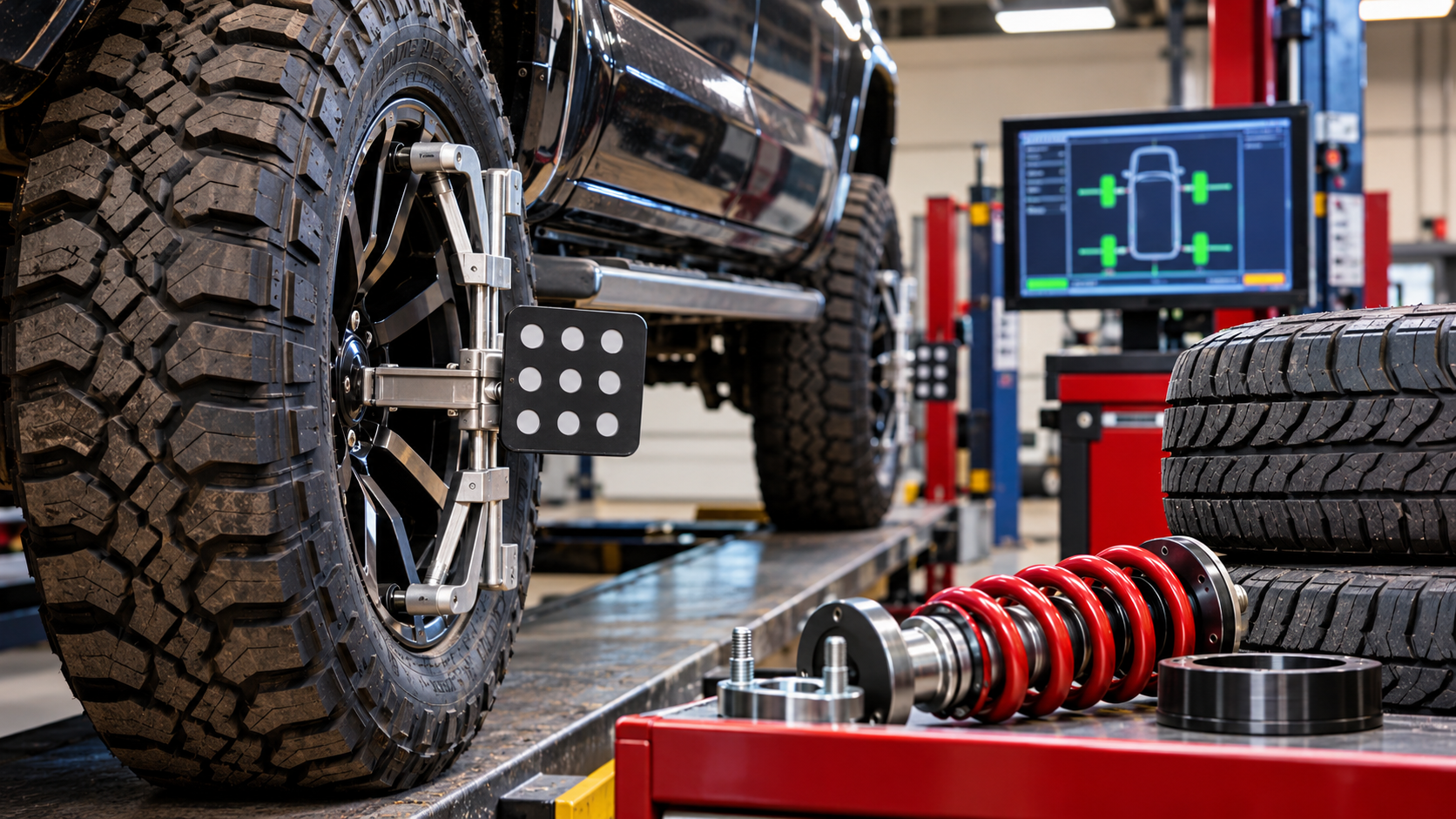
For drivers investing in wheel alignment and balancing, combining both services provides one of the best ways to maximize tire life and improve ride quality.
Road Force Variation Makes Precision Even More Important
Not all tire vibrations come from weight imbalance alone.
Sometimes the tire itself has slight stiffness variations that become noticeable as it rolls. This condition is known as road force variation. Advanced balancing equipment can often detect these differences and help technicians determine whether repositioning the tire on the wheel will reduce vibration even further.
This process, sometimes called match mounting, aligns the high spot of the tire with the low spot of the wheel to create a more uniform assembly.
While not every vehicle requires this level of adjustment, performance vehicles, luxury vehicles, and vehicles equipped with low-profile tires often benefit from these additional steps.
Drivers expecting premium ride quality typically notice the difference immediately.
Balancing Helps Tires Wear More Evenly
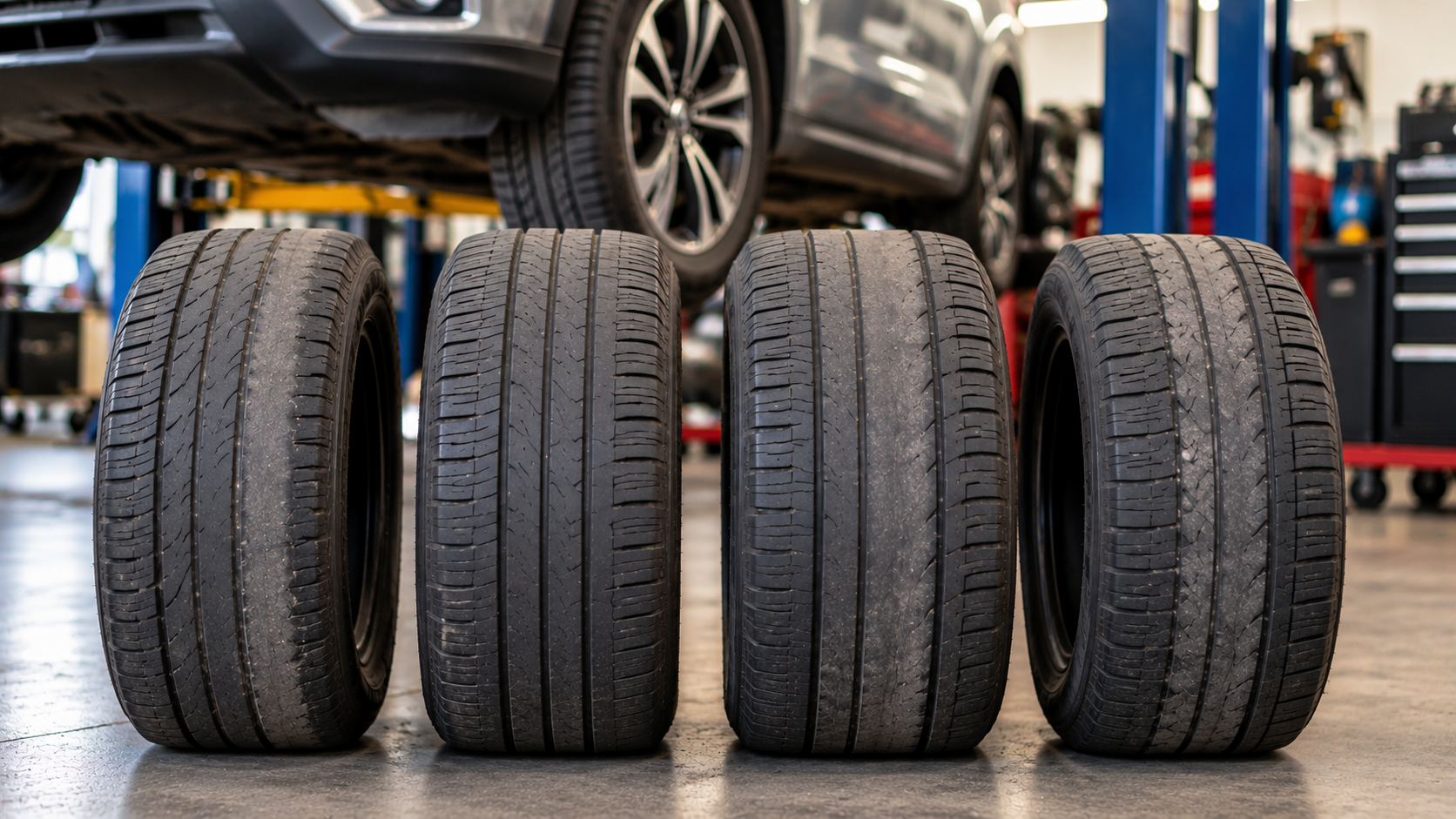
Tires are designed to distribute weight evenly across the tread surface. When the assembly is out of balance, certain portions of the tire repeatedly strike the pavement with greater force than others.
Over time, this can create irregular tread patterns such as cupping or scalloping. Once these wear patterns develop, balancing alone may not completely eliminate vibration because the tire itself has worn unevenly.
Regular balancing helps maintain consistent contact with the road, promoting even tread wear and maximizing the usable life of your tires.
The experts at Consumer Reports have also emphasized the importance of proper tire maintenance—including balancing and rotation—for extending tire life and maintaining vehicle performance.
Replacing premium tires prematurely because of uneven wear is far more expensive than keeping them properly balanced from the beginning.
Precision Matters Even More After Wheel Repairs or Upgrades
Many drivers assume balancing is only necessary when purchasing new tires. In reality, several situations should prompt another balance check.
For example:
- Installing aftermarket wheels
- Completing wheel repair
- Rotating tires
- Replacing suspension components
- Performing a precision wheel alignment & balancing
- Striking a pothole or curb
- Installing larger wheels
Even slight changes in the wheel assembly can alter weight distribution.
Likewise, repaired wheels should always be carefully balanced after restoration. Professional rim repair or wheel repair restores structural integrity, but balancing ensures the repaired assembly performs just as smoothly as intended.
Signs Your Wheels May Need to Be Rebalanced
Some balancing problems develop gradually, making them easy to overlook.
Common warning signs include vibrations that appear only within certain speed ranges, usually between 55 and 75 mph. Drivers may also notice shaking during acceleration, increased steering wheel movement, or a vehicle that simply does not feel as smooth as it once did.
Other indicators include uneven tire wear, increased road noise, or vibrations that begin shortly after purchasing new tires or wheels.
Ignoring these symptoms rarely makes them disappear. Instead, the vibration often accelerates wear throughout the vehicle, increasing repair costs over time.
If your vehicle exhibits any of these symptoms, having the wheel assemblies professionally inspected is a smart investment.
Professional Equipment Makes a Significant Difference
Not every balancing machine offers the same level of accuracy.
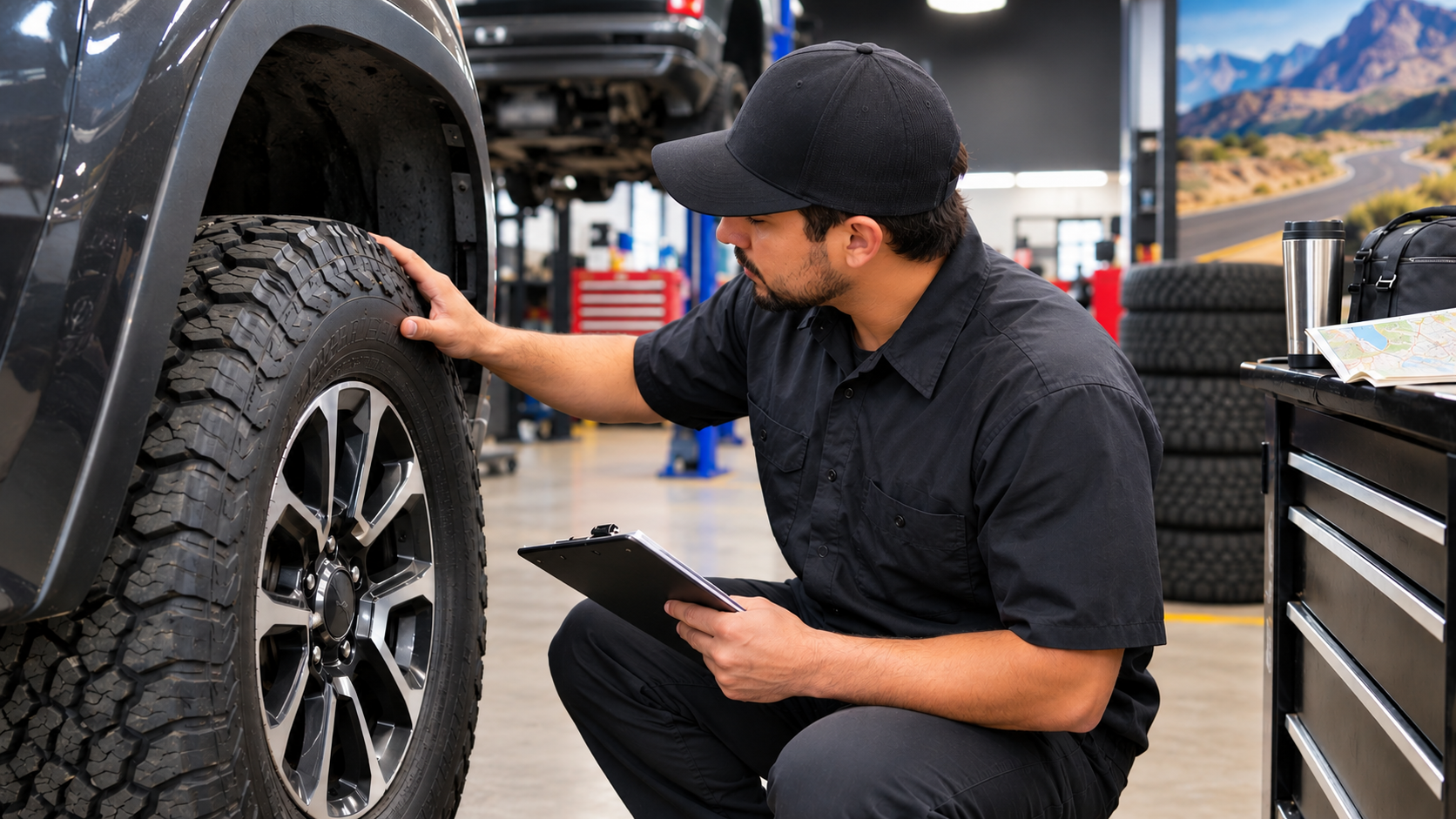
Professional balancing equipment measures wheel assemblies to extremely precise tolerances while identifying even minor weight differences. Experienced technicians also understand where to place weights, how different wheel designs affect balancing, and when additional diagnostic steps may be necessary.
At The Wheel Shop, our certified mechanics combine years of experience with specialized equipment to deliver balancing services that help customers enjoy smoother rides, longer tire life, and greater confidence behind the wheel.
Whether you drive a daily commuter, a lifted truck, a performance car, or a luxury SUV, precision balancing ensures your wheels and tires perform exactly as they were designed.
Frequently Asked Questions
Choosing the right wheels and tires is only part of achieving excellent ride quality. Proper balancing plays a critical role in maximizing performance, protecting your investment, and creating a comfortable driving experience. Below are answers to several common questions customers ask about precision balancing and low-profile tires.
How often should wheels be balanced?
Most manufacturers recommend balancing whenever new tires are installed or rotated. It is also wise to have them checked if you notice vibration, after striking a pothole, or after completing suspension or wheel repairs.
Are low-profile tires more likely to vibrate?
Low-profile tires are not inherently defective, but their shorter sidewalls transmit vibration more directly than taller tires. As a result, even very small balancing errors become much easier to feel inside the vehicle.
Can wheel balancing fix all vibrations?
No. While balancing resolves many vibration issues, some problems may stem from damaged tires, bent wheels, worn suspension components, alignment issues, or road force variation. Professional inspection helps identify the actual cause.
Is balancing worth it if my tires still look good?
Absolutely. Balancing is about much more than tread appearance. Properly balanced wheels reduce stress on suspension components, improve ride comfort, promote even tire wear, and help protect your investment over the long term.
The Wheel Shop Difference
For more than twenty years, The Wheel Shop has helped drivers throughout Riverside and the surrounding communities get the most from their vehicles. We specialize in aftermarket wheels, OEM wheels, tires, wheel repair, alignments, suspension upgrades, powder coating, chrome plating, calipers, and truck and car accessories. Every service is performed by certified mechanics who bring years of experience and specialized training to every installation and repair.
We understand that every wheel and tire package is different. Whether you are upgrading to low-profile performance tires, installing oversized truck wheels, or simply replacing worn tires, we take the time to ensure every assembly is balanced with precision so you can enjoy the smoothest ride possible.
Our goal is not simply to install wheels and tires. We help customers make informed decisions that improve ride quality, protect expensive components, and maximize the lifespan of their investment. From precision wheel alignment & balancing to complete wheel and tire packages, we are committed to delivering professional workmanship that meets the highest standards.
If you are experiencing vibration, planning to upgrade your wheels, or simply want your vehicle performing at its best, contact The Wheel Shop today at (951) 588-1222 or email info@thewheelshop.com. We look forward to helping you achieve the smooth, confident ride your vehicle was designed to deliver.