When drivers think about upgrading their wheels, the wheels themselves usually get most of the attention. Diameter, width, offset, finish, spoke design, and tire selection can dramatically change the appearance and performance of a vehicle. However, the smaller components attached to and surrounding those wheels matter more than many vehicle owners realize. Valve caps, center caps, lug nuts, wheel locks, hub-centric rings, spacers, and other wheel accessories can affect everything from appearance and fitment to maintenance and security.
Some accessories are primarily cosmetic. Others perform an important mechanical or protective function. Still others do both. Knowing the difference helps you avoid purchasing parts simply because they look good while overlooking compatibility, installation requirements, or long-term maintenance.
Whether you are finishing a new set of aftermarket wheels, refreshing factory wheels, customizing a truck, or simply replacing missing components, understanding your options can help you make smarter choices. This guide explains the most common wheel accessories, what they do, and what to consider before adding them to your vehicle.
Valve Caps: Small Parts With a Practical Purpose
Valve caps are among the smallest components on a wheel, which makes them easy to dismiss as decorative pieces. Their primary purpose is to protect the tire valve from dirt, moisture, road grime, and other contamination. We recommend keeping caps installed because they help prevent dirt and moisture from reaching the valve.
That protection matters because the valve is responsible for allowing the tire to be inflated and helping the assembly maintain pressure. A missing cap leaves the end of the valve exposed every time you drive through rain, dust, mud, or ordinary road debris. Although the valve core itself is the primary seal in most passenger-vehicle applications, a quality cap provides another layer of protection and can function as a secondary seal.
Valve caps are also one of the easiest ways to personalize wheels. They are available in simple plastic designs as well as metal, chrome-look, anodized, branded, and specialty styles. When choosing decorative caps, however, material compatibility matters. Certain metal caps can corrode and seize onto valve stems when incompatible metals and moisture are involved. Vehicles equipped with direct Tire Pressure Monitoring System sensors may also have specific valve components, so it is better to choose a compatible accessory than assume every cap fits every valve assembly.
The importance of the valve area is also a good reminder to pay attention to tire pressure. The National Highway Traffic Safety Administration recommends checking tire pressure at least monthly when tires are cold and notes that TPMS warnings generally appear only after a tire is already significantly underinflated. A good-looking valve cap is useful, but it should never take the place of regular pressure checks.
Center Caps: The Finishing Touch in the Middle of the Wheel
Center caps cover the center portion of a wheel, creating a cleaner and more finished appearance. Depending on the wheel design, the cap may conceal the hub area, axle nut, wheel bearing components, or simply an unfinished opening. On many OEM wheels and aftermarket designs, the center cap is an important visual component of the complete wheel.
Center caps come in an enormous range of sizes and attachment styles. Some snap into the wheel using retaining clips or tabs. Others are secured with screws or bolts. Large truck and specialty-wheel applications can use more substantial hub covers or caps. This is why buying a center cap based on appearance alone can lead to frustration. A cap that looks almost identical to the original may have a slightly different diameter, depth, retention system, or mounting pattern.
Replacement center caps should therefore be matched carefully to the wheel rather than just the vehicle. Two vehicles of the same make and model can have completely different wheels, particularly when one uses factory equipment and another has aftermarket wheels. Wheel brand, model, part number, center-bore dimensions, and cap measurements can all help identify the correct replacement.
For custom vehicles, center caps also provide an opportunity to change the visual character of the wheel without replacing the entire wheel. A contrasting center cap can make the center section more prominent, while a matching cap creates a cleaner, more integrated appearance. On trucks, larger caps and chrome hub covers for trucks can make an especially noticeable difference because of the wheel’s size and visibility.
Lug Nuts: More Than Decorative Hardware
Lug nuts secure the wheel to the vehicle, making them fundamentally different from purely cosmetic accessories. They are available in numerous configurations, including conical-seat, ball-seat, flat-seat, spline-drive, extended, open-ended, closed-end, and other specialty designs. The correct type depends on the wheel, wheel stud, vehicle, and application.
This is one area where appearance must come second to compatibility. A lug nut can thread onto a wheel stud and still be incorrect for the wheel. The seating surface must correspond to the lug seat machined into the wheel. Thread diameter, thread pitch, overall dimensions, seat design, and engagement all need to be appropriate. Incorrect lug hardware can prevent the wheel from being secured as intended.
Aftermarket wheels can make lug selection particularly important. Some wheel designs have narrow lug openings that require smaller-diameter spline-drive hardware. Truck owners may also consider aftermarket truck lug nuts, extended lug nuts, or other styles designed to complement larger custom wheels.
Decorative options are extensive. Black, chrome, polished, colored, and custom lug nuts for trucks can help tie together a wheel package. Some owners even choose chrome wheel lug nut covers or specialty designs to create a particular look. The key is to treat lug hardware as functional equipment first and styling equipment second.
Wheel Locks: Adding Protection to Your Wheels
Custom wheels and tires can represent a significant investment, which makes wheel security worth considering. Wheel locks are designed to make unauthorized wheel removal more difficult. A typical set replaces one standard lug nut or lug bolt on each wheel with a locking fastener that requires a corresponding key or adapter.
Wheel locks cannot guarantee that wheels will never be stolen, but they add another obstacle that can discourage opportunistic theft. They can be especially appealing to owners of distinctive custom wheels, expensive aftermarket wheel packages, or vehicles that routinely park outside.
There is an important practical consideration: keep track of the key. If the vehicle needs a tire rotation, brake service, wheel repair, or roadside tire change, the technician needs access to it. Keeping the key in a consistent, secure location inside the vehicle can prevent unnecessary complications.
Quality also matters. Cheap wheel locks can be more troublesome than helpful if the key deforms, the pattern strips, or corrosion makes removal difficult. Like standard lug hardware, locks should be properly matched to the wheel’s seat style, thread specifications, and application.
Hub-Centric Rings: Helping Aftermarket Wheels Fit Correctly
Hub-centric rings are not visually exciting, but they can be extremely useful in certain aftermarket wheel installations. Many aftermarket wheels are manufactured with a center bore large enough to fit several vehicle applications. A hub-centric ring fills the space between the wheel’s center bore and the vehicle’s hub when needed.
The goal is to help center the wheel accurately on the hub during installation. Without the appropriate fit, some wheel-and-vehicle combinations may be more difficult to center consistently and can contribute to vibration concerns. Rings are available in materials such as plastic and aluminum, with the correct choice depending on the specific installation.
Accurate measurement is critical. Both the wheel center bore and vehicle hub diameter need to be known. A ring that is even slightly incorrect may not fit properly. For this reason, hub-centric rings are best treated as fitment components rather than generic accessories.
It is also important not to assume that every aftermarket wheel requires them. Some aftermarket wheels are manufactured specifically for a vehicle’s hub dimensions, while other applications use different centering arrangements. A knowledgeable wheel professional can determine whether rings are necessary for a particular setup.
Wheel Spacers: Understanding What They Actually Change
Wheel spacers are installed between the wheel and hub, moving the wheel outward from its original mounting position. Drivers may use them to achieve clearance, alter wheel positioning, or create a particular stance. They are particularly common in customized truck and off-road applications, which is reflected in searches for products such as best truck wheel spacers and dually wheel spacers.
Unlike a valve cap or decorative center cap, however, a spacer changes wheel positioning relative to the vehicle. That means the decision involves more than appearance. Spacer thickness can influence effective offset, fender clearance, suspension clearance, stud engagement, and other fitment considerations.
Not every wheel clearance problem should automatically be solved with a spacer. If the underlying wheel dimensions are poorly matched to the vehicle, selecting the correct wheel may be the better solution. There are also different spacer designs, including slip-on and bolt-on configurations, and requirements vary by application.
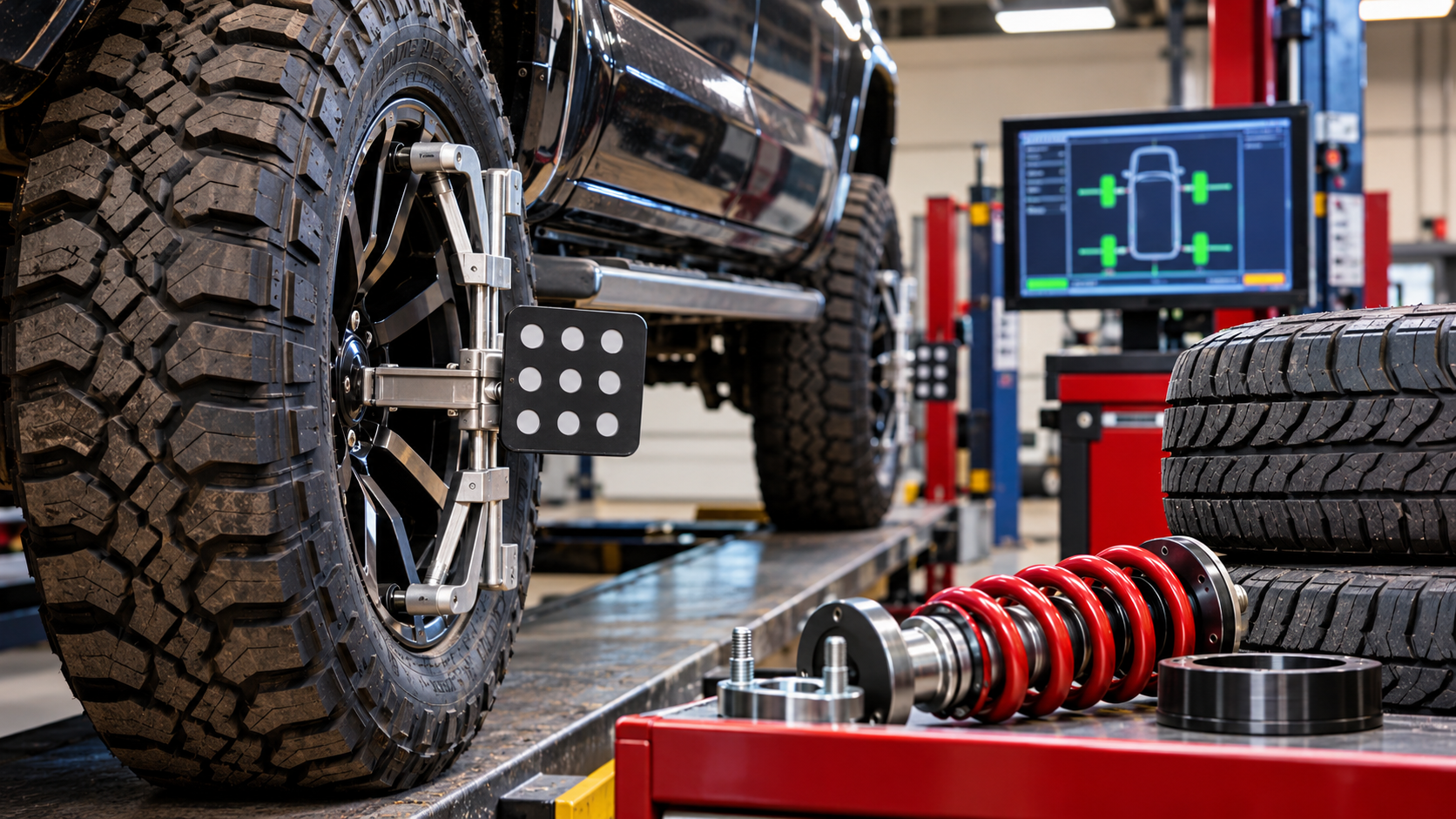
Professional evaluation becomes especially valuable when a truck carries substantial loads, tows, uses oversized tires, or has modified suspension. A combination that looks good while parked still needs adequate clearance through steering movement and suspension travel.
Hub Caps, Wheel Covers, and Truck-Specific Accessories
Although the terms are sometimes used interchangeably, hub caps, center caps, and wheel covers are not necessarily the same thing. A center cap covers the center opening of a wheel. A hub cap generally covers the hub or central portion of a wheel, although traditional automotive terminology varies. A wheel cover typically covers much more, or sometimes nearly all, of a steel wheel.
Truck accessories can become particularly specialized. Dually applications may use front and rear caps designed specifically around their wheel configuration. Commercial trucks may use lug covers, hub covers, and full wheel covers. Decorative dually wheel caps and even specialty lug designs are also available for owners who want a more aggressive custom appearance.
Fitment again matters. Wheel diameter alone is rarely enough information to guarantee compatibility. Wheel construction, lug configuration, hub dimensions, axle configuration, and attachment method can all influence whether a particular cover or cap fits securely.
TPMS Components and Valve Hardware
Modern wheel accessories increasingly overlap with electronic tire-pressure systems. NHTSA explains that direct TPMS configurations use sensors located in the tires, while indirect systems use wheel-speed and other vehicle data. Passenger cars, light trucks, and vans from model year 2008 onward are required to have TPMS. (NHTSA)
When wheels or tires are changed, direct TPMS sensors may need to be transferred, replaced, serviced, or programmed depending on the vehicle and sensor condition. Valve stems, seals, grommets, cores, nuts, and caps associated with certain TPMS assemblies can also require application-specific parts.
This is an area where seemingly insignificant hardware becomes important. Installing an incompatible component simply because it threads onto the valve may create corrosion or sealing concerns. When replacing wheels or installing new tires, it makes sense to inspect the valve and TPMS-related hardware at the same time.
Drivers should also remember that TPMS is a warning system rather than a replacement for maintenance. A dashboard light does not tell you everything about tire condition, and it may not illuminate until pressure has fallen substantially. Regular pressure checks and visual inspections remain important.
Matching Accessories to the Wheel Finish
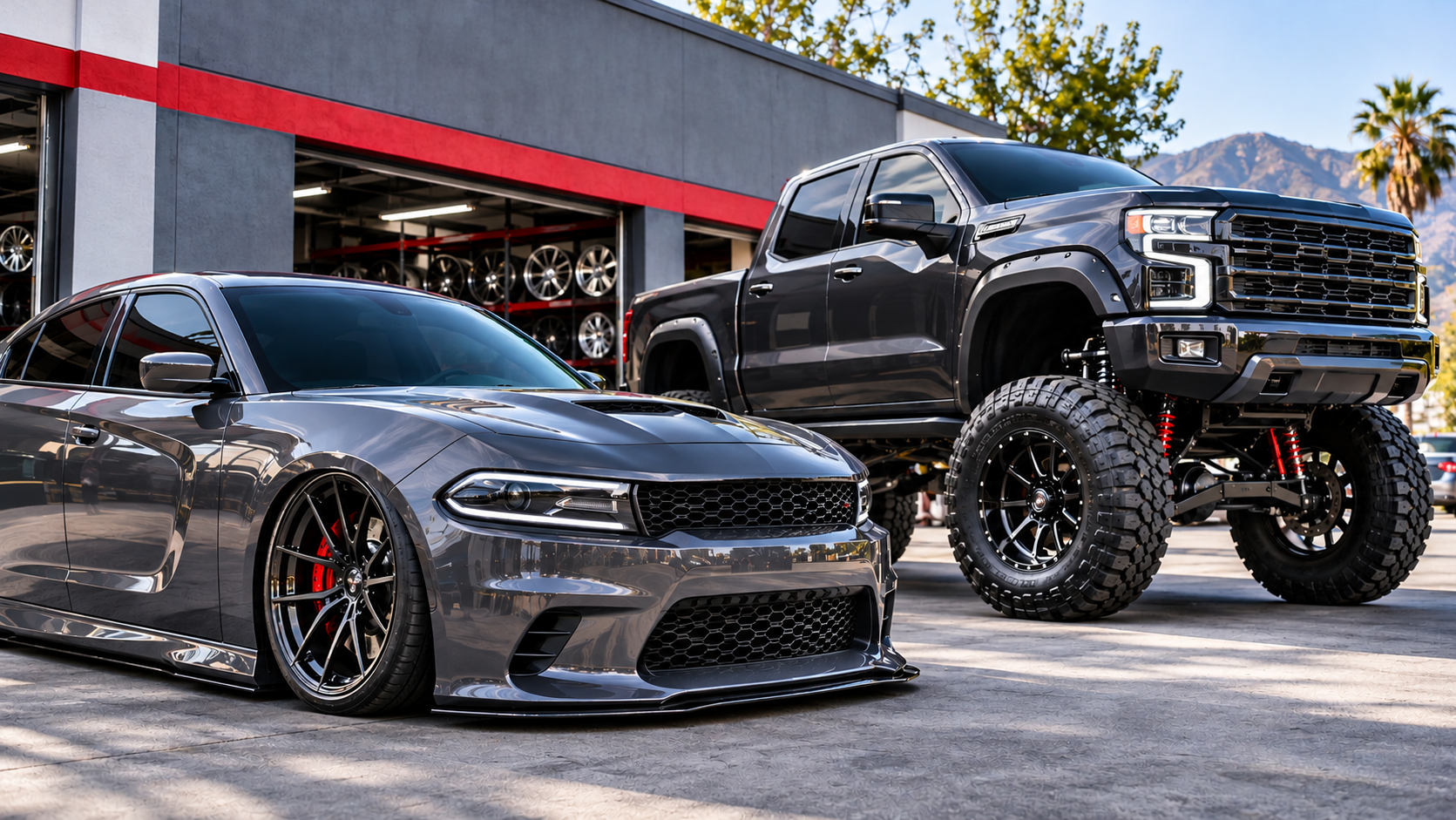
Wheel accessories have a surprisingly large influence on overall appearance. A carefully chosen wheel can lose some of its visual impact when paired with mismatched, corroded, faded, or missing hardware. Conversely, coordinated center caps, lug nuts, and valve caps can make even a relatively simple wheel design look much more intentional.
For black wheels, owners may choose black lug hardware and caps for a monochromatic appearance or polished hardware for contrast. Chrome wheels can be paired with polished or chrome-look components. Powder-coated wheels offer even greater possibilities because accessory choices can either blend into the finish or create a deliberate accent.
Maintenance should influence the decision as well. Wheel accessories are exposed to water, brake dust, cleaning chemicals, temperature changes, and road contaminants. Materials and finishes that look excellent when new may require additional maintenance to retain their appearance.
This becomes especially relevant when combining accessories with powder coating wheels, chrome finishes, or custom-colored calipers. Instead of choosing each item independently, think of the wheel, tire, hardware, and visible brake components as one overall package.
Frequently Asked Questions About Wheel Accessories
Wheel accessories range from simple cosmetic upgrades to important fitment and security components, so it is normal to have questions about what is necessary and what is optional. Here are several common questions customers ask when completing or upgrading a wheel package.
Do I really need valve caps on my tires?
Yes, it is a good idea to keep valve caps installed. They help protect the valve from dirt, moisture, and contamination, and quality caps can provide a secondary sealing function. A missing cap does not automatically mean that a tire will immediately lose air, but replacing it is inexpensive and helps protect the valve assembly.
If a valve cap repeatedly goes missing or you notice pressure loss, inspect the valve rather than assuming that installing another cap will solve the underlying problem.
Can I put any center cap on an aftermarket wheel?
No. Center caps need to match the wheel’s dimensions and attachment system. Diameter alone may not be sufficient because cap depth, retaining clips, mounting tabs, and other features can vary.
If you do not know which cap you need, identifying the wheel manufacturer and model is usually a good starting point. Measurements and part numbers can also help locate the correct replacement.
Do aftermarket wheels require different lug nuts?
Sometimes. Aftermarket wheels may use a different lug-seat design or have narrower lug openings than the original wheels. Thread specifications must also match the vehicle’s studs.
Never select lug nuts only by color or appearance. The correct seat, thread, dimensions, and engagement are essential to proper wheel installation.
Are wheel spacers safe?
Wheel spacers need to be evaluated according to the vehicle, wheel, spacer design, dimensions, and intended use. They should not be treated as universal accessories or an automatic fix for incorrect wheel fitment.
If you are considering spacers for clearance or appearance, particularly on a truck, towing vehicle, or modified suspension setup, have the complete wheel and tire combination evaluated professionally first.
The Wheel Shop Difference
The right accessories can transform a wheel package, but getting the details right requires more than choosing what looks best online. At The Wheel Shop, we have more than twenty years of industry experience helping customers select, install, maintain, repair, and customize wheels and tires. From small finishing details to complete wheel packages, we can help you determine what makes sense for your vehicle and your goals.
Our certified mechanics bring years of experience, specialized training, and industry expertise to every repair and installation. Whether you need replacement center caps, new wheels and tires, custom truck accessories, wheel repair, powder coating, alignment service, or help determining whether a particular wheel setup is right for your vehicle, professional guidance can help you avoid fitment problems and get the finished result you want.
Contact The Wheel Shop at (951) 588-1222 or email us to discuss your wheels, tires, or accessories. From the valve caps at the edge of the wheel to the center caps that complete the design, every detail contributes to a wheel package that looks finished, fits correctly, and complements your vehicle.