Upgrading your wheels can dramatically change the appearance of a car, truck, or SUV, but wheel selection is about much more than choosing a diameter and design that look good. Every wheel must work within a specific set of dimensions established by the vehicle’s hub, brakes, steering, suspension, and wheel wells. When those dimensions do not work together, an attractive upgrade can create mechanical problems that are expensive to correct.
Incorrect wheel fitment can place a wheel too close to a brake caliper, move the tire farther outward or inward than intended, alter steering geometry, or cause contact with suspension components. Some problems appear immediately as rubbing or vibration. Others develop gradually as accelerated tire wear, stressed wheel bearings, steering changes, or premature suspension wear.
Understanding what proper fitment involves can help vehicle owners make better decisions when shopping for aftermarket wheels, tires, or suspension upgrades. It also explains why professional measurement and installation matter, particularly when a vehicle has modified brakes, suspension, or ride height.
Wheel Fitment Is More Than Diameter and Bolt Pattern
It is easy to assume that a wheel fits if its diameter and bolt pattern match the vehicle. In reality, those are only two pieces of the equation. Proper fitment requires consideration of wheel width, offset, backspacing, center bore, load capacity, lug hardware, tire dimensions, brake clearance, and available suspension clearance.
Wheel offset is particularly important. Offset measures the relationship between the wheel’s mounting surface and its centerline. Changing that measurement changes where the entire wheel and tire assembly sits relative to the vehicle. Incorrect offset can adversely affect handling and that changes in wheel width often require corresponding offset changes to maintain adequate clearance.
Proper fitment must therefore be evaluated as a complete system. Two wheels may share the same diameter and bolt pattern yet fit a vehicle very differently because their widths, offsets, center bores, or spoke profiles differ. This becomes especially important with performance vehicles, trucks, lowered cars, lifted vehicles, and models equipped with larger brake packages.
How Improper Fitment Can Interfere With Your Brakes
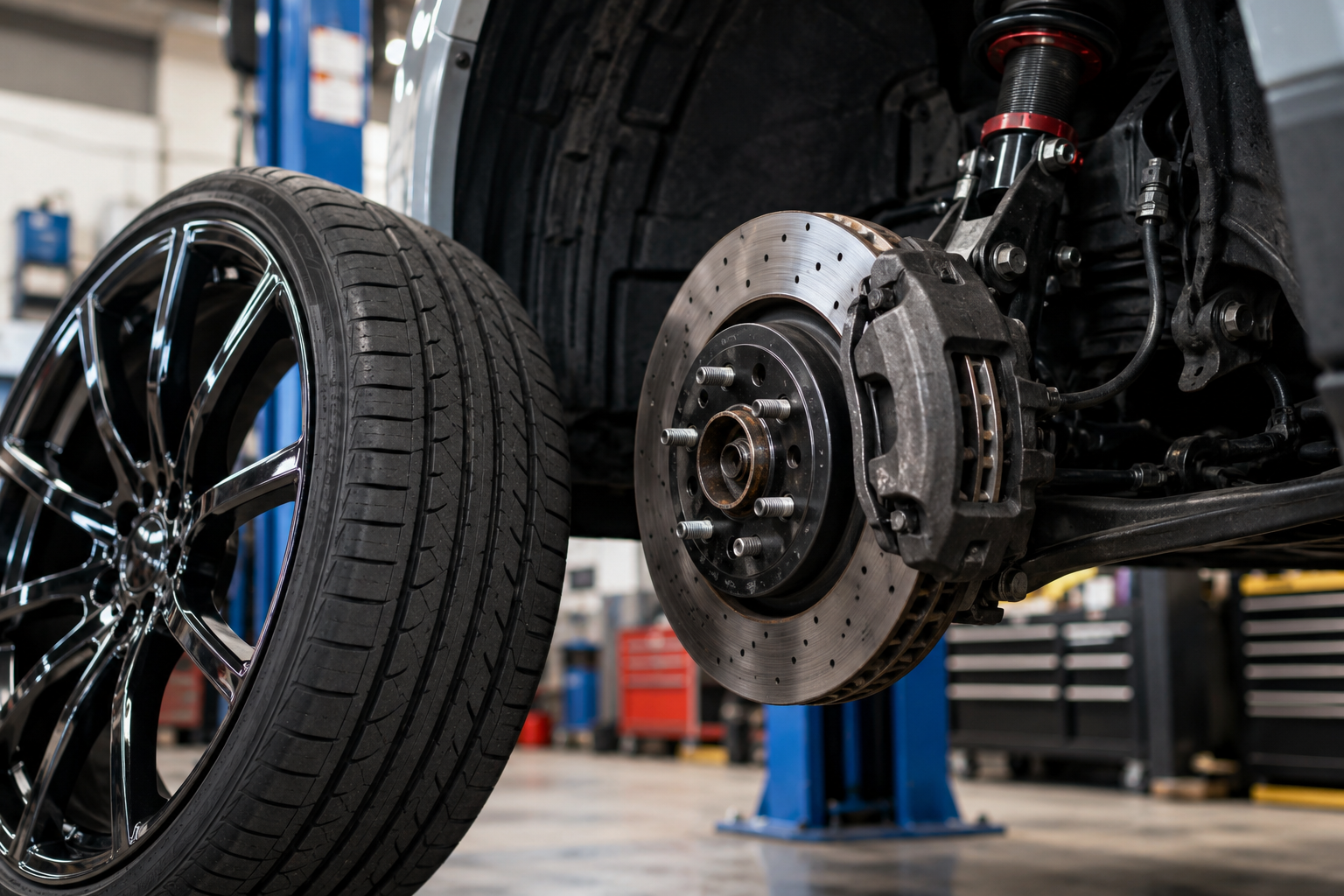
Brake clearance is one of the most important and sometimes overlooked elements of aftermarket wheel fitment. A wheel must provide sufficient space not only around the brake rotor but also around the brake caliper. The shape of the wheel barrel and spokes can determine whether that clearance exists.
This is why diameter alone cannot confirm that a wheel will clear the brakes. Larger brake rotors and calipers require sufficient space within the wheel, but simply increasing wheel diameter does not guarantee clearance. The wheel’s internal profile and spoke design must also accommodate the brake components.
If clearance is insufficient, the inside of the wheel or spokes may contact the caliper. Even minor contact is a serious problem. The wheel and brake assembly experience movement, heat, vibration, and loading during normal operation. A setup that appears to have barely enough clearance while the vehicle is stationary may not provide an appropriate margin under actual driving conditions.
Fitment can become even more complicated when aftermarket calipers or larger brake systems have been installed. A wheel that fit perfectly over the factory brakes may no longer be suitable after a brake upgrade. Brake modifications should therefore be considered whenever new wheels and tires are selected.
Incorrect Offset Can Change Suspension and Steering Geometry
Wheel offset determines more than how flush the wheels appear against the fenders. It influences the relationship between the tire contact patch, steering axis, wheel bearing, and suspension components. Moving a wheel significantly inward or outward can change forces within that system.
A wheel with excessive positive offset may sit too far inward, reducing clearance around struts, control arms, tie rods, or other suspension parts. Too little positive offset or an aggressive negative offset can push the wheel outward. Although an outward stance may be desirable visually, moving the tire farther from its intended position can alter steering feel and increase leverage on certain components.
This does not mean every departure from the factory offset will damage a vehicle. Many properly engineered aftermarket applications use different widths and offsets successfully. The key is understanding how those dimensions interact rather than selecting an aggressive setup solely because it physically bolts onto the hub.
When customers are shopping for aftermarket rims or wheels, professional fitment allows the desired appearance to be balanced against mechanical clearance and appropriate vehicle geometry. That is especially valuable when wheel changes are being combined with suspension modifications.
Fitment Problems Can Increase Stress on Wheel Bearings and Suspension Parts
A wheel and tire assembly creates forces that must be managed by the hub, wheel bearing, steering system, and suspension. Changing where that assembly sits can change the leverage those forces exert on surrounding components.
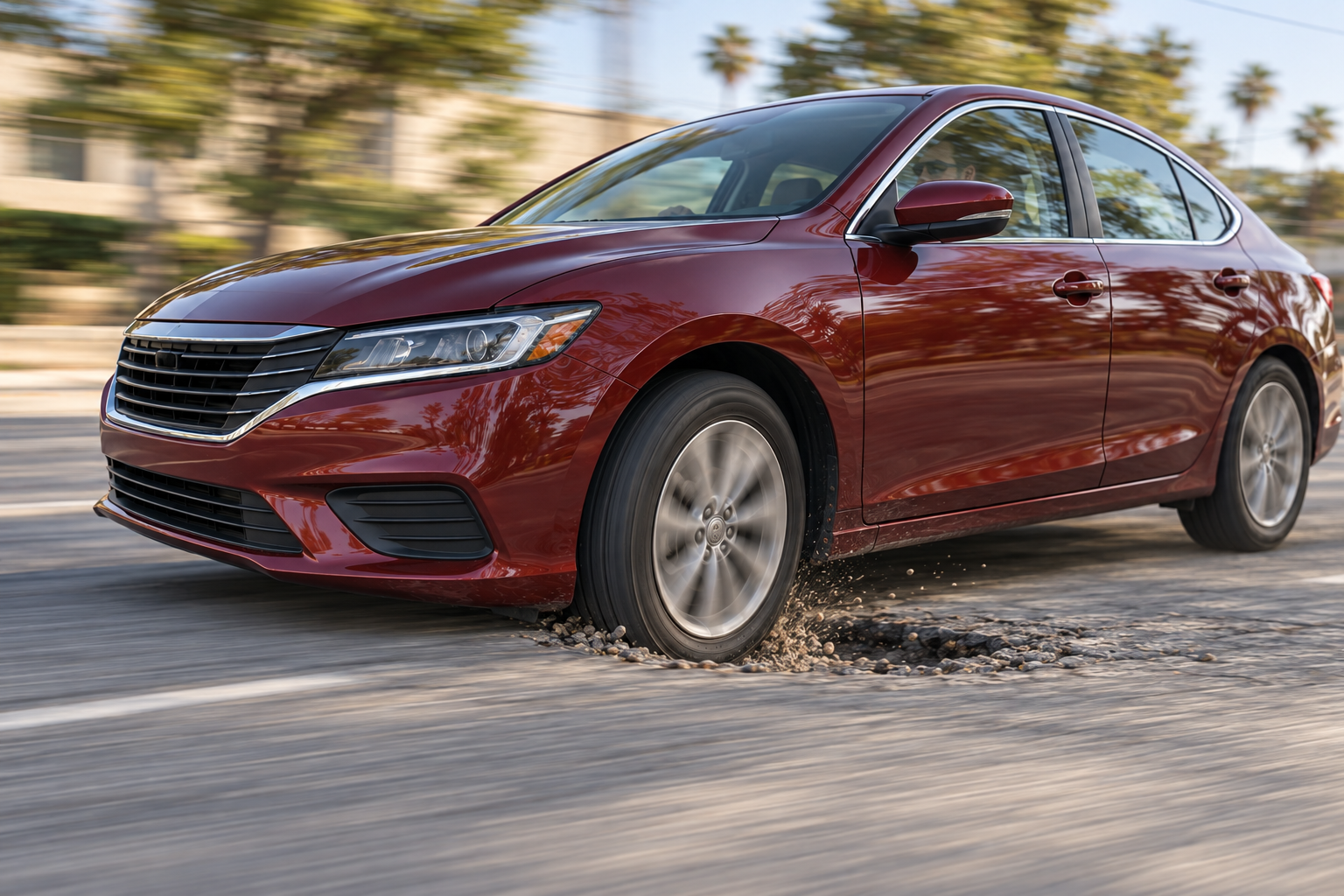
An aggressive offset that moves the wheel substantially outward can increase the moment acting through the hub and bearing assembly. Over time, excessive or inappropriate changes may contribute to accelerated wear, especially when combined with heavy wheels, oversized tires, rough roads, or demanding driving conditions. Steering and suspension components can also experience loads differently than they would with the intended geometry.
The risk becomes more significant when several modifications are combined without considering how they interact. For example, a truck might receive larger wheels, heavier tires, spacers, and suspension changes simultaneously. Each individual modification may appear reasonable, but the complete package needs to be evaluated together.
This is one reason suspension work and wheel fitment should not be treated as completely separate decisions. Wheels, tires, brakes, steering, and suspension operate together every time the vehicle accelerates, turns, encounters a bump, or stops.
Rubbing Is a Warning, Not Just an Annoyance
One of the clearest symptoms of incorrect fitment is rubbing. A tire may contact the fender liner, suspension, bodywork, or another component when steering, traveling over bumps, carrying passengers, or operating under load.
Rubbing that occurs only during a full steering lock can seem minor, but it indicates that clearance is already limited. Suspension movement can reduce that clearance further. Tire sidewalls should not repeatedly contact hard components, and wheel contact with suspension or brake components should never be considered acceptable.
Wheel width, offset, tire width, tire sidewall profile, and vehicle ride height all influence clearance. A vehicle may therefore have the correct wheel diameter while still experiencing interference because the complete tire and wheel package is too wide or positioned incorrectly.
Visible rubbing marks should be inspected rather than ignored. A professional can determine whether the problem originates from the tire dimensions, wheel specifications, suspension configuration, alignment, or a combination of factors.
Tire Size Can Create Problems Even When the Wheel Fits
Correct wheel specifications are only part of proper fitment. The tire must also be appropriate for both the wheel and vehicle. A tire that is too wide, too tall, or otherwise outside an appropriate range can create clearance and performance problems even when the wheel itself fits correctly.
The National Highway Traffic Safety Administration tire safety guidance recommends using the same tire size as the vehicle’s original tires or another size recommended by the vehicle manufacturer. NHTSA also advises checking the owner’s manual or Tire and Loading Information Label for the appropriate specifications.
Changing overall tire diameter can also affect more than physical clearance. Modern vehicles rely on wheel-speed information for systems such as anti-lock braking, traction control, and electronic stability control. Significant changes in tire dimensions can affect how a vehicle behaves and how some electronic systems interpret wheel movement.
Drivers looking for a different wheel diameter or stance do not necessarily have to remain with the exact factory wheel dimensions. Properly designed plus-size and alternative fitments can work well. The goal is to maintain appropriate overall dimensions, load capacity, clearance, and vehicle compatibility rather than making changes based on appearance alone.
Alignment and Fitment Need to Work Together
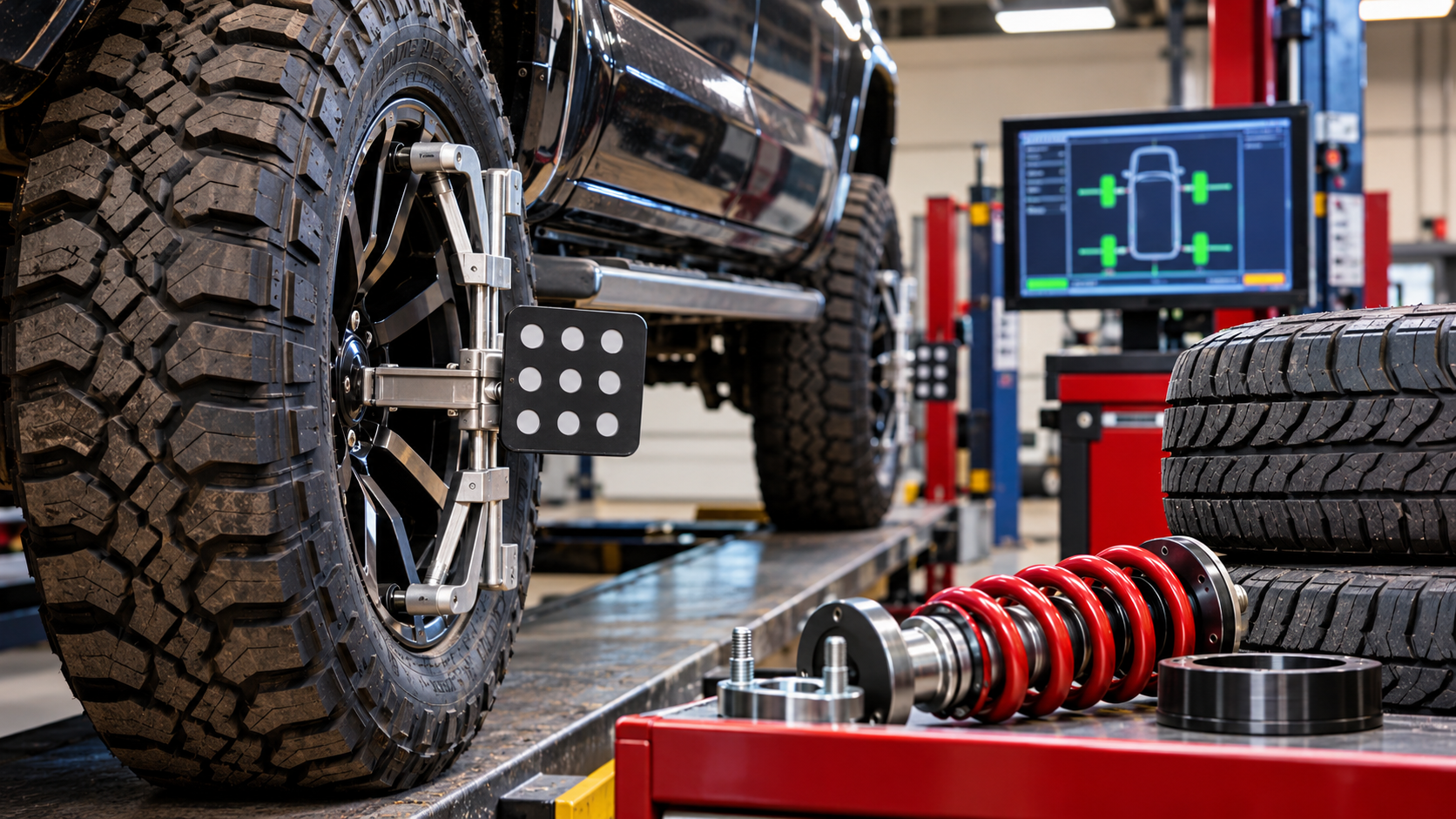
A good wheel alignment establishes appropriate wheel angles so the tires interact with the road as intended. However, alignment cannot compensate for a fundamentally unsuitable wheel and tire combination.
If an incorrect wheel offset causes interference or substantially alters where the tire sits, simply adjusting alignment angles does not correct the underlying fitment problem. Likewise, installing wider wheels or modifying suspension height may change the alignment requirements of the vehicle. The entire setup should be evaluated together.
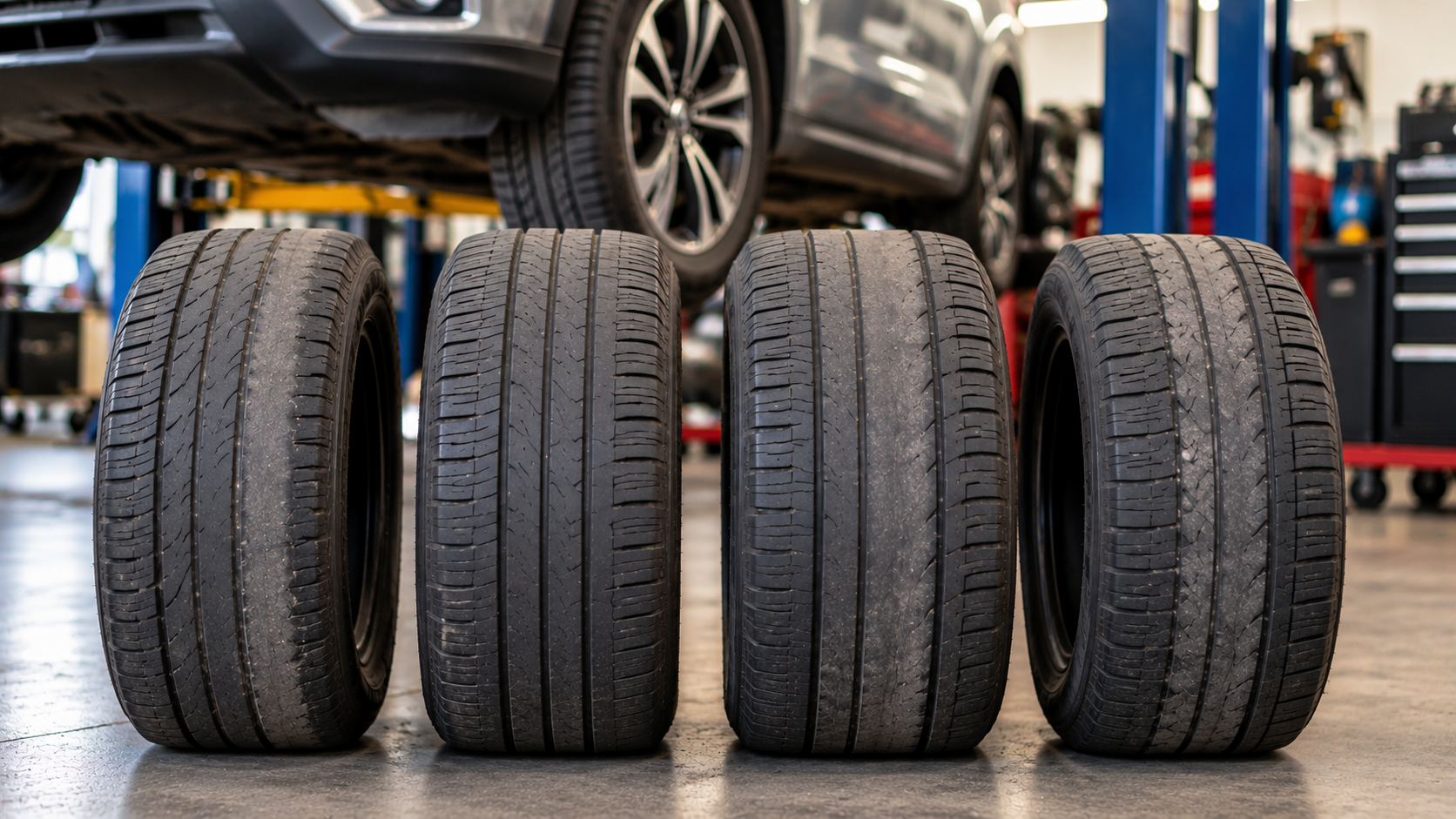
Signs that deserve attention after wheel, tire, or suspension changes include uneven tire wear, pulling, an off-center steering wheel, unusual steering effort, vibration, rubbing, or changes in handling. NHTSA notes that proper wheel alignment helps maximize tire life and prevents a vehicle from veering while traveling straight on a level road.
A professional car wheel alignment after significant wheel or suspension changes can verify that the vehicle is operating within appropriate specifications. More importantly, the technician can identify fitment problems that an alignment adjustment alone cannot solve.
Why Professional Wheel Fitment Matters
There is a major difference between a wheel that can be bolted onto a vehicle and a wheel that is correctly fitted to it. A proper evaluation considers the entire application, including bolt pattern, center bore, offset, wheel width, tire dimensions, brake profile, suspension clearance, load capacity, and appropriate lug hardware.
Professional fitment becomes particularly valuable when a vehicle has already been modified. Lift kits, lowering springs, coilovers, larger brake packages, suspension upgrades, or nonfactory body components can change available clearance. Specifications that work for a stock version of the same model may not automatically work for the modified vehicle.
At The Wheel Shop, we can evaluate wheels as part of the complete vehicle rather than treating them as isolated cosmetic components. That approach helps customers achieve the look they want while protecting the brakes, tires, steering, and suspension that must work behind those wheels.
Frequently Asked Questions
Wheel fitment can become confusing because small dimensional differences can have a noticeable effect on how a wheel sits and operates. The following questions address several common concerns customers have when considering new wheels, tires, or suspension changes.
Can the wrong wheel offset damage my suspension?
An inappropriate offset can change wheel position and the forces acting through the steering, hub, and suspension. Extreme fitments may also create physical interference with struts, control arms, tie rods, fenders, or other components. Not every offset change is harmful, but it should be selected according to the vehicle, wheel width, tire dimensions, and intended use.
If the bolt pattern matches, will the wheel fit?
Not necessarily. Matching the bolt pattern only confirms one fitment dimension. The wheel must also have appropriate width, diameter, offset, center bore, load capacity, brake clearance, suspension clearance, and lug hardware. A matching bolt pattern should never be treated as proof of complete compatibility.
How do I know if my wheels are rubbing my brakes or suspension?
Possible signs include scraping or grinding sounds, marks on the inner wheel barrel, unusual steering noises, visible tire rubbing, or damage near the caliper or suspension. Some interference occurs only while turning or when the suspension is compressed, so a professional inspection may be needed to identify the contact point.
Should I get an alignment after installing aftermarket wheels?
Not every wheel replacement automatically requires an alignment, but it is wise to check alignment when the vehicle shows uneven tire wear, pulling, steering changes, or when wheel installation accompanies suspension or ride-height changes. An alignment inspection can also help identify other steering or suspension issues before they create unnecessary tire wear.
The Wheel Shop Difference
Choosing the right aftermarket wheels is about more than finding a design that transforms the appearance of your vehicle. Fitment needs to support the way the vehicle was engineered to steer, stop, carry its weight, and move through its suspension travel. At The Wheel Shop, we bring more than twenty years of industry experience to helping customers make those decisions.
Located in Riverside, California, we specialize in Powdercoating, Tires, Wheel Repair, Alignments, Aftermarket and OEM Wheels, Truck and Car Accessories, Suspension, Calipers, and Chrome Plating. That range of services gives us a broader understanding of how wheels, brakes, tires, alignment, and suspension need to function together.
Our certified mechanics bring years of experience, specialized training, and industry certifications to repairs and installations. Whether you are replacing factory wheels, changing tire sizes, upgrading your suspension, or creating a completely new look, we can help you choose a combination that accounts for clearance, performance, and proper fitment rather than appearance alone.
If you are considering new wheels or are concerned that your current setup may be causing rubbing, unusual tire wear, brake-clearance problems, or suspension issues, contact us at (951) 588-1222 or email us to schedule an evaluation. The right wheel should do more than look right on your vehicle. It should fit right, too.