The Hidden Cost of Your Driving Habits
How you drive has a bigger impact on your tires than you might think. From aggressive acceleration to hard braking and sharp turns, your daily driving habits play a major role in how quickly your tires wear down. Everything from tire lifespan and performance to overall vehicle safety—and even your fuel economy—is directly tied to how you handle the road. By understanding the connection between driving style and tire health, you can make smarter decisions that extend tire life and save money in the long run.
Here’s what you need to know about how driving habits affect your tires:
| Driving Habit | Impact on Tires | Lifespan Reduction |
|---|---|---|
| Aggressive acceleration | Causes rubber shedding and rapid tread wear | Up to 25% |
| Hard braking | Creates flat spots and uneven wear | Up to 20% |
| Sharp cornering | Wears down tire edges prematurely | Up to 15% |
| High speeds | Increases heat buildup and rubber deterioration | Up to 25% |
| Proper inflation | Ensures even wear and optimal performance | Extends life by 20% |
Tires are the unsung heroes of the automotive world. They bear the weight of your vehicle, ensure traction in various conditions, and provide the smooth ride you expect. Yet many drivers overlook how their behind-the-wheel behavior affects these crucial components.
Think about the last time you accelerated quickly from a stoplight or braked hard approaching an intersection. Each of these actions deposits a small amount of your tire’s rubber on the road – rubber that won’t be there when you need it most.
Aggressive driving habits can reduce tire lifespan by up to 25% and increase replacement costs by approximately 30% over your vehicle’s lifetime. For the average driver, that translates to replacing tires at least one extra time during your ownership period.
The good news? Simple adjustments to how you drive can dramatically extend your tire life while improving safety and fuel economy. Whether you’re a daily commuter or weekend warrior, understanding the relationship between your driving style and tire wear is the first step toward smarter vehicle ownership.
How Your Driving Style Impacts Your Tires: Aggressive vs. Smooth Driving
Ever notice those dark skid marks on the road after someone peels out from a stoplight? That’s not just rubber meeting the road—it’s your tire’s lifespan literally being left on the pavement.
When it comes to your tires, the difference between aggressive and smooth driving isn’t just noticeable—it’s measurable in thousands of miles of tire life. Think of your driving style as either an investment in your tires or a withdrawal from their longevity bank account.
Aggressive driving habits are the true villains in the tire wear story. Those satisfying quick starts, screeching stops, and fast cornering might make you feel like a race car driver, but they’re secretly draining your wallet with every mile. These behaviors create excessive heat and friction that break down rubber compounds much faster than normal driving.
Here at The Wheel Shop in Riverside, we’ve seen countless tires roll into our shop worn down well before their time. One customer’s set of premium tires lasted just 15,000 miles instead of their rated 60,000—all because of a heavy right foot and a fondness for quick cornering. That’s a 25% lifespan loss that translated to hundreds of dollars wasted.
Beyond the financial impact, there’s something far more important at stake—your safety. Tires worn unevenly or excessively are significantly more prone to blowouts, especially at highway speeds when you need reliability most.
Speed itself is another silent tire killer. While your tires might have a speed rating of 130+ mph, sustained high-speed driving generates excessive heat that accelerates rubber breakdown. Even staying at 80 mph for extended periods can reduce your tire’s overall lifespan, regardless of what the speed rating suggests.
How Your Driving Style Impacts Your Tires During Acceleration
The moment you press that gas pedal, you’re making a choice about your tire’s future. Hard acceleration forces your tires to spin rapidly against the road surface, creating friction that literally burns away the tread.
During wheel spin, tiny rubber particles shed onto the road—that’s what creates those black marks after an aggressive start. This isn’t just cosmetic damage; it’s measurable loss of your tire’s useful material that can never be recovered.
Flat-spotting is another acceleration-related issue we frequently diagnose at The Wheel Shop. This occurs when portions of the tire wear unevenly due to repeated aggressive starts. The result? Annoying vibrations you’ll feel through the steering wheel that often lead to premature tire replacement.
The fuel penalty is worth mentioning too. Our experience shows that gentle, progressive acceleration not only preserves tire life but can improve fuel economy by 5-10% compared to aggressive driving habits. That’s a double saving you can take to the bank.
How Your Driving Style Impacts Your Tires When Cornering & Braking
Taking that corner like you’re qualifying for a race? Your tires are paying the price. When cornering aggressively, the outer edge of your tires bears tremendous lateral forces, leading to accelerated edge wear. Front-wheel-drive vehicles suffer particularly badly here, as their front tires already handle both steering and propulsion duties.
The shoulders of your tires—those rounded edges where tread meets sidewall—are especially vulnerable during aggressive cornering. Overheating in these areas can lead to premature breakdown of the rubber compound. In extreme cases, we’ve even seen delamination, where layers of the tire begin to separate—a dangerous condition that often requires complete tire replacement.
Hard braking presents its own challenges to tire longevity. Those last-minute stops engage your vehicle’s Anti-lock Braking System (ABS), which rapidly pulses the brakes to prevent skidding. While this technology is a lifesaver in emergency situations, making it your regular braking style creates flat spots—areas where the tire has been dragged against the pavement rather than rolling smoothly.
These flat spots manifest as vibrations at specific speeds, a problem we diagnose weekly at The Wheel Shop. Even more concerning, they can become permanent if the braking is severe enough or if the tires are allowed to cool in the flattened position (such as parking after a hard stop).
By adopting a smoother driving style—with gentle acceleration, gradual braking, and moderate cornering—you’re not just being kinder to your tires. You’re making a smart investment in safety, comfort, and your financial future. Your tires will thank you with thousands of extra miles of reliable service.
Inflation, Load & Maintenance—The Foundation of Tire Longevity
You might be the most gentle driver on the road, but without proper maintenance, your tires will still wear out before their time. Think of maintenance as the foundation your tire’s lifespan is built upon—skimp on it, and everything else crumbles.
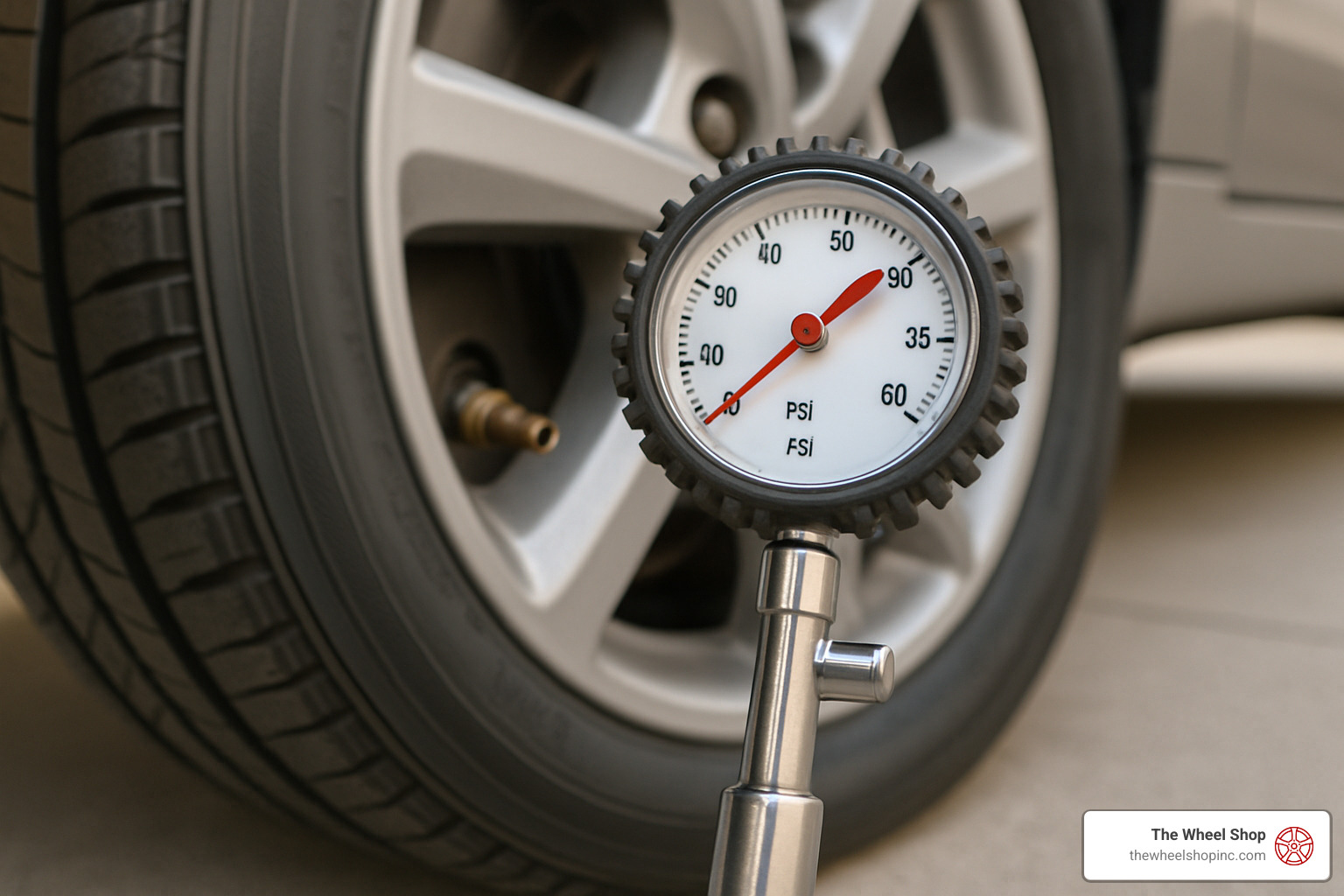
Proper tire inflation might seem like a small detail, but it’s actually the cornerstone of tire health. Yet it’s amazing how many of us overlook it! Industry data shows about 85% of drivers don’t check their tire pressure regularly, leading to billions in wasted fuel and unnecessary replacements. That’s a lot of money left on the table (or rather, on the road).
Your driving style becomes even more significant when paired with improper inflation. Think of underinflated tires as being like shoes that are too loose—they flex too much, heat up, and wear out at the edges. Overinflated tires are like walking on tiptoes—less contact with the ground, more wear in the middle, and less grip when you need it most.
Here at The Wheel Shop, we’ve seen countless tires ruined by simple neglect. We always tell our customers: check your pressure twice monthly, preferably when the tires are cold. And remember, the correct pressure isn’t found on the tire itself—look for it on your vehicle’s door jamb sticker or in your owner’s manual.
Don’t forget about rotation every 5,000 to 10,000 miles! Your tires wear differently depending on their position on your vehicle. Regular rotation ensures they wear evenly, extending the life of the entire set.
Proper vs. Improper Inflation
A few PSI might not seem like much, but the difference between properly inflated tires and slightly off ones is night and day. Underinflated tires create more rolling resistance—imagine trying to pedal a bike with soft tires. The U.S. Department of Energy notes this can reduce your fuel economy by up to 3%. That adds up over time!
While modern vehicles include Tire Pressure Monitoring Systems (TPMS), they’re not perfect. Most only alert you when pressure drops significantly below recommended levels—often after damage has already begun. A quality pressure gauge costs less than lunch and can save you hundreds in the long run.
When tires are underinflated, the sidewalls flex excessively with each rotation. This generates heat that breaks down the rubber from the inside out. We can spot these tires instantly at The Wheel Shop—they develop a distinctive wear pattern with the shoulders (outer edges) wearing faster than the center, creating a concave appearance.
Overinflation creates the opposite problem—a bulge in the center of the contact patch causes accelerated wear down the middle of the tread. With less tire actually touching the road, your traction suffers, especially in rain or snow when you need it most.
For more detailed guidance on maintaining the right pressure, check out this recommended tire pressure guide.
Overloading: Silent Tire Killer
Even with perfect inflation and the gentlest driving habits, overloading your vehicle puts your tires at serious risk. Every vehicle has a Gross Vehicle Weight Rating (GVWR) that should be respected like a speed limit—it’s there for your safety.
Overloading causes excessive sidewall flex and internal heat buildup. It’s like asking someone to carry twice their capacity—eventually, something gives. This risk skyrockets when you’re towing trailers or carrying heavy roof-mounted cargo during summer road trips.
Take a moment to check the load index number on your tire’s sidewall—it tells you exactly how much weight each tire can safely carry. When it’s time for replacements, we make sure every tire we install at The Wheel Shop meets or exceeds your vehicle’s original specifications for load capacity.
Rotation, Alignment & Inspection Schedule
If you want to get the most mileage from your tires, regular rotation is non-negotiable. Most manufacturers recommend rotation every 5,000 to 10,000 miles, though your specific vehicle might have different needs.
Front-wheel-drive vehicles put extra stress on the front tires, which handle both steering and propulsion duties. Moving them to the rear periodically helps distribute wear more evenly. For AWD and 4WD vehicles, we typically recommend a cross-pattern rotation, where tires move diagonally as well as from front to rear.
Alignment is just as important but often overlooked until problems arise. Misaligned wheels are like walking with one shoe’s sole thicker than the other—they cause uneven and often rapid tire wear. Watch for warning signs: uneven tread wear, your vehicle pulling to one side, or a steering wheel that’s crooked when driving straight.
Our precision alignment services at The Wheel Shop ensure your vehicle tracks true, preventing premature tire wear and improving handling. Learn more about Why Proper Wheel Alignment is Crucial for both tire longevity and overall vehicle performance.
Don’t forget regular tread depth checks! While the legal minimum in most states is 2/32″, we recommend replacement at 4/32″ for wet conditions and 5/32″ for snow driving. A simple depth gauge takes the guesswork out of this important safety check. For more guidance on when it’s time for new tires, see How Often Should You Replace the Tires on Your Car?
Detecting Wear Early & Taking Action
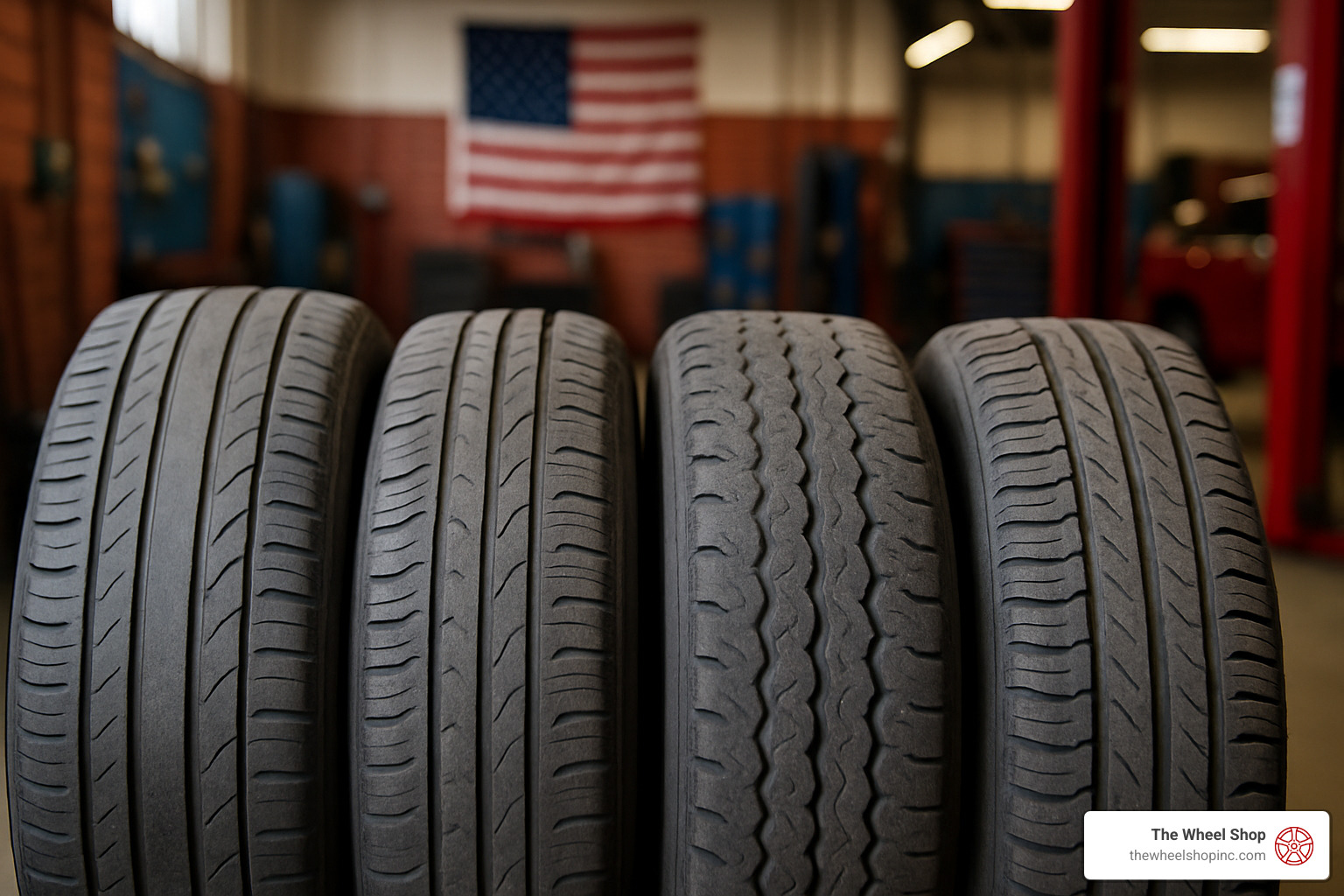
Your tires constantly talk to you—you just need to know how to listen. The story of your driving habits, vehicle condition, and maintenance routine is written clearly in the wear patterns that develop over time.
The impacts of your driving style on your tires becomes visible long before you might realize there’s a problem. Learning to spot these early warning signs can save you hundreds in premature replacements and, more importantly, keep you safer on the road.
Think of tire wear patterns as your vehicle’s way of sending you messages. That unusual wear along just one edge? It’s telling you about an alignment issue. The smooth strip running down the center? A clear sign you’ve been overinflating. These aren’t just cosmetic concerns—they’re early warnings of problems that will only get worse with time.
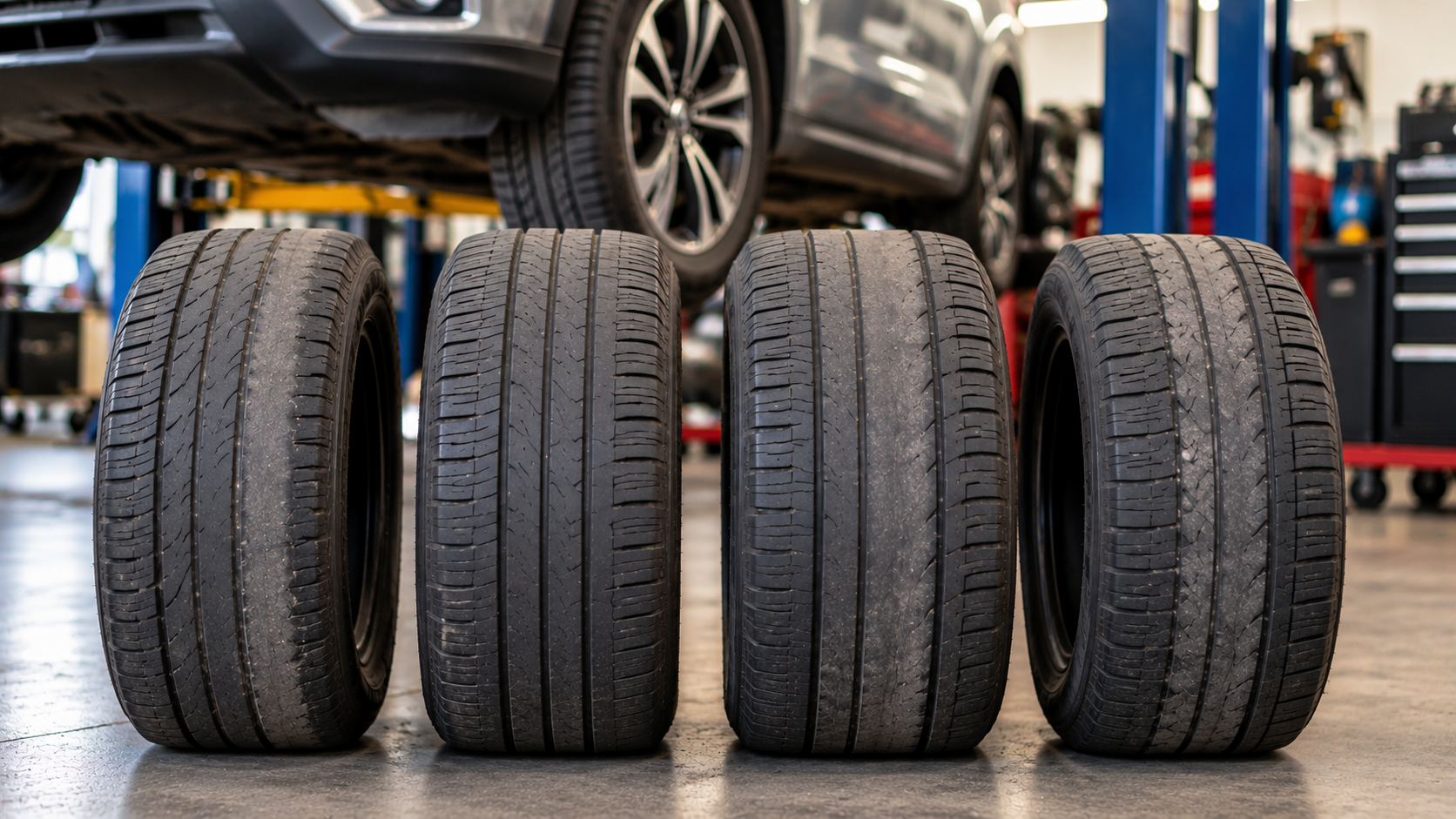
The most common wear patterns tell specific stories. Center wear down the middle of your tread typically points to overinflation, while edge wear along both outer edges usually means you’re driving with too little air pressure. When you notice one-sided wear affecting just a single edge of the tire, your vehicle is likely dealing with alignment problems. Those odd cupping or scalloping patterns—dips that appear around the tread—often indicate worn suspension components allowing the tire to bounce rather than maintain consistent road contact. And feathering, where tread blocks feel smooth one way and sharp the other, is your vehicle’s way of saying the alignment is off.
Most states consider 2/32″ the legal minimum tread depth, easily checked with the classic penny test. Insert a penny with Lincoln’s head pointing down into your tread groove—if you can see the top of his head, it’s replacement time. But here’s the thing: waiting until you reach this legal minimum isn’t ideal. At The Wheel Shop, we’ve seen how tire performance in wet conditions begins to deteriorate much earlier. That’s why we recommend replacement at 4/32″ for daily drivers in rainy areas and 5/32″ for those who frequently encounter snow.
For a deeper dive into how tread depth affects your safety, check out our detailed article on The Link Between Tread Depth and Stopping Distance.
Common Wear Patterns & What They Mean
Your tires are like a diagnostic tool that’s working 24/7. Each distinctive wear pattern points to specific issues that might otherwise go unnoticed until they become expensive problems.
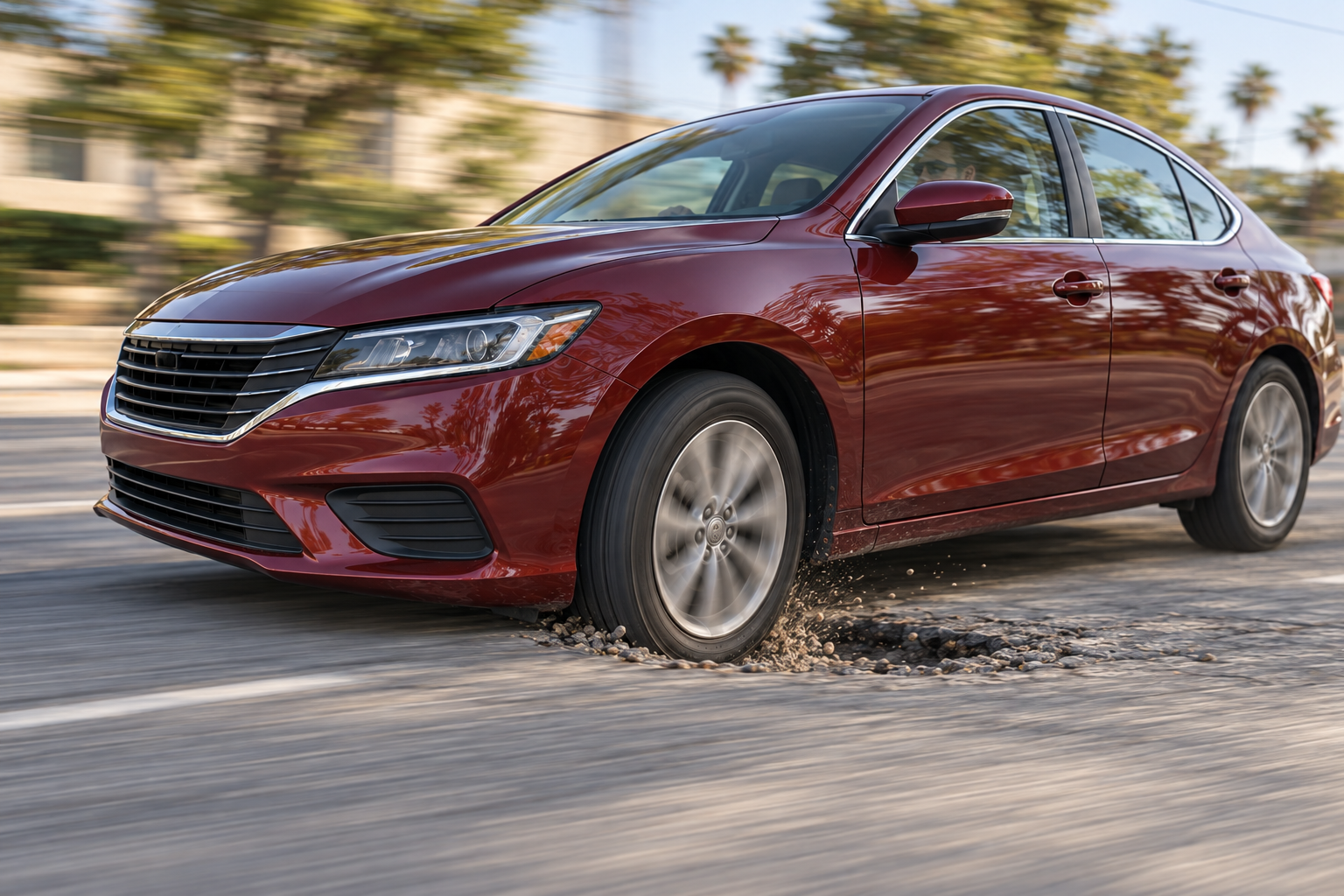
When we see camber wear at The Wheel Shop—excessive wear on either the inside or outside edge—we immediately check your suspension components and alignment. Positive camber (where the top of the tire tilts outward) creates outer edge wear, while negative camber (top tilting inward) wears down the inner edge. This pattern often appears after hitting a significant pothole or curb that knocked your alignment out of whack.
Toe wear creates that distinctive feathered appearance across the tread—smooth in one direction, sharp in the other. This happens when your tires are pointing slightly pigeon-toed (toe-in) or duck-footed (toe-out) instead of straight ahead. We often see this after a minor collision or when steering components begin to wear.
Those random dips or scalloped patterns in your tread tell us to check your shock absorbers or struts. When these components wear out, they allow your tire to bounce against the road rather than maintaining consistent contact, creating those characteristic cups or scallops in your tread.
The relationship between inflation and wear is straightforward but often overlooked. Center wear is the classic sign of overinflation—your tire bulges in the middle, concentrating wear along the centerline. Edge wear on both sides indicates underinflation, where too-soft tires flex excessively and wear along both edges.
At The Wheel Shop in Riverside, our technicians have developed an eye for these telltale patterns. We don’t just identify the wear—we track it back to its source, whether that’s alignment issues, suspension problems, or simply habits that need adjusting.
Smart Driving Habits & Real-World Cost Savings
Ever noticed how some drivers seem to replace their tires constantly while others make theirs last for years? The secret isn’t luck—it’s smart driving habits that save both rubber and money.
How your driving style impacts your tires goes straight to your wallet. Think about this: gentle driving might get you 45,000 miles from a set of tires, while aggressive habits could force replacement at just 35,000 miles. Over your vehicle’s lifetime, that aggressive style translates to approximately 30% higher replacement costs—money literally burned on the asphalt.
The good news? Small changes make big differences. Smooth acceleration keeps rubber where it belongs—on your tires, not the road. Next time you’re at a stoplight, try easing into speed rather than punching it. Your tires (and fellow drivers) will thank you.
Gradual braking prevents those flat spots that cause annoying vibrations. Start slowing earlier by anticipating stops instead of slamming on the brakes at the last second. I’ve found this habit not only saves my tires but makes for a much more relaxing drive.
When taking corners, moderate your speed to reduce the intense lateral forces that wear down tire edges. Those squealing tires you hear? That’s the sound of your tread vanishing.
Many of us have felt that cringe-worthy scrape when parking too close to a curb. Being curb-aware protects vulnerable sidewalls from damage that can’t be repaired. A little extra caution during parking maneuvers saves both your tires and your wheels from expensive damage.
Trip planning might seem unrelated to tire wear, but combining errands reduces cold starts (when most engine wear occurs) and cuts down overall mileage. Less driving equals longer-lasting tires—simple math that adds up to significant savings.
Choosing the right tire for your specific needs is equally important. A highway touring tire might last longer but perform poorly if your weekend trips take you off-road. At The Wheel Shop, we help customers match their tire selection to their actual driving habits, not just what came on the vehicle originally.
Habits That Pay Off at the Pump and the Shop
The connection between driving style, tire wear, and fuel economy forms a triangle of potential savings. According to the U.S. Department of Energy, aggressive driving can slash fuel economy by 15-30% on highways and a whopping 10-40% in city traffic. Your right foot controls both your fuel gauge and your tire lifespan.
Low rolling resistance tires, when properly maintained, improve fuel economy by 1-3%. Pair these with conservative driving habits, and you’re looking at significant savings over time. I’ve had customers report back with noticeable improvements in their gas mileage after making these simple changes.
Many of our most satisfied customers keep a maintenance log tracking tire rotations, pressure checks, and alignment services. This isn’t just for the mechanically obsessed—it provides valuable insights into how your specific driving patterns affect your tires. At The Wheel Shop, we help customers analyze their wear patterns and develop personalized maintenance schedules based on their unique driving habits.
The Wheel Shop Difference
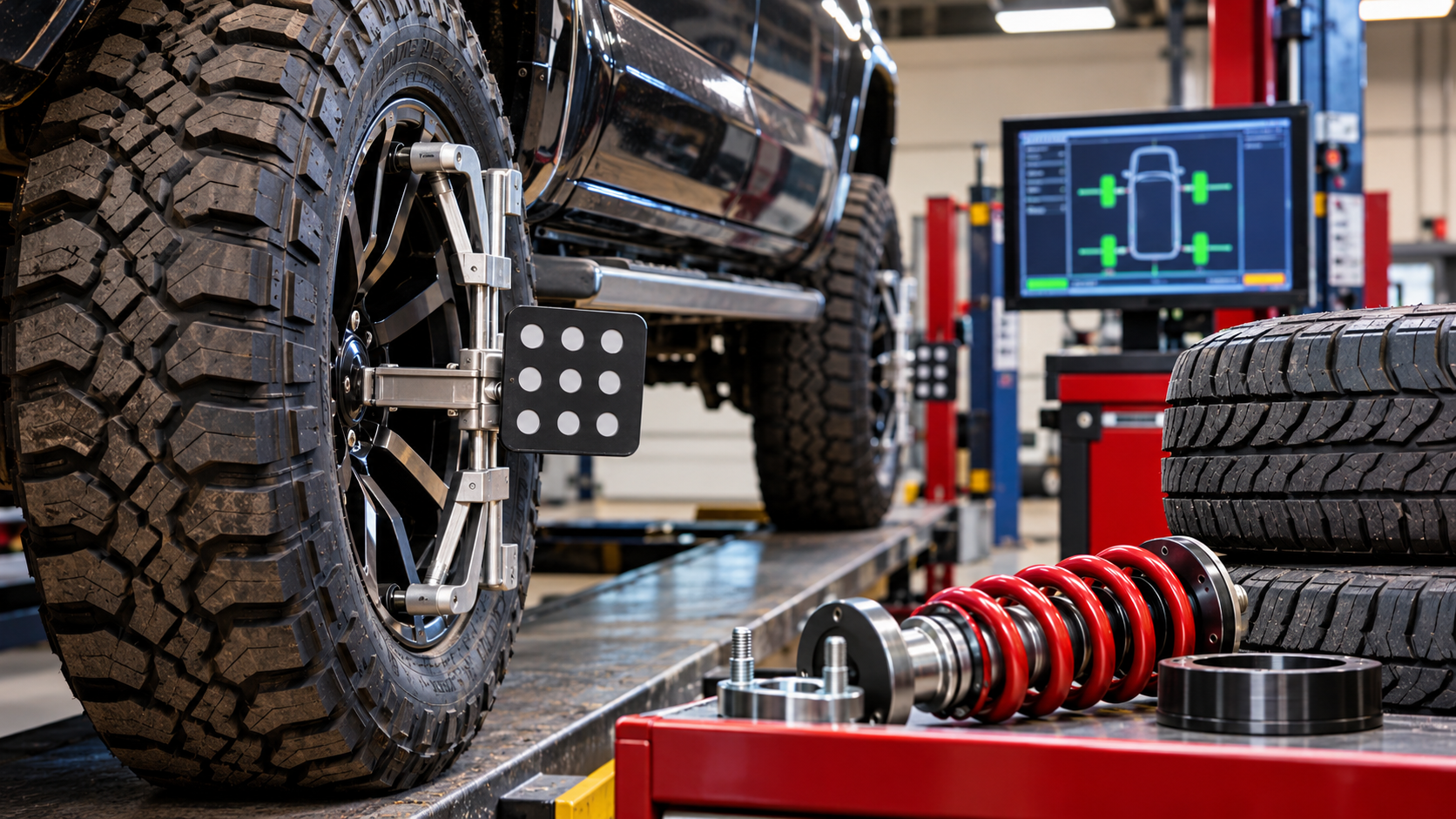
At The Wheel Shop in Riverside, CA, we’ve spent over twenty years helping drivers maximize their tire investment. Our team has seen how small adjustments in driving habits can lead to major improvements in tire longevity. We specialize in wheel and tire services that keep you rolling safely, from precision alignments to custom suspension installations and specialty wheel repairs.
When you notice unusual wear patterns developing, don’t wait – they’re early warning signs that something needs attention. Catching these issues early can prevent costly repairs down the road and keep you safer behind the wheel.
The financial benefits of smart tire care are substantial. Better driving habits and proper maintenance save you money at both the gas pump and the tire shop. It’s a win-win that benefits your wallet and the environment.
Whether you’re dealing with unusual tire wear or just need routine maintenance, our experienced technicians at The Wheel Shop can diagnose issues and recommend the right solutions. We take pride in delivering exceptional customer service with every interaction.
For more information about our comprehensive wheel and tire services, visit More info about wheel & tire services or stop by our Riverside location to experience the difference that quality service makes.
Your tires are literally where the rubber meets the road – the only four points of contact between your vehicle and the pavement below. Taking care of them isn’t just about saving money; it’s about protecting yourself and everyone who shares the road with you. Drive smoothly, maintain properly, and your tires will thank you with miles of safe, comfortable driving.