Why Your Wheel Finish Choice Matters More Than You Think
Powder Coating vs. Paint: What Actually Lasts on Wheels – and Why is a question that matters if you want your wheels to stay beautiful and protected for years. Here’s the quick answer:
Quick Answer:
- Powder Coating lasts significantly longer—often decades with proper care—because it forms a thick, thermally-bonded polymer shell that resists chipping, scratching, and corrosion far better than paint.
- Spray Paint is cheaper upfront but typically lasts only a few years before fading, chipping, or peeling, especially under harsh road conditions like salt, UV exposure, and road debris.
- Why It Matters: Powder coating’s electrostatic application and heat-curing process creates a molecular bond to the metal that paint simply cannot match, resulting in a finish that’s 3-5 times more durable.
Your wheels take a beating every single day. Gravel kicked up at 70 mph. Corrosive road salt in winter. Brake dust baking onto the surface. Curbs that seem to jump out of nowhere. The finish you choose determines whether your wheels will look great for years or start flaking and rusting after the first season.
But numbers don’t tell the whole story.
What really matters is this—powder coating creates a protective barrier that’s thicker, harder, and more flexible than paint. It doesn’t just sit on top of your wheel. It bonds to the metal at a molecular level through heat, creating a finish that can flex without cracking and resist impacts that would chip paint in seconds.
Paint has its place. It’s cheaper. It offers unlimited custom color mixing. For show cars that rarely see the road, it might be fine. But for daily drivers, winter wheels, and anything that faces real-world conditions, powder coating is the finish that actually lasts.
The Fundamental Differences: How Each Coating is Applied
To understand what lasts, we first need to know what each process involves. The application method is the primary reason for the vast differences in durability and finish between powder coating and paint.
What is Powder Coating?
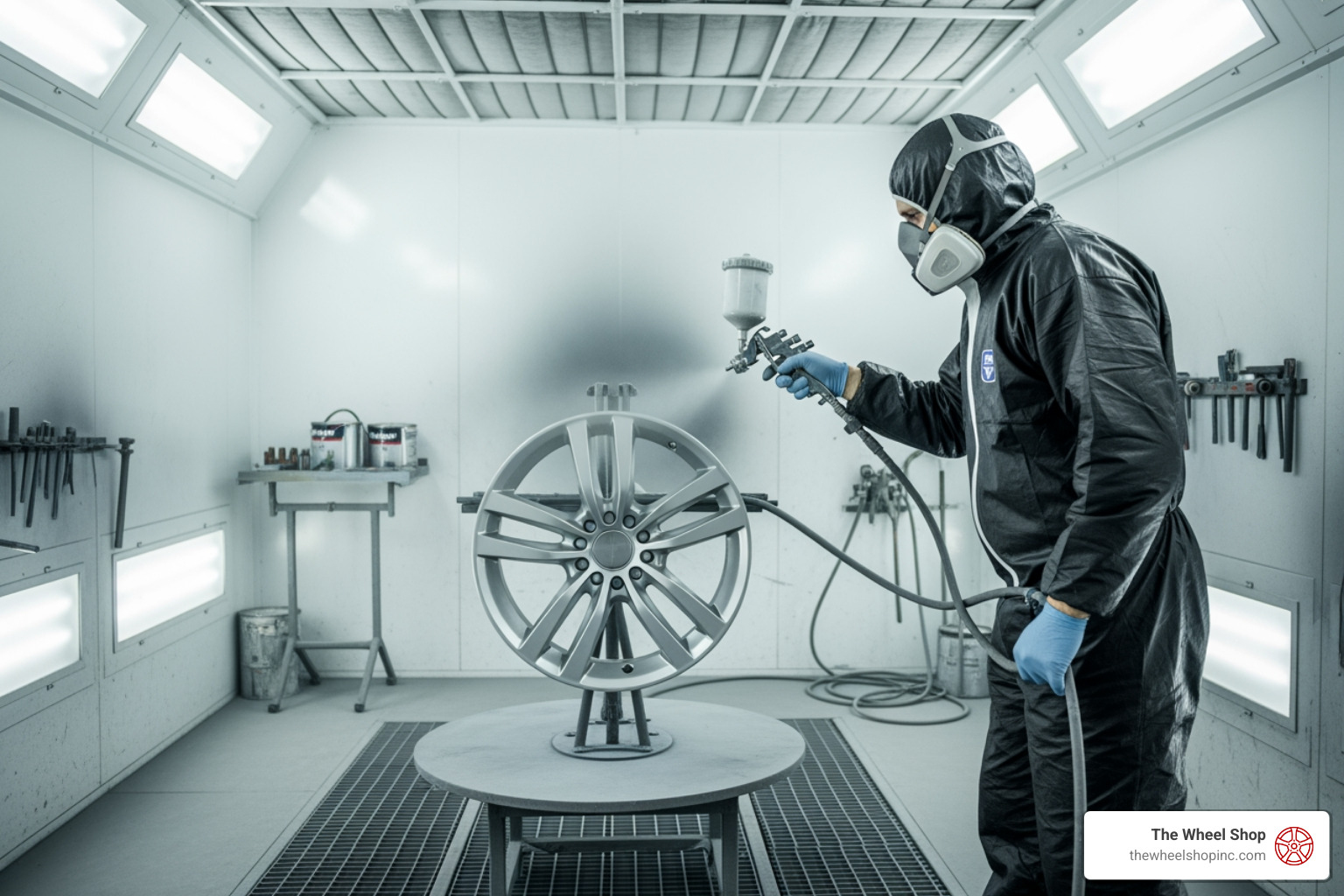
Imagine a paint that’s not wet. That’s essentially what powder coating is! It’s applied as a dry, free-flowing powder, much like baking flour. The magic happens through an electrostatic process. First, the wheel is carefully cleaned and prepared. Then, a specialized spray gun gives the powder particles a positive electrical charge. Simultaneously, the metal wheel is grounded, creating an irresistible attraction between the charged powder and the wheel’s surface. This electrostatic bond allows the powder to cling evenly to every curve and crevice, even those hard-to-reach areas.
Once the wheel is coated with this dry powder, it’s moved into a curing oven. Here, the heat (typically around 400°F) works wonders. The powder melts, flows out, and chemically cross-links, forming a continuous, uniform, and incredibly durable coating. This process creates a thermal bond, essentially fusing the polymer to the metal, resulting in a much thicker and more robust layer than traditional paint. This thermal bonding is key to its legendary durability. You can dive deeper into the process here: What is PowderCoating and learn more about What Is Powder Coating?. For more detailed information on our services, visit More info about powder coating.
What is Liquid Spray Paint?
In contrast, spray painting involves liquid paint, which contains chemical solvents (Volatile Organic Compounds, or VOCs) to keep the pigment and resins in a liquid state. This wet mixture is applied using an atomized spray gun, which breaks the liquid into fine droplets that adhere to the wheel’s surface.
Unlike powder coating, which often achieves sufficient thickness in a single application, spray painting usually requires multiple thin coats to build up adequate coverage and depth. Each coat needs time to dry, either through air-drying or a lower-temperature bake cure, as the solvents evaporate. This evaporation process is what allows the paint to harden, but it also means the paint loses volume, making it inherently thinner than a single layer of powder coat. The reliance on solvents and the multi-coat process also contribute to a less uniform finish and a greater risk of imperfections like drips or streaks if not applied by a skilled hand.
Durability Showdown: Powder Coating vs. Paint on Wheels
Wheels endure a constant barrage of road hazards. From gravel and brake dust to road salt and curb scrapes, the finish you choose must be tough. Here’s how they stack up in a real-world test of strength.
Resistance to Chipping, Flaking, and Wear
When it comes to taking a beating, powder coating is the undisputed champion. Its unique thermal bonding process creates a flexible yet incredibly hard polymer shell. This makes it significantly more resistant to physical impacts, like those pesky pebbles and road debris that get kicked up by tires. Where traditional paint might chip or flake after a direct hit, a powder-coated finish often flexes, absorbing the impact without breaking its bond. This flexibility also helps prevent cracking, a common issue with paint that can lead to further damage.
Furthermore, powder coating offers superior resistance to corrosive elements like brake dust (which is highly abrasive and hot) and harsh cleaning chemicals. The thick, non-porous layer acts as a formidable barrier, protecting the underlying metal. Paint, being thinner and often more brittle, is far more susceptible to these forms of wear. Once a paint chip occurs, moisture and contaminants can get underneath, leading to further flaking and even rust. For more insights into how wheels get damaged, check out More info about common wheel damage.
Longevity and Environmental Resilience
The typical lifespan of a well-applied powder coating is truly impressive, often lasting decades. This is largely due to its exceptional UV resistance and superior color retention. Unlike paint, which can fade, chalk, or peel over time due to prolonged exposure to sunlight, moisture, and heat, powder coatings—especially those made from polyester—are designed to withstand these environmental assaults. They resist chalking, ensuring your wheels maintain their vibrant color and gloss for years longer than spray alternatives.
Consider the harsh realities of driving in Riverside, CA, where UV exposure is constant and road grime is a given. Powder coating’s robust barrier provides excellent corrosion protection, safeguarding your wheels from moisture and other corrosive agents that can lead to rust. This makes it a standout choice for long-term resilience. For a deeper dive into coating life expectancy, you can refer to Learn more about coating life expectancy.
The Critical Role of Preparation and Quality Application
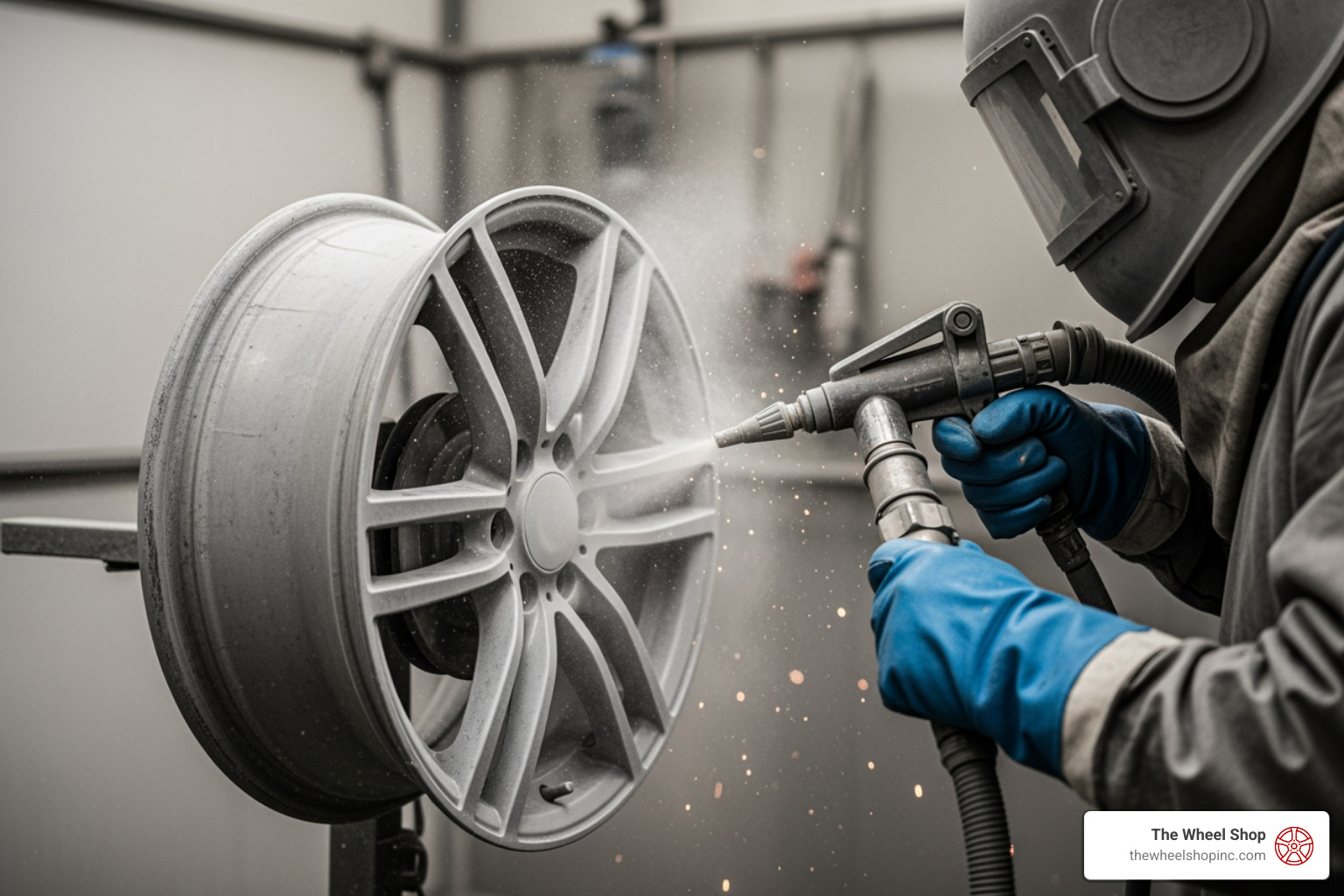
It doesn’t matter how good the coating material is if the surface isn’t prepared correctly. Think of it like building a house – a strong foundation is everything! For both powder coating and paint, meticulous surface preparation is absolutely critical for longevity and success. This typically involves thoroughly cleaning the wheel to remove all oil, dirt, and contaminants. Then, any existing finish needs to be stripped away, often through sandblasting or chemical stripping, to ensure the new coating has a perfectly clean and rough surface to adhere to.
For powder coating, this step is paramount. If the surface isn’t perfectly prepared, or if critical areas like the hub seats or lug bolt seats aren’t properly masked, it can lead to issues. For example, applying powder coating to the hub seating area can make it difficult to remove the wheel, and coating the bolt seats can cause torque inaccuracies or even material crumbling, which is a serious safety concern. Proper masking prevents these problems, ensuring a clean, precise application where it matters most.
Finally, the quality of the application and the curing process are equally important. For powder coating, this means ensuring the wheel is baked at the correct temperature for the appropriate duration. Improper curing can compromise the coating’s durability, leading to premature failure. This is where professional expertise, like ours at The Wheel Shop, really shines. We understand the nuances of wheel restoration and ensure every step is executed with precision. Explore our wheel restoration service to see our commitment to quality.
Aesthetics and Finish: Comparing the Final Look
Durability is key, but you also want your wheels to look incredible. The final appearance can vary significantly between powder coating and paint.
Smoothness, Thickness, and Texture
Powder coating typically results in a thicker finish than paint, which contributes to its durability. However, achieving an ultra-smooth, high-gloss finish with powder coating can sometimes be a challenge. If not applied expertly, powder coating can exhibit a slight “orange peel” texture, especially with thinner coats. While advancements in powder technology have largely mitigated this, it’s still a consideration.
Liquid paint, on the other hand, excels at achieving incredibly smooth, mirror-like, high-gloss finishes. Its ability to be applied in very thin layers allows for a fine, seamless appearance. However, paint’s thinness means it offers less protection. Powder coating also offers a vast array of textured options, including matte, satin, metallic, and even specialized textures that are difficult to replicate with paint.
Color Options and Customization
Both powder coating and paint offer a wide spectrum of colors, but their customization capabilities differ. Paint generally holds the advantage when it comes to precise color matching and mixing custom hues on-site. If you need to match an obscure factory color or create a truly unique blended shade, paint offers more immediate flexibility. It also allows for intricate metallic flakes and pearl effects that can be challenging to achieve with powder.
However, powder coating has made immense strides in color variety. We can offer hundreds of colors, including vibrant and custom options. While custom powder coat colors might require special production runs, the sheer range of finishes—from high-gloss to flat matte, and various textures—provides ample opportunity for personalization. Our expertise allows us to achieve stunning results that truly make your vehicle stand out. See our custom wheel finishes for inspiration.
The Bottom Line: Cost, Value, and Environmental Impact
The best choice also needs to make financial and environmental sense. We compare the initial investment against the long-term value and ecological footprint of each method.
Powder Coating vs. Paint: What Actually Lasts on Wheels – and Why from a Cost Perspective
Initially, spray painting might seem like the more affordable option. You can buy a can of spray paint for a few dollars, and a basic paint job will typically cost less upfront than a professional powder coating service. However, this is where the “long-term” part of our question, “Powder Coating vs. Paint: What Actually Lasts on Wheels – and Why,” really comes into play.
While the initial cost for powder coating is higher (ranging from $350 to $700 for a set of wheels, depending on size and quality), its superior durability translates into significant long-term savings. Powder-coated wheels resist chipping, fading, and corrosion much better than painted wheels, meaning they won’t need frequent touch-ups or complete re-coating every few years. A well-done powder coat can last for decades, three times as long as many paint jobs. This reduced need for reapplication and maintenance makes powder coating a far more cost-effective investment over the lifespan of your vehicle. Think of it as investing in quality that pays dividends in appearance and protection for years to come.
Environmental and Safety Considerations
When we look at the environmental impact, powder coating truly shines. The most significant difference lies in the absence of Volatile Organic Compounds (VOCs). Traditional liquid paints contain solvents that evaporate into the atmosphere during application and curing, contributing to air pollution and posing health risks. Powder coating, by contrast, is solvent-free and emits virtually no VOCs, making it a much greener and safer process. Organizations such as the United States Environmental Protection Agency highlight VOC reduction as a key strategy for improving indoor and outdoor air quality, which is one reason many manufacturers favor powder where possible.
The efficiency of powder coating is another major environmental advantage. With a transfer efficiency of 60-70%, a significant portion of the powder adheres to the wheel. What’s even better is that unused overspray can often be collected and reused, dramatically reducing waste. Reports indicate that powder coating waste is up to 95% less than what you’d expect with spray painting. Paint, with a transfer efficiency of only 30-35%, wastes nearly two-thirds of the product used for an application, which means more material ends up in landfills or polluting the environment. This efficiency also translates into safer working conditions for our technicians, as they are not exposed to harmful paint fumes. For more details on this comparison, read More on powder coating vs. liquid paints.
Making the Right Choice for Your Specific Wheels
The superior method often depends on your wheel type, driving habits, and goals. Here’s a clear guide on when to choose one over the other.
When is Powder Coating the Superior Option?
For most drivers, especially those with daily drivers, off-road vehicles, or who use their vehicles in challenging conditions (like winter wheels or gravel roads), powder coating is the clear winner. Its maximum durability and resistance to high-wear conditions make it ideal for wheels that face constant exposure to brake dust, road salt, UV rays, and physical impacts. Cast wheels, which are common on many vehicles, are excellent candidates for powder coating due to their robust nature. If you’re looking for a finish that provides long-lasting protection and maintains its aesthetic appeal for years without constant worry, powder coating is your go-to. It’s truly an investment in your wheels’ longevity and appearance.
When Might Painting Be a Viable Choice?
While powder coating offers unparalleled durability, there are specific scenarios where painting might be a viable or even preferable option. Forged wheels, for instance, are heat-treated under very controlled conditions at the factory. The high bake temperatures required for powder coating could potentially affect the integrity of the alloy, although modern low-temperature powders and experienced applicators can mitigate this risk. If you have high-end forged wheels and are concerned about maintaining their original structural properties, or if your wheel manufacturer specifically advises against high-heat processes, paint might be a safer bet.
Paint is also more suitable for DIY touch-ups, as it’s easier to blend and less equipment-intensive. If you’re after a very specific custom color that requires on-the-spot mixing, paint offers greater flexibility. For show cars that rarely see the road and prioritize a flawless, unique aesthetic over extreme durability, paint can provide an excellent finish. Finally, if initial budget constraints are a significant factor, painting can be a cheaper upfront option. However, you might be sacrificing long-term durability and potentially incurring higher maintenance costs down the line. Regardless of your choice, if your wheels suffer damage, We can also repair wheel damage.
Powder Coating vs. Paint: What Actually Lasts on Wheels – and Why for Different Wheel Types
The type of wheel material can influence the best finishing method.
- Cast Aluminum Wheels: These are typically robust and handle the heat required for powder coating very well. The thermal bonding process creates an incredibly durable finish that’s ideal for the everyday wear and tear these wheels experience. Learn about powder coating aluminum wheels specifically discusses the suitability of aluminum for this process.
- Forged Aluminum Wheels: As mentioned, forged wheels undergo precise heat treatment during manufacturing. While many professional powder coaters can safely coat forged wheels by carefully managing oven temperatures and using specific powder formulations, some owners and manufacturers prefer paint to completely avoid any risk of altering the metal’s properties. This is a critical consideration for high-performance or very expensive forged wheels.
- Steel Wheels: Often found on older vehicles or as winter wheels, steel wheels benefit immensely from powder coating. Steel is highly susceptible to rust, and the thick, protective barrier of powder coating offers superior corrosion resistance compared to paint, extending the lifespan of these wheels significantly.
The choice hinges on balancing durability, aesthetic goals, and the specific characteristics of your wheels.
Frequently Asked Questions about Wheel Finishes
Can you powder coat over existing paint or chrome?
No, for a lasting bond, the wheel must be stripped to bare metal. Any existing finish, including paint or chrome plating, is removed via sandblasting to ensure the powder adheres perfectly and prevents future flaking. Attempting to powder coat over an existing finish will likely result in premature peeling and a poor-quality finish.
How do I maintain my powder-coated wheels?
Maintenance is simple. Use a pH-neutral soap and water, and avoid harsh, acidic wheel cleaners. For extra protection and easier cleaning, applying a ceramic coating is highly recommended, as this wheel manufacturer advises. While white wheels on a ZB might look nice, a wheel manufacturer also warned that they would require a great deal of cleaning as dirt shows easily on white wheels. Ceramic coating can help with this. You can also read more about how ceramic coatings work in general on the ceramic coating overview.
Can a damaged powder-coated wheel be repaired?
Minor curb rash can sometimes be repaired, but touching up a powder-coated finish seamlessly is very difficult. Due to the nature of the baked-on finish, a small repair might not match the original texture or color perfectly. For a perfect finish, the entire wheel typically needs to be stripped and re-coated. For any damage, it’s best to consult a professional wheel repair specialist, as we can assess the extent of the damage and recommend the best course of action.
The Wheel Shop Difference
For the vast majority of drivers, powder coating is the clear winner for a wheel finish that actually lasts. Its superior durability, resistance to chipping and corrosion, and long-term value make it the ideal investment for protecting and beautifying your wheels. While paint has its place for specific applications, it cannot match the tough, baked-on resilience of a quality powder coat. When asking “Is it better to paint or powder coat rims?”, the answer for longevity and durability is almost always powder coating.
The longevity of either finish depends heavily on the quality of the prep work and application. Entrusting your wheels to an experienced professional like The Wheel Shop ensures a flawless result that stands the test of time. Our expertise in Riverside, CA, guarantees that your wheels receive the meticulous care and precise application needed for a finish that endures.
Ready to give your wheels a finish that’s as durable as it is beautiful? Explore our expert rim powder coating services today!