Why Proper Wheel Alignment Matters for Every Driver
Proper wheel alignment is essential for every driver, yet it’s one of the most overlooked aspects of vehicle maintenance. When your wheels are misaligned, your tires don’t sit at the optimal angle, which can lead to uneven tire wear, reduced fuel efficiency, and even difficulty steering. Over time, misalignment can cause your tires to wear out faster, meaning more frequent replacements and added costs.
Beyond protecting your tires, proper wheel alignment ensures safer handling and a smoother ride. Misaligned wheels can pull your vehicle to one side, reduce braking efficiency, and increase the risk of accidents, especially in emergency maneuvers. Regular alignment checks keep your car running efficiently, extend the life of your tires, and give you confidence behind the wheel—making it a small investment for a major impact on safety and performance.
Here’s what you need to know at a glance:
Key Benefits:
- Extends tire life by preventing uneven wear
- Improves fuel efficiency by up to 10%
- Improves safety with better handling and braking
- Saves money by avoiding premature tire and suspension repairs
How Often:
- Every 12,000 miles or annually
- Immediately after hitting a pothole or curb
- When installing new tires
- If you notice pulling, vibration, or uneven tire wear
When your alignment is off, the consequences go far beyond an uncomfortable ride. Many drivers don’t realize that misaligned wheels can ruin a 60,000-mile tire in just 10,000 miles, decrease gas mileage by up to 10%, and create dangerous handling issues.
Proper wheel alignment is a cost-effective way to protect your vehicle investment and keep you safe on the road.
What is Wheel Alignment? The Three Key Angles Explained
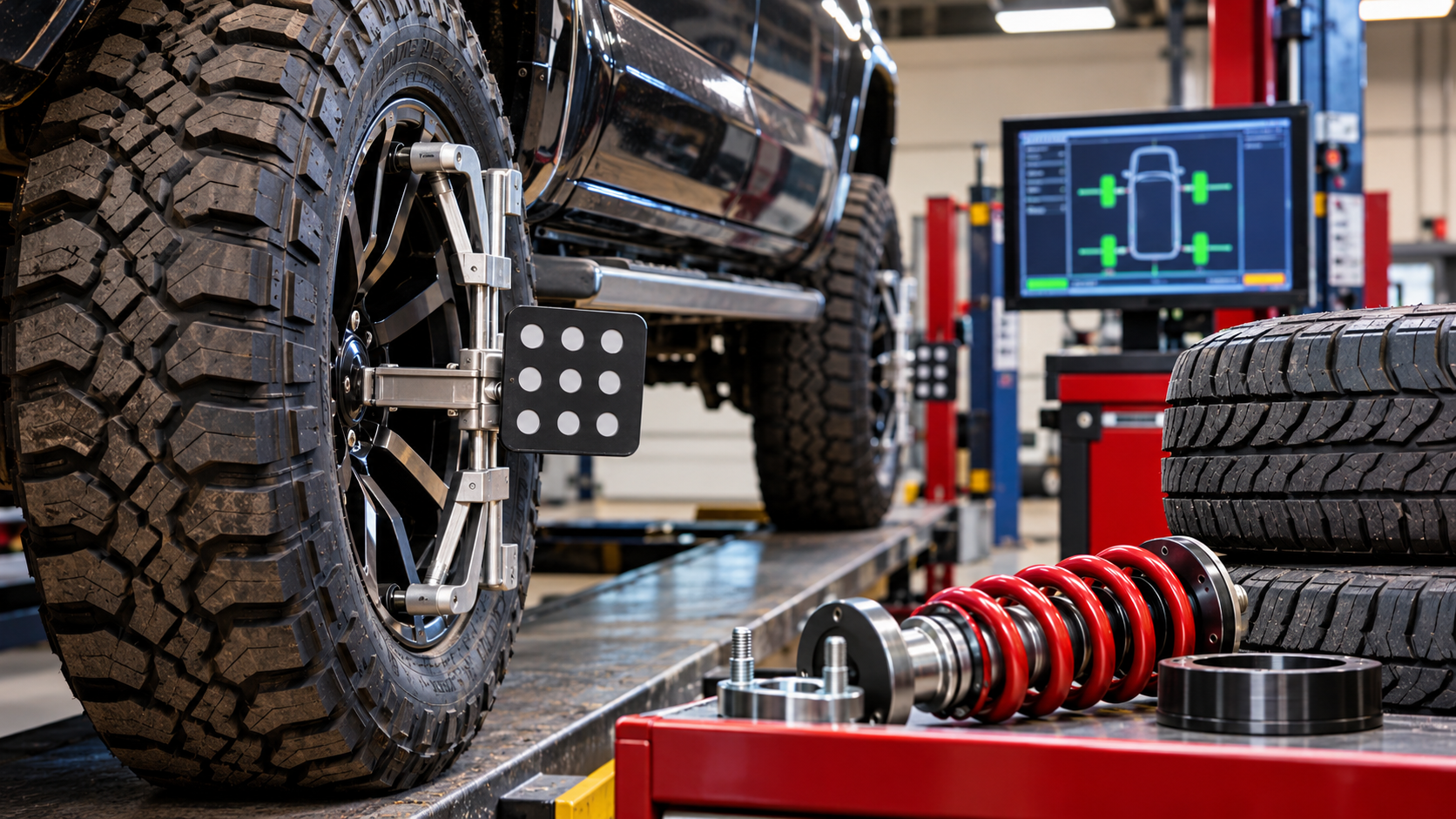
Wheel alignment is like a posture check for your car, ensuring it runs smoothly and safely. It involves precision adjustments to the suspension system—the link between your car and its wheels—setting three key angles to the manufacturer’s exact specifications. This process prevents uneven tire wear, improves fuel economy, and improves safety.

Camber: The Inward or Outward Tilt
Camber is the inward or outward tilt of your tires when viewed from the front. Positive camber is when the top of the tire leans away from the car, while negative camber is when it leans inward. Most daily drivers require a nearly vertical angle for even wear.
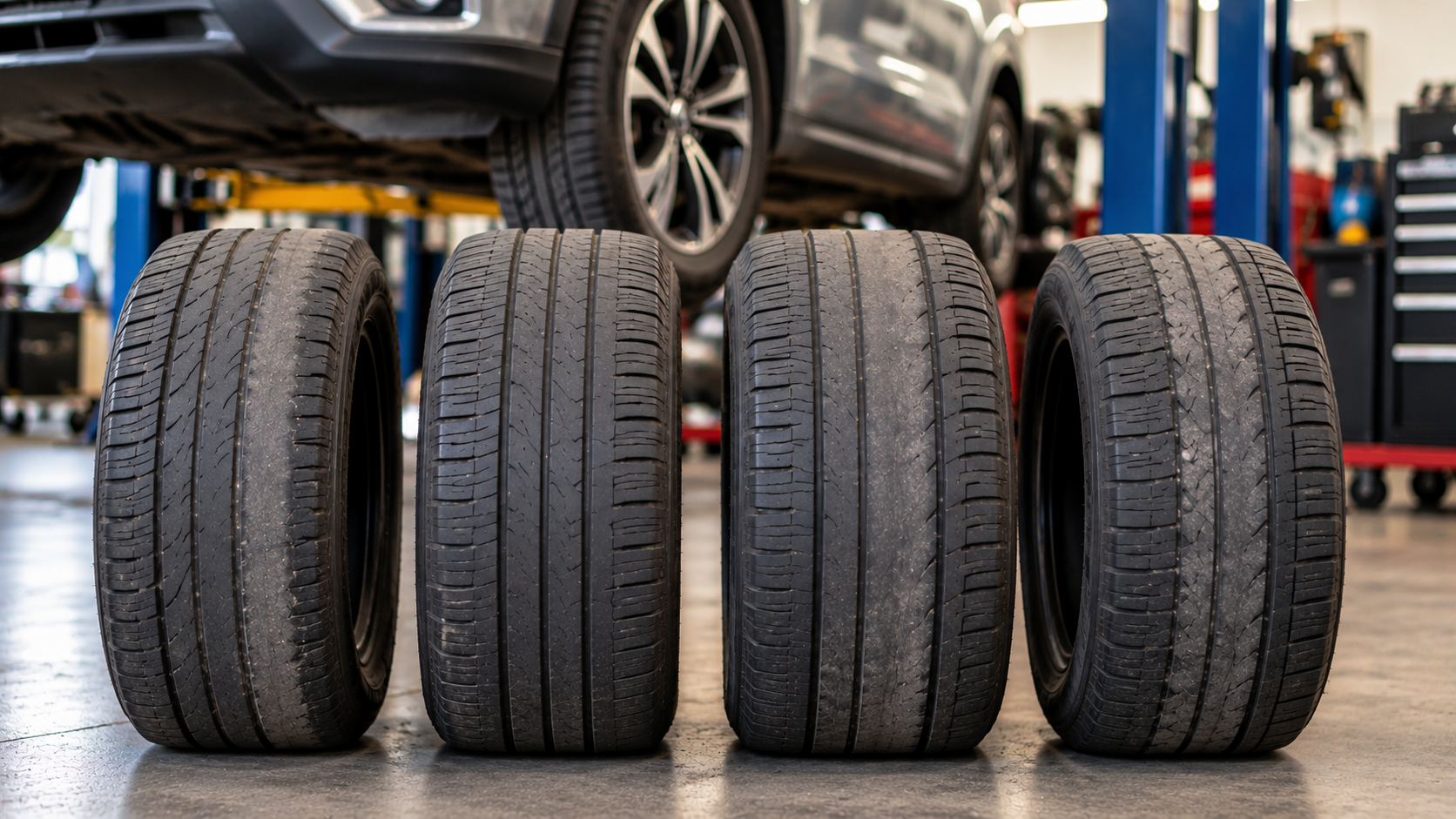
Incorrect camber is costly, creating telltale wear patterns. Too much positive camber wears the outside edge of your tire, while too much negative camber wears the inside edge, both leading to premature tire replacement.
While some sports cars use negative camber for better cornering, your daily driver needs the angle to be just right. That’s where our precision services make all the difference.
Toe: The Directional Angle
Toe is the angle of your tires when viewed from above, indicating if they point inward (toe-in) or outward (toe-out). Incorrect toe causes “feathered” tire wear, as tires scrub against the pavement instead of rolling smoothly.
This scrubbing action not only wears out tires faster but also hurts gas mileage and reduces steering responsiveness. Correcting the toe angle is crucial for straight-line stability and ensuring your car goes exactly where you point it.
Caster: The Steering Axis Angle
Caster is the angle of the steering axis when viewed from the side. Most modern cars use positive caster (the axis tilts toward the driver) because it provides steering stability, especially at highway speeds, and helps the steering wheel return to center after a turn.
Proper caster makes your car feel stable and predictable. Poor caster can make steering feel loose or difficult to control.
When all three angles work in harmony, your car handles correctly, tires wear evenly, and you achieve the best possible fuel economy. That’s the magic of a proper wheel alignment.
Top 5 Benefits of Proper Wheel Alignment
Proper wheel alignment is a proactive maintenance step that benefits your vehicle’s performance, your safety, and your wallet. It’s a crucial aspect of vehicle care that protects the long-term value of your investment. Here’s why proper wheel alignment is so crucial:
1. Extends Tire Life and Prevents Uneven Wear
Proper alignment is one of the best ways to extend tire life. Misaligned wheels drag instead of rolling freely, causing premature and uneven wear patterns like camber wear (on the edges) or toe wear (feathering). A misaligned vehicle can wear out 60,000-mile tires in as little as 10,000 miles. By ensuring your wheels are properly aligned, you maximize your tire investment. To learn more about your tires, visit our dedicated page.

2. Improves Fuel Efficiency
When your wheels are out of alignment, your vehicle has to work harder to move forward. The extra rolling resistance forces the engine to use more power—and more fuel—to maintain normal speeds. Over time, that inefficiency can noticeably reduce your gas mileage and increase wear on your tires. A quick, professional wheel alignment not only restores balance and improves handling but also helps you conserve fuel, extend tire life, and save money every time you fill up. It’s a simple service that pays off in smoother driving and lower operating costs.
3. Improves Vehicle Handling and Steering
Proper alignment ensures predictable, responsive handling. Your car will track straight without constant steering corrections, making driving more comfortable and less fatiguing. This stability is especially important for maintaining optimal driver control at higher speeds and during turns.
4. Increases Driving Safety
Alignment is a critical safety feature. Misaligned wheels can increase braking distance and cause unpredictable reactions in emergency maneuvers, making it harder to maintain control. Correct alignment, paired with adequate tread depth, is fundamental for safe driving. The link between tread depth and stopping distance is significant, and alignment plays a key role in preserving tread.
5. Reduces Stress on Suspension Components
Misalignment puts undue stress on suspension parts like ball joints, tie rods, and struts. This strain causes premature wear, leading to costly future repairs. Regular alignment checks preserve the health of your entire suspension system, saving you from significant wheel repair and other maintenance costs down the road.
Signs You Need an Alignment and Common Causes
Your vehicle often signals when its alignment is off, and noticing these signs early can save you from costly repairs down the road. Uneven tire wear, a steering wheel that drifts to one side, or a vibration while driving are all indicators that your wheels may be misaligned. Understanding these warning signs—and addressing them promptly—ensures safer handling, prolongs the life of your tires, and keeps your car running efficiently. By staying attentive to these clues, you can maintain proper alignment and avoid problems before they escalate.

Warning Signs Your Vehicle is Misaligned
- Vehicle pulling left or right: The car drifts to one side on a straight, flat road, requiring constant steering correction.
- Crooked steering wheel: The steering wheel is off-center even when you are driving straight.
- Steering wheel vibration: While also a sign of imbalance, vibration can indicate an alignment problem.
- Squealing tires: Tires may squeal during normal turns due to scrubbing from misalignment.
- Uneven tire wear: Look for camber wear (one edge is more worn than the other) or toe wear, which creates a “feathered” feel across the tread blocks.
What Knocks Your Wheels Out of Alignment?
Alignment can be knocked out of spec by a single event or gradually over time through everyday driving challenges.
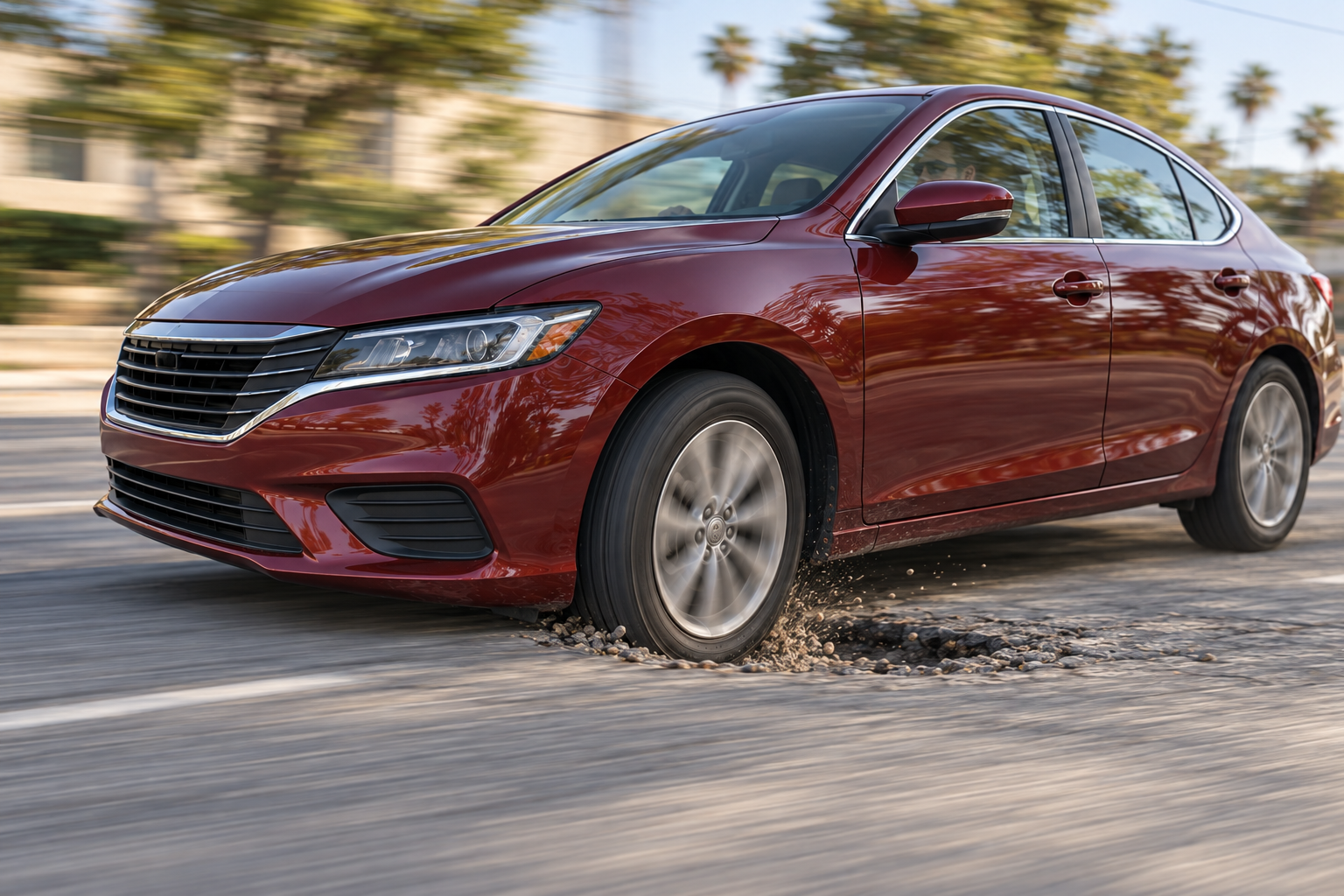
- Potholes: A significant impact from a pothole can instantly throw your alignment off. We’ve written about how potholes affect wheels.
- Hitting curbs: Even a gentle bump against a curb can be enough to alter alignment angles.
- Minor accidents: Any collision, even a fender bender, can shift suspension components and affect alignment.
- Worn suspension parts: As parts like ball joints and tie rods wear out, they can no longer hold the alignment settings.
- Vehicle modifications: Changing ride height, suspension parts, or tire size often requires a new alignment.
- Everyday driving: The cumulative effect of speed bumps and rough roads causes gradual misalignment over time.
The Importance of Proper Wheel Alignment and How Often You Need It
Regular wheel alignments are a key part of proactive vehicle maintenance, much like routine oil changes. Even if your car feels fine, sticking to a consistent alignment schedule protects your investment by preventing minor issues from turning into expensive repairs. Consistent alignment keeps your tires wearing evenly, improves fuel efficiency, and ensures safer handling—helping your vehicle perform at its best for years to come.
Recommended Alignment Schedule for Most Vehicles
The general guideline for most vehicles is an alignment check every 12,000 miles or annually. This accounts for the gradual wear and tear of everyday driving. A practical approach is to get an alignment with every other oil change.
Always consult your owner’s manual for manufacturer-specific recommendations, as some vehicles may have different requirements based on their suspension design.
When to Get an Alignment Outside Your Regular Schedule
Certain situations require an immediate alignment check outside of your normal schedule.
- After buying new tires: This is crucial to protect your investment and ensure they wear evenly from day one.
- After a significant impact: Hitting a major pothole or curb can instantly shift your alignment.
- After a collision or suspension work: Any collision or replacement of parts like struts or tie rods requires an alignment check.
- If you notice any warning signs: Don’t wait for your next scheduled service if you experience pulling, vibration, or see uneven tire wear. These symptoms usually worsen over time.
Regular alignment maintenance is one of the smartest investments you can make in your vehicle’s health and your driving safety.
Wheel Alignment vs. Wheel Balancing: What’s the Difference?
Many drivers confuse wheel alignment and wheel balancing. They are two distinct services that solve different problems. Think of alignment as adjusting your car’s posture and balancing as correcting its weight distribution. Both are crucial for optimal performance, but they address separate issues.
For a deeper dive, check out our guide: Do You Need a Tire Balance or a Wheel Alignment?
Wheel alignment adjusts the angles of the wheels (camber, toe, and caster) by making changes to the vehicle’s suspension. This ensures your wheels are perpendicular to the ground and parallel to each other. Symptoms of misalignment include the car pulling to one side, a crooked steering wheel, or uneven tire wear.
Wheel balancing ensures the weight of the tire and wheel is evenly distributed. Technicians add small counterweights to the rim to correct any imbalances. The primary symptom of imbalanced wheels is vibration, especially at highway speeds, felt in the steering wheel, seat, or floorboard.
Here’s a quick comparison:
| Aspect | Wheel Alignment | Wheel Balancing |
|---|---|---|
| What it fixes | Vehicle pulling, crooked steering wheel, uneven tire wear | Vibrations, especially at highway speeds |
| Focus area | Suspension angles and wheel positioning | Weight distribution of wheel and tire assembly |
| When you need it | Annually, after impacts, with new tires, after suspension work | With new tires, after tire repairs, when you feel vibrations |
| Main benefit | Better handling, longer tire life, improved fuel efficiency | Smoother ride, prevents tire cupping |
For most vehicles, a wheel alignment is recommended once a year or every 12,000 miles, while tire balancing is typically done when installing new tires or if you notice vibrations while driving. Often, both services are needed together to maintain optimal performance. When getting new tires, it’s best to have them balanced first and then aligned, ensuring even wear and a smoother ride. Paying attention to proper alignment and balancing not only extends tire life but also improves handling, fuel efficiency, and overall driving comfort.
Frequently Asked Questions about Wheel Alignment
Here are answers to some of the most common questions we hear about proper wheel alignment and how often it’s needed. With over twenty years of experience, the team at The Wheel Shop knows that informed customers make smarter decisions—helping their vehicles last longer, perform better, and stay safer on the
What are the consequences of neglecting wheel alignment?
Neglecting wheel alignment leads to several negative consequences that are both costly and unsafe:
- Costly Tire Wear: Tires can wear out in as little as 10,000 miles instead of their intended 60,000-mile lifespan.
- Poor Fuel Economy: Misalignment increases rolling resistance, reducing gas mileage by up to 10%.
- Unsafe Handling: A misaligned vehicle may pull to one side, handle unpredictably, and have increased braking distances, compromising safety in emergencies.
- Suspension Damage: It puts extra stress on components like ball joints and tie rods, leading to premature failure and expensive repairs.
- Lower Resale Value: Uneven tire wear and suspension issues are red flags for potential buyers, reducing your car’s value.
How long does a wheel alignment take?
A typical wheel alignment takes 30 to 60 minutes. A four-wheel alignment takes slightly longer than a two-wheel (front-end) alignment because all four wheels are adjusted. The time can vary depending on the vehicle’s condition; for example, corroded bolts may take longer to adjust. However, our modern computerized equipment makes the process highly efficient and accurate, getting you back on the road quickly.
Do I need a two-wheel or four-wheel alignment?
The type of alignment you need depends on your vehicle’s suspension design.
Two-wheel alignments adjust only the front wheels and are common for vehicles with a solid rear axle.
Most modern vehicles, including all-wheel-drive (AWD), rear-wheel-drive, and many front-wheel-drive cars with independent rear suspensions, require a four-wheel alignment. This is because all four wheels need to track perfectly together for optimal handling and tire wear.
Our expert technicians at The Wheel Shop will determine the correct alignment type for your vehicle and explain the service you’re getting. It’s part of the exceptional customer service we’ve built our reputation on.
The Wheel Shop Difference
The importance of proper wheel alignment cannot be overstated. Regular alignments are a smart investment in your vehicle’s performance, safety, and longevity. They help prevent uneven tire wear, improve handling and fuel efficiency, and provide peace of mind by reducing the risk of costly repairs down the road. Keeping your wheels properly aligned ensures your car drives smoothly and stays in top condition for years to come.
At The Wheel Shop, our 20+ years of experience and state-of-the-art equipment ensure we deliver top-tier craftsmanship on every precision alignment. We understand your vehicle is your connection to work, family, and life’s adventures.
Proactive maintenance is always cheaper than reactive repairs. Don’t wait for major issues to arise. For a professional assessment of your vehicle’s needs, schedule a service with our experts.
Book your alignment service today and give your vehicle the care it deserves to keep serving you well.