Why Every Groove on Your Tire Is Doing a Job You Can’t See
Most drivers choose tires based on brand, price, or warranty — but the real performance difference is built into something far more technical: the tread pattern. Those grooves, sipes, channels, and blocks aren’t just aesthetic design choices. They’re engineered systems designed to manage water evacuation, road contact, heat dispersion, traction forces, and even road noise. The science behind tire tread patterns directly affects how your vehicle handles in rain, grips during cornering, brakes at highway speeds, and maintains stability under load.
Understanding which tread does what isn’t just for racing enthusiasts or off-road drivers. It matters for daily commuters, truck owners, and performance vehicle drivers alike. Whether you’re navigating wet highways, dry summer pavement, gravel roads, or light winter conditions, the right tread pattern can mean shorter stopping distances, better fuel efficiency, improved comfort, and increased tire longevity. Choosing correctly isn’t guesswork — it’s physics, engineering, and real-world application working together.
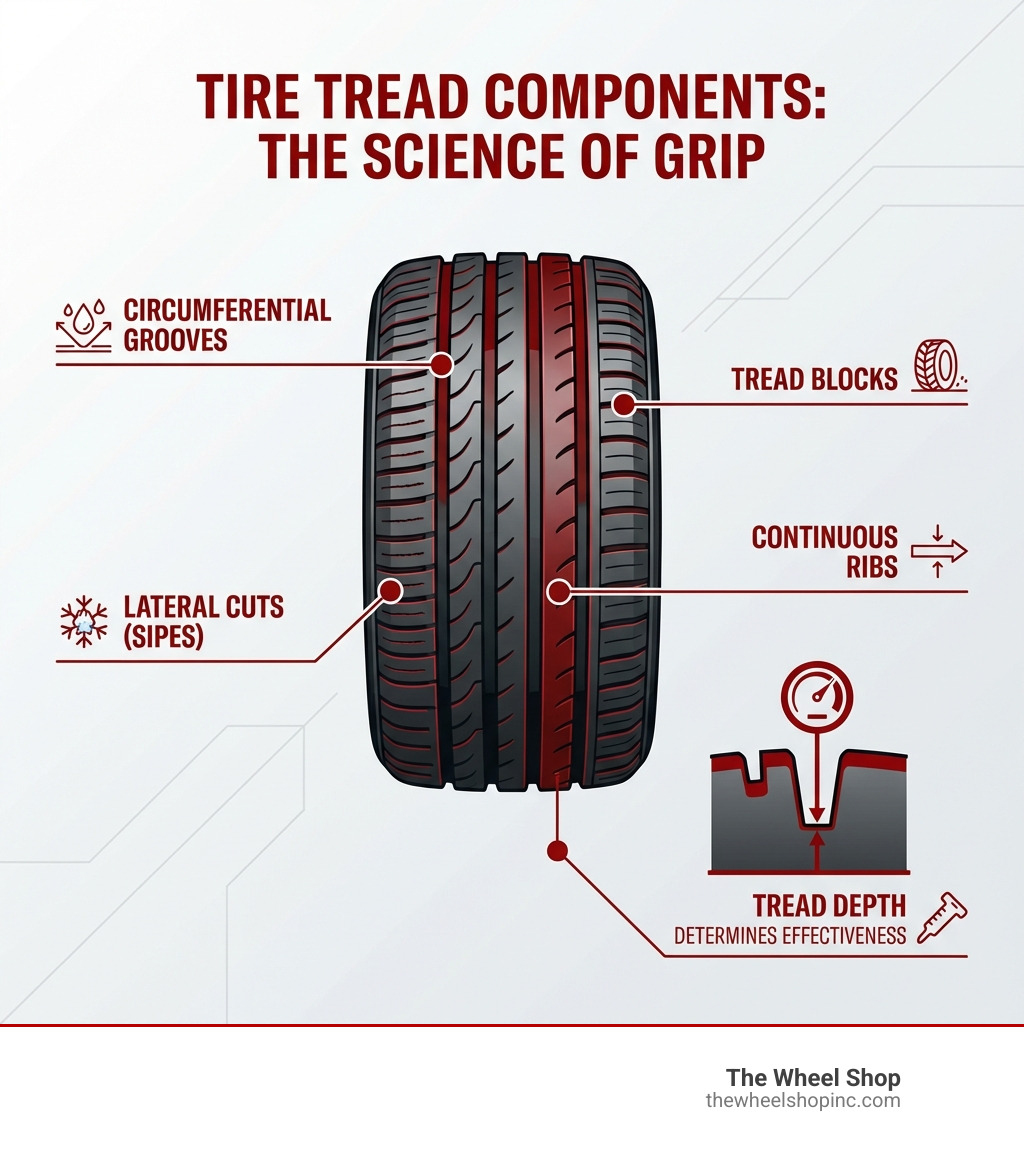
Here’s a quick breakdown:
| Tread Component | What It Does |
|---|---|
| Circumferential grooves | Channel water away from the contact patch to prevent hydroplaning |
| Lateral cuts (sipes) | Create extra biting edges for grip on wet, icy, and snowy surfaces |
| Tread blocks | Provide the rubber-to-road contact that generates traction and braking force |
| Continuous ribs | Deliver stability, straight-line tracking, and lower road noise |
| Tread depth | Determines how well all of the above actually work — and when they stop working |
The pattern you’re rolling on right now affects your stopping distance, your fuel bill, your cabin noise, and your safety margin in the rain. Most drivers never think about it until something goes wrong.
Tire engineers spend hundreds of hours — and now use supercomputers — developing each tread design, because improving one performance quality almost always trades off against another. More grooves for wet grip means less rubber contact for dry braking. Deeper tread for snow traction means more heat buildup and higher rolling resistance.
Understanding those trade-offs helps you choose smarter — and stay safer.
Which Tread Does What and Why It Matters
When we look at a tire, we see rubber. When an engineer looks at a tire, they see a complex puzzle of fluid dynamics and structural integrity. The primary mission of a tire tread is to provide a “contact patch”—the actual area where rubber meets the road—that can handle the forces of acceleration, braking, and cornering.
However, if the road was always perfectly dry and smooth, we wouldn’t need tread at all. In fact, Formula 1 race cars use “slicks” because a smooth tire provides the maximum amount of rubber in contact with the pavement. But for those of us driving around Riverside, CA, we have to deal with rain, dust, and the occasional trip to the mountains. That’s where the science of “voids” comes in.
Grooves and Sipes: The Mechanics of Grip
The most critical job of a tire in the rain is water evacuation. If water builds up between the tire and the road, you experience hydroplaning—a terrifying moment where your car essentially becomes a boat, but without the rudder.
- Longitudinal Grooves: These are the deep channels that run around the circumference of the tire. Their job is to act like a plumbing system, directing water straight through and out the back of the tire.
- Lateral Cuts: These run perpendicular to the grooves, pushing water out to the sides (the shoulders) of the tire.
- Sipes: These are the tiny, squiggly slits you see inside the larger tread blocks. Sipes are fascinating because they act like thousands of tiny “claws.” On wet or icy roads, they open up as the tire rotates, creating a vacuum effect that sucks up water or bites into snow. In fact, winter tires use a “snow-on-snow” principle; the sipes pack snow into the tread because snow actually sticks to other snow better than rubber sticks to ice.
Modern innovations like 3D sipes are designed to lock together under heavy braking. This prevents the tread blocks from “squirming” too much, which keeps the tire stable even though it has thousands of tiny cuts in it.
Tread Blocks and Ribs: Balancing Stability and Noise
While grooves handle the water, tread blocks and ribs handle the weight of your vehicle.
- Tread Blocks: These are the raised segments of rubber. Larger, stiffer blocks are usually found on performance tires to provide better “lateral stability” (the ability to turn sharply without the tire folding over).
- Continuous Ribs: Many touring tires feature a solid rib running down the center. This helps with straight-line tracking and reduces road noise.
Speaking of noise, have you ever noticed that some tires “sing” at high speeds? This happens when tread blocks are all the same size, creating a repetitive air-compression sound. Engineers solve this using variable pitch. By making the blocks slightly different sizes around the tire, they create different sound frequencies that cancel each other out, giving us a much quieter ride.
Another hidden feature is road crown compensation. Most roads are slightly sloped toward the shoulder to help water drain. Engineers actually angle the tread blocks to generate a tiny amount of lateral force that counteracts this slope, keeping your car going straight without you having to constantly tug at the steering wheel.
Tread Depth and Stopping Distances
Tread depth is the measurement from the top of the tread block to the bottom of the deepest groove. In the United States, the legal minimum is 2/32 of an inch. However, at The Wheel Shop, we consider this the “danger zone.”
Research shows that tire performance drops off a cliff long before you hit the legal limit. A tire with 4/32″ of tread can stop significantly faster in the wet than one at 2/32″. Once the grooves are too shallow, they can no longer evacuate water, and your stopping distance can double.
You can check this yourself with the Penny Test:
- Insert a penny into your tire tread with Lincoln’s head facing down.
- If you can see the top of Lincoln’s head, your tread is below 2/32″ and you need immediate replacement.
- If the tread covers part of his head, you’re in better shape, but you should start planning for new tires once it gets close.
Decoding the Four Main Tread Designs: Performance and Purpose
Not all tread patterns are created equal. Depending on whether you drive a commuter sedan, a high-performance sports car, or a heavy-duty truck, the pattern under your feet will look very different.
| Tread Type | Best For | Rotation Pattern |
|---|---|---|
| Symmetrical | Daily driving, fuel economy | Any direction (X-pattern) |
| Asymmetrical | Performance handling, wet/dry mix | Front-to-back (Keep ‘Outside’ out) |
| Directional | Wet weather, snow, high speed | Front-to-back only |
| Directional/Asymmetric | Ultra-high performance | Specific side and direction |
Symmetrical and Asymmetrical Patterns
Symmetrical tires are the most common. The inner and outer halves of the tire look exactly the same. They are quiet, long-lasting, and easy to maintain because you can rotate them in any direction.
Asymmetrical tires, however, are like a “two-in-one” deal. The inner side is designed with more grooves for water evacuation, while the outer side has larger, solid tread blocks. Why? Because when you turn a corner, the car’s weight transfers to the outside edge of the tire. By putting more rubber on that outer edge, the tire provides much better grip during spirited driving. Just remember: these tires are marked “Inside” and “Outside” on the sidewall. If you mount them backward, you lose the performance benefits!
Directional Treads: Why It Matters in Wet Conditions
If you see a tire with a distinct “V” or chevron shape, you’re looking at a directional tread. These are the champions of wet weather. The V-shape acts like a snowplow for water, pushing it away from the center and out to the sides with incredible efficiency.
The trade-off? They can only roll in one direction. If you put them on backward, they will actually pull water under the tire, increasing your risk of hydroplaning. This also means you can only rotate them from front to back on the same side of the car, unless you want to unmount and flip the tires on the rims.
Specialized Treads: Off-Road vs. Commercial
For those of us in Riverside who head out to the trails, off-road tires use aggressive lugs. These are massive tread blocks with huge gaps (voids) between them. These gaps aren’t for water—they’re for mud and rocks. As the tire spins, the “self-cleaning” design flings the mud out so the next rotation can grab fresh dirt.
In the commercial world, tread is axle-specific:
- Steer Axle: Features deep longitudinal ribs to help with steering and water dispersion.
- Drive Axle: Features “lugs” for maximum pulling power.
- Trailer Axle: Designed to be slicker and more heat-resistant to handle heavy loads without wearing down prematurely.
Engineering Evolution: From Bias-Ply to Smart Graphene Treads
Tires have come a long way since the days of solid rubber. The biggest leap in history was the move from bias-ply to radial construction.
Bias-ply tires used cords that crisscrossed at angles. While strong, they were stiff and got very hot. In 1946, Michelin patented the radial tire, which positioned cords at 90 degrees to the direction of travel and added steel belts under the tread.
Why Modern Radials Outperform the Past
The shift to radials changed everything:
- Durability: Radial tires deliver 40,000-65,000 miles of service life, a 35-45% improvement over the 25,000-40,000 miles seen in bias-ply designs.
- Heat: Radials run 15-20°F cooler. Heat is the number one enemy of rubber; cooler tires last longer and are less likely to blow out.
- Fuel Efficiency: Because the sidewall flexes independently from the tread, radials have much lower “rolling resistance.”
Speaking of efficiency, Why Proper Tire Pressure is More Important Than You Think because even the best radial tire will waste fuel if it’s under-inflated.
Material Science: Silica and Graphene Innovations
The “hidden science” isn’t just in the shapes—it’s in the chemistry.
- Silica: By replacing some of the carbon black in tires with silica, manufacturers have reduced rolling resistance by 20-30%. This small change accounts for a 1.5-2% reduction in global CO2 emissions from vehicles.
- Graphene: This “wonder material” is being infused into modern compounds. Graphene increases tensile strength by 30-40% and can improve abrasion resistance by a staggering 500%. It also helps dissipate heat, which is vital for high-performance driving.
- Self-healing rubber: We are now seeing the development of rubber systems that can achieve 99% repair efficiency within minutes of a small puncture.
Frequently Asked Questions about Tire Treads
How do tire tread patterns impact fuel efficiency?
Tread patterns directly affect rolling resistance—the energy your engine spends just to keep the tires turning. Rolling resistance accounts for 24-33% of total fuel consumption. Treads with continuous ribs and specialized silica compounds can reduce this resistance significantly. In fact, reducing rolling resistance by 20% can cut your fuel use by 4.8-6.6%.
What is the difference between sipes and grooves?
Think of grooves as the “highways” for water; they are large channels designed to move high volumes of liquid away from the tire. Sipes are the “backroads”; they are tiny slits that provide the actual grip on slippery surfaces by creating thousands of additional biting edges. Grooves prevent hydroplaning, while sipes provide traction on ice and snow.
Can I mix different tread patterns on the same vehicle?
We strongly advise against it. Mixing different tread patterns—like putting directional tires on the front and symmetrical on the back—can lead to handling instability. Each tread type reacts differently to water and cornering forces. Mixing them can cause the car to pull to one side or oversteer unexpectedly in the rain. For the best safety, always use a matched set of four tires. If you must replace only two, they should be the same model as the existing tires and always placed on the rear axle for stability.
The Wheel Shop Difference
The next time you walk up to your car, take a second to look at those “random” scribbles on your tires. They are the result of decades of engineering, supercomputer modeling, and material science breakthroughs. From the sipes that keep you steady in a downpour to the silica compounds that save you money at the pump, your tread is your most important safety feature.
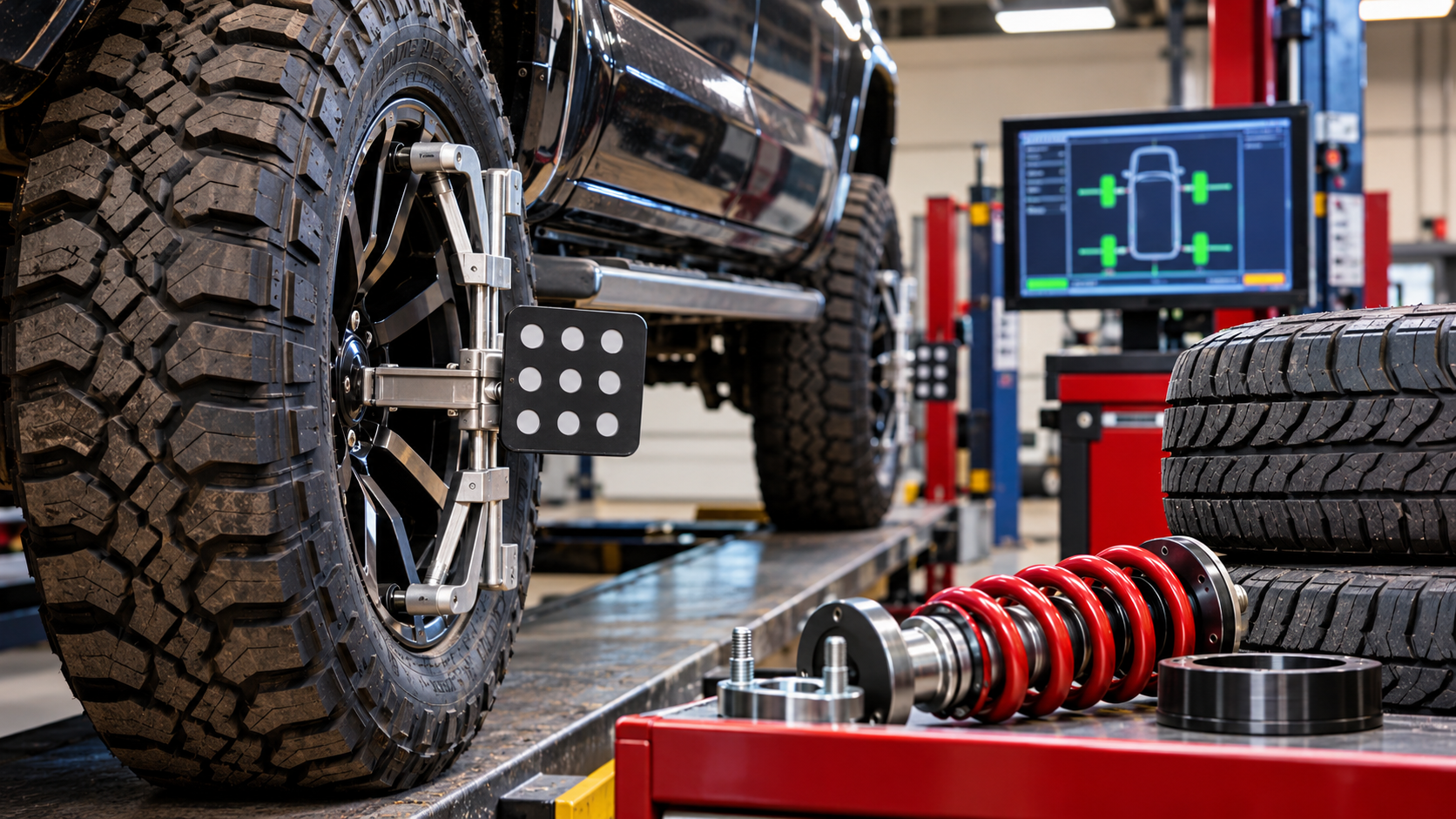
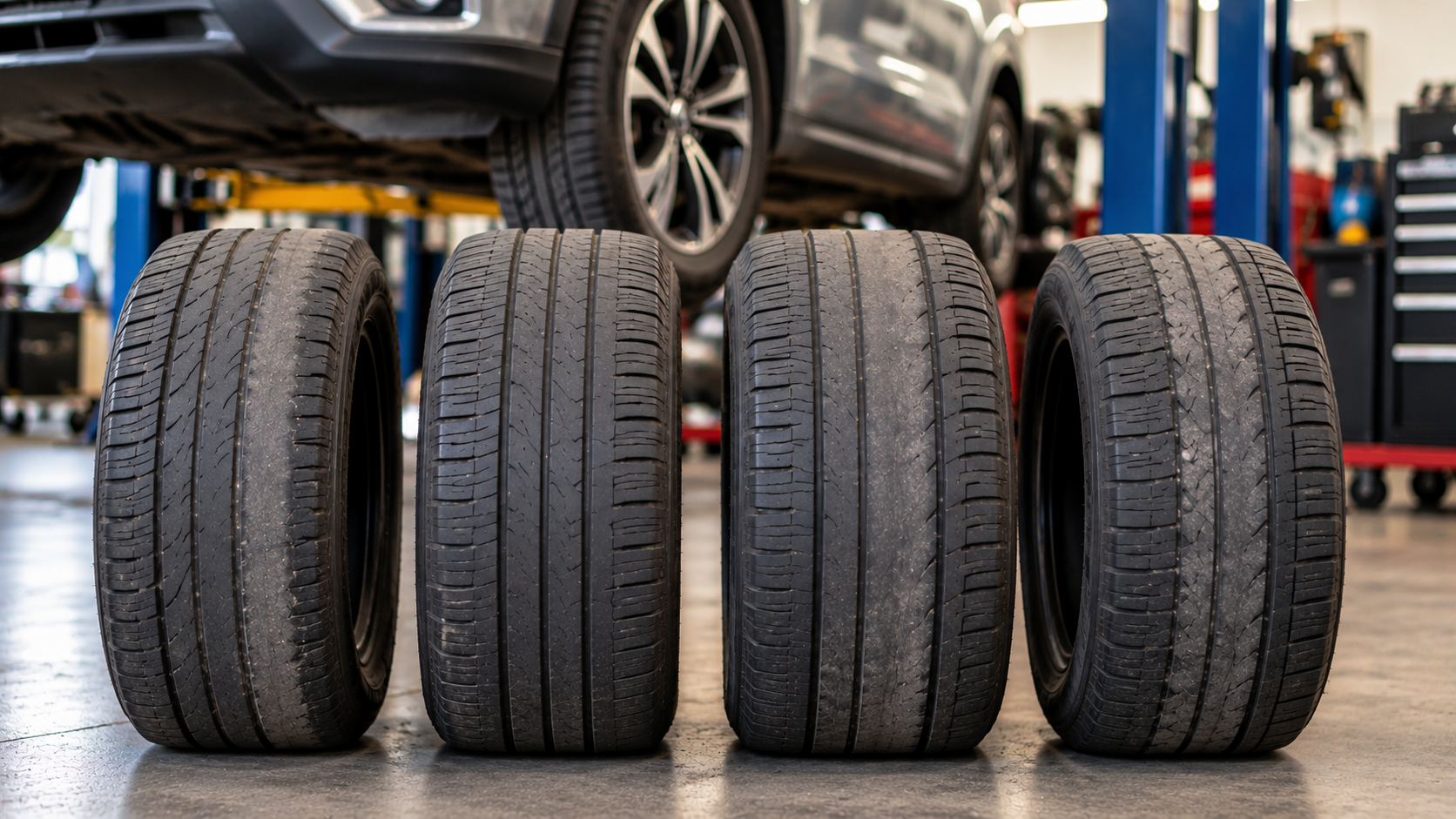
At The Wheel Shop in Riverside, CA, we’ve spent over twenty years perfecting the art of tire and wheel care. Whether you need a precision alignment to stop irregular tread wear, or you’re looking for speciality wheel repair and reconditioning, we bring top-tier craftsmanship to every job. We even specialize in caliper and wheel powder coating to make sure your car looks as good as it performs.
Don’t leave your safety to chance. If your tread is looking low or you’ve noticed a change in your car’s handling, come see us. We’ll make sure your “contact patch” is ready for whatever the road throws at it.