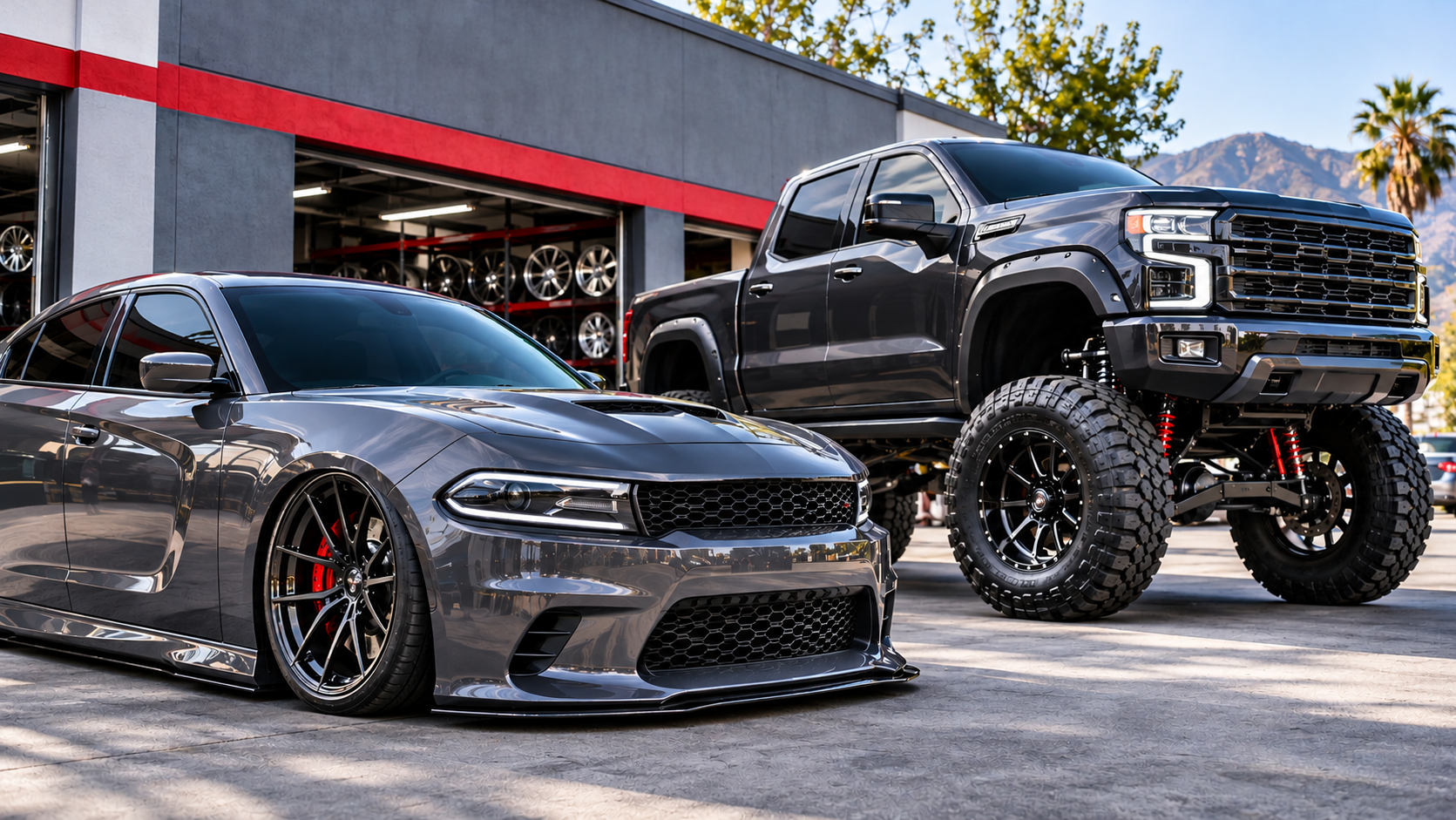
A lifted truck with larger tires has a completely different presence on the road. The extra height, more aggressive stance, and larger wheel-and-tire combination can transform the appearance of a pickup while also providing additional ground clearance for drivers who spend time off pavement. However, getting that look and functionality right involves much more than simply installing the biggest tires that will fit.
Increasing tire size and changing ride height can affect wheel clearance, suspension geometry, steering, alignment, braking, gearing, and even the way the truck feels at highway speeds. A combination that looks good while parked still needs to function properly when the steering is at full lock, the suspension compresses, the truck carries a load, or the driver needs to brake quickly.
At The Wheel Shop, we look at lifted trucks as complete systems. Whether a customer is considering lifts for trucks, larger tires, aftermarket truck wheels, suspension upgrades, or a complete change in stance, our goal is to make sure the components work together rather than treating each modification as a separate project.
Bigger Tires Change More Than Ground Clearance
One of the most obvious reasons truck owners install a lift is to create room for larger tires. Increasing tire diameter can raise the truck at the axles and provide additional ground clearance. It can also create the proportion many owners want from a lifted build: more tire filling the wheel wells and a stronger, more aggressive stance.
The important detail is that a larger tire is also a larger rotating component. Depending on the tire and wheel combination, it can add considerable weight compared with the factory setup. Substantially heavier wheel-and-tire combinations on pickups and SUVs can contribute to longer stopping distances and increased brake and suspension wear.
Diameter matters as well. A taller tire travels farther with each revolution. That effectively changes the truck’s gearing, which can influence acceleration, transmission behavior, engine RPM, and overall responsiveness. Large changes in tire diameter can also affect speedometer accuracy and the operation of systems such as ABS, traction control, and electronic stability control. That is why choosing heavy duty truck tires for a lifted vehicle requires more thought than deciding which tread pattern looks best.
The Lift and Suspension Need to Work Together
Installing larger tires without creating the correct amount of clearance can lead to rubbing against the fender liner, suspension components, or other parts of the wheel well. The problem may not be obvious while the truck is sitting still. It often appears during turns, suspension compression, or articulation.
That is where properly selected lift kits for trucks and aftermarket suspension upgrades become important. The appropriate amount and type of lift depend on the truck, intended tire size, wheel dimensions, offset, and how the vehicle will be used. A daily-driven pickup has different priorities than a truck regularly used on trails, and a vehicle that tows or carries substantial loads introduces another set of considerations.
Suspension changes can also alter the operating angles of components such as control arms, ball joints, tie rods, and CV axles, depending on the vehicle design. For instance, lifting certain independent-front-suspension trucks can change control-arm angles enough to affect post-lift alignment and component movement.
At The Wheel Shop, our suspension services allow us to consider the entire setup. Instead of choosing a tire first and trying to make everything else accommodate it afterward, we can help customers approach the truck as a complete build.
Wheel Fitment Becomes Even More Important
Tire diameter gets plenty of attention on lifted trucks, but wheel dimensions are equally important. Width, diameter, backspacing, and offset all influence where the tire sits relative to the suspension and body.
Changing wheel offset can push the wheel outward or pull it farther inward. Too far inward, and the tire may interfere with suspension or steering components. Too far outward, and the setup can change steering characteristics, increase leverage on certain components, and create clearance problems at the fender. A wide stance may be part of the desired appearance, but fitment still needs to be functional.
This is why selecting aftermarket truck wheels should happen alongside tire and suspension planning. At The Wheel Shop, we work with aftermarket and OEM wheels, tires, and suspension systems, allowing us to consider these measurements together. The objective is not merely to find wheels that bolt onto the hub. We want the complete wheel-and-tire package to make sense for the truck.
A Lifted Truck Needs a Proper Alignment
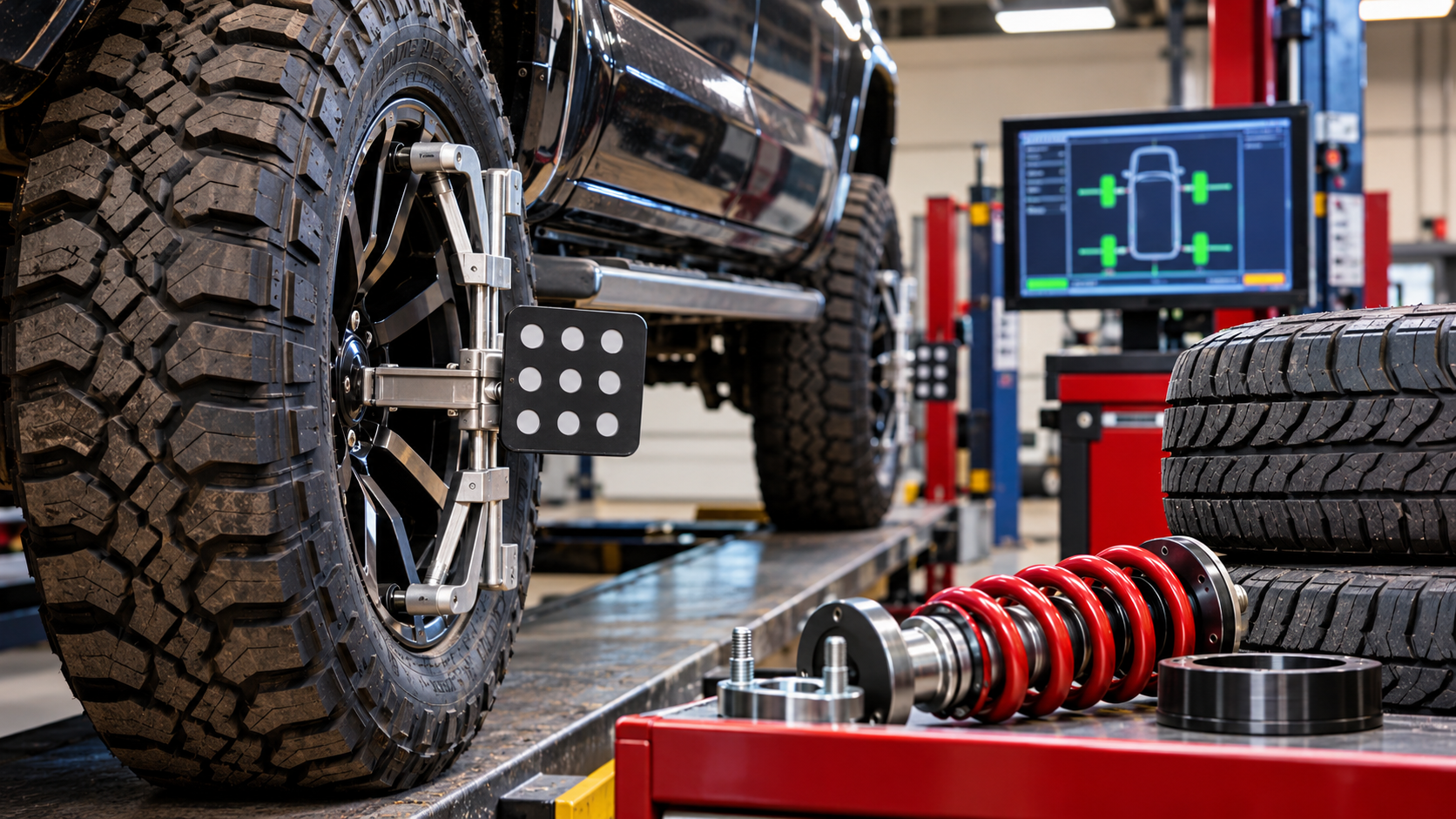
Any time ride height or suspension geometry changes, alignment deserves attention. Camber, caster, and toe determine how the wheels are positioned relative to the road and how the truck tracks as it moves. A suspension modification can move those measurements away from their intended range.
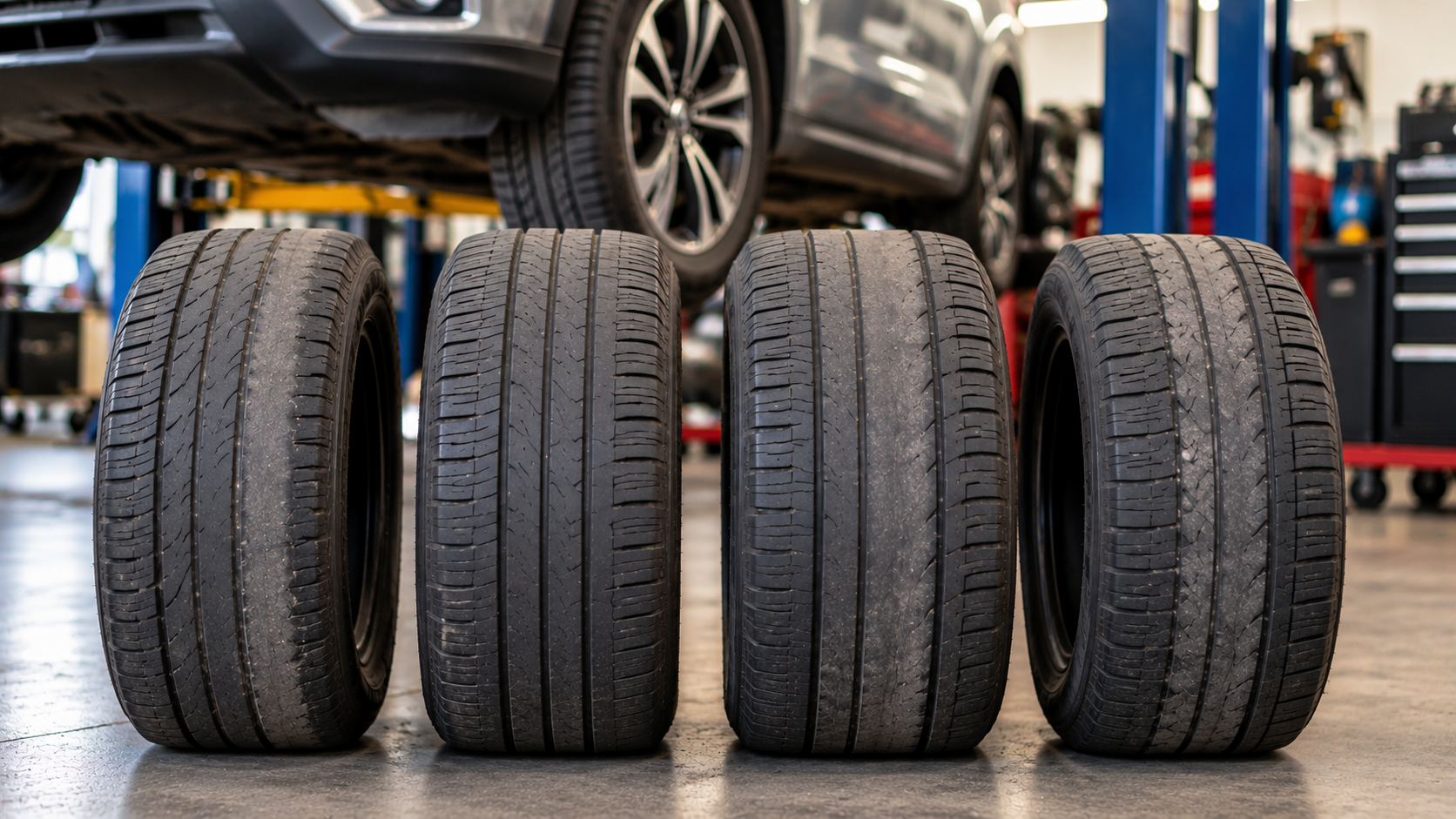
An improper alignment can cause a lifted truck to pull, wander, feel less stable, or wear expensive tires unevenly. Larger tires can make some of those problems even more costly because replacing oversized truck tires is rarely inexpensive.
The National Highway Traffic Safety Administration explains that wheel alignment helps maximize tire life and prevents a vehicle from veering to one side while traveling on a straight, level road. NHTSA also recommends that drivers monitor tires for irregular wear, vibration, and other changes in performance.
That makes alignment after suspension work an important part of a well-planned truck modification. The Wheel Shop uses professional alignment equipment to help ensure that the finished vehicle is not only sitting at the desired height but is also properly set up for the road.
Steering and Braking Still Have to Do Their Jobs
A lifted truck may look tougher, but the fundamental demands placed on its steering and braking systems have not disappeared. In some cases, larger and heavier tires can make those systems work harder.
More rotating mass can affect how quickly the vehicle accelerates and decelerates. Larger tires may also place additional demands on steering and suspension components. Changes in ride height alter the truck’s center of gravity, which can influence how it responds during cornering, lane changes, and emergency maneuvers.
These effects do not mean that a truck should not be lifted. They mean the modification should be approached as a system. Tire size, wheel weight, suspension design, steering geometry, braking condition, and intended use should all be considered together.
At The Wheel Shop, our certified mechanics can look beyond the visible modifications. When a customer comes to us for off-road suspension upgrades, new wheels, tires, or a lift, we understand that how the truck drives after the installation matters just as much as how it looks.
Tire Load Ratings and Intended Use Matter
Not every large tire is appropriate for every truck. Size is only one specification. Load capacity, construction, tread design, speed rating, and intended use also matter.
A truck used primarily for commuting and freeway driving may benefit from a very different tire than one frequently driven through dirt, mud, rocks, or loose terrain. Likewise, a pickup used for towing or hauling needs tires capable of supporting the loads involved. Choosing a more aggressive tread simply because it complements a lifted appearance can introduce unnecessary road noise or different handling characteristics if that tread does not match how the vehicle is actually used.
When customers come to The Wheel Shop for larger tires, we can discuss more than diameter. The truck’s use, load requirements, wheel dimensions, suspension setup, and driving expectations all help determine what kind of tire makes sense.
Do Not Forget the Details That Complete a Lifted Truck
Once the major components are right, smaller details can make the difference between a truck that simply has a lift and a truck that feels intentionally built. Wheel finish, lug hardware, center caps, fender clearance, running boards, and other truck wheel accessories and truck accessories can all contribute to the finished result.
This is another advantage of working with a shop that handles multiple parts of the project. The Wheel Shop offers suspension services, tires, aftermarket and OEM wheels, alignments, wheel repair, powder coating, chrome plating, caliper services, and truck and car accessories. If an existing wheel needs attention or a customer wants a different finish to complement the new stance, we can address that as part of the broader project.
A lifted truck should look cohesive from every angle. More importantly, the components underneath that appearance need to work together when the truck is actually driven.
Frequently Asked Questions About Lifted Trucks
Lift and tire combinations vary significantly from one truck to another, so there is no universal formula that applies to every build. These are some of the questions we frequently consider when helping customers plan wheel, tire, suspension, and alignment changes.
Can I put bigger tires on my truck without installing a lift?
Sometimes. How much larger you can go depends on the specific truck, factory wheel wells, suspension design, wheel width and offset, and tire dimensions. A tire that technically mounts may still rub during turns or suspension compression. The Wheel Shop can help evaluate fitment before you commit to a larger setup.
Do I need an alignment after lifting my truck?
Suspension changes can alter alignment geometry, so an alignment should be evaluated after a lift or significant suspension modification. Correct alignment is particularly important with larger tires because improper camber or toe can contribute to uneven and premature tread wear.
Will bigger tires make my speedometer inaccurate?
They can. Increasing overall tire diameter changes the distance traveled with each wheel revolution. If the change is substantial enough, the speedometer and odometer may no longer correspond precisely with the truck’s actual movement. Some vehicles may require recalibration or other adjustments depending on the modification.
What should I upgrade first: the lift, wheels, or tires?
Ideally, these decisions should be planned together. The desired tire size influences how much clearance may be required, while the lift and suspension design influence wheel fitment and alignment. Wheel width and offset also affect where the tire sits. At The Wheel Shop, we can help customers develop a combination in which the truck wheels and rims, tires, suspension, and final alignment complement one another.
The Wheel Shop Difference
A lifted truck should be more than a factory pickup sitting higher on oversized tires. The wheel-and-tire package, suspension, alignment, clearance, and overall fitment need to work together. At The Wheel Shop, we help customers look at the entire vehicle so that one modification does not create problems somewhere else.
Our certified mechanics bring years of experience, specialized training, and industry certifications to every repair and installation. Whether you are planning a mild lift with a larger all-terrain tire or a more extensive wheel, tire, and suspension transformation, we can help you consider fitment, alignment, appearance, and how the finished truck will actually be used.
If you are considering lifts for trucks, aftermarket truck wheels, larger tires, or a complete suspension upgrade, talk with The Wheel Shop before simply choosing the biggest tire you can fit. Call us at (951) 588-1222 or email save@thewheelshopinc.com to discuss your truck and the setup you have in mind. The right combination can give you the stance you want while keeping the entire build working together.