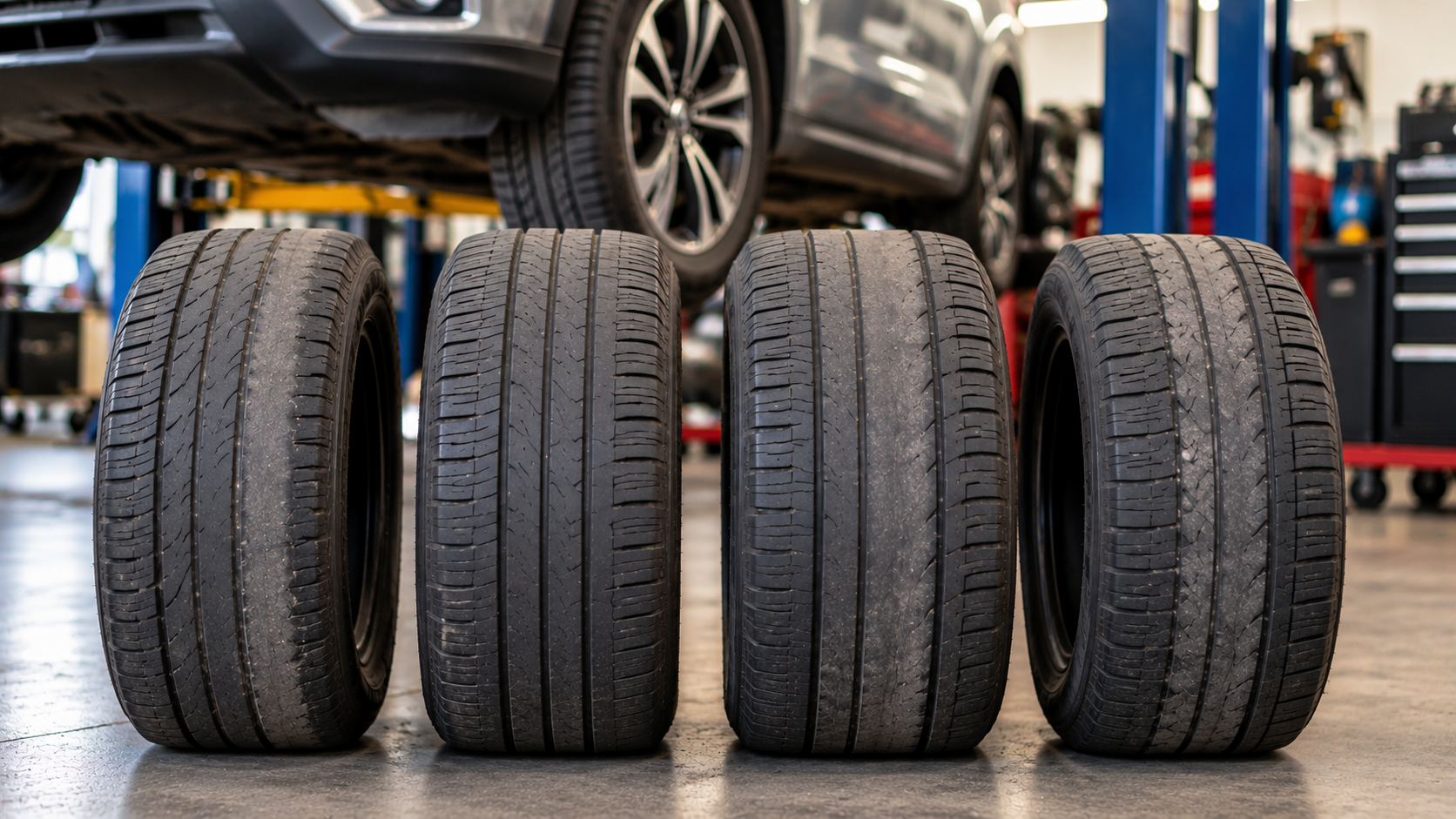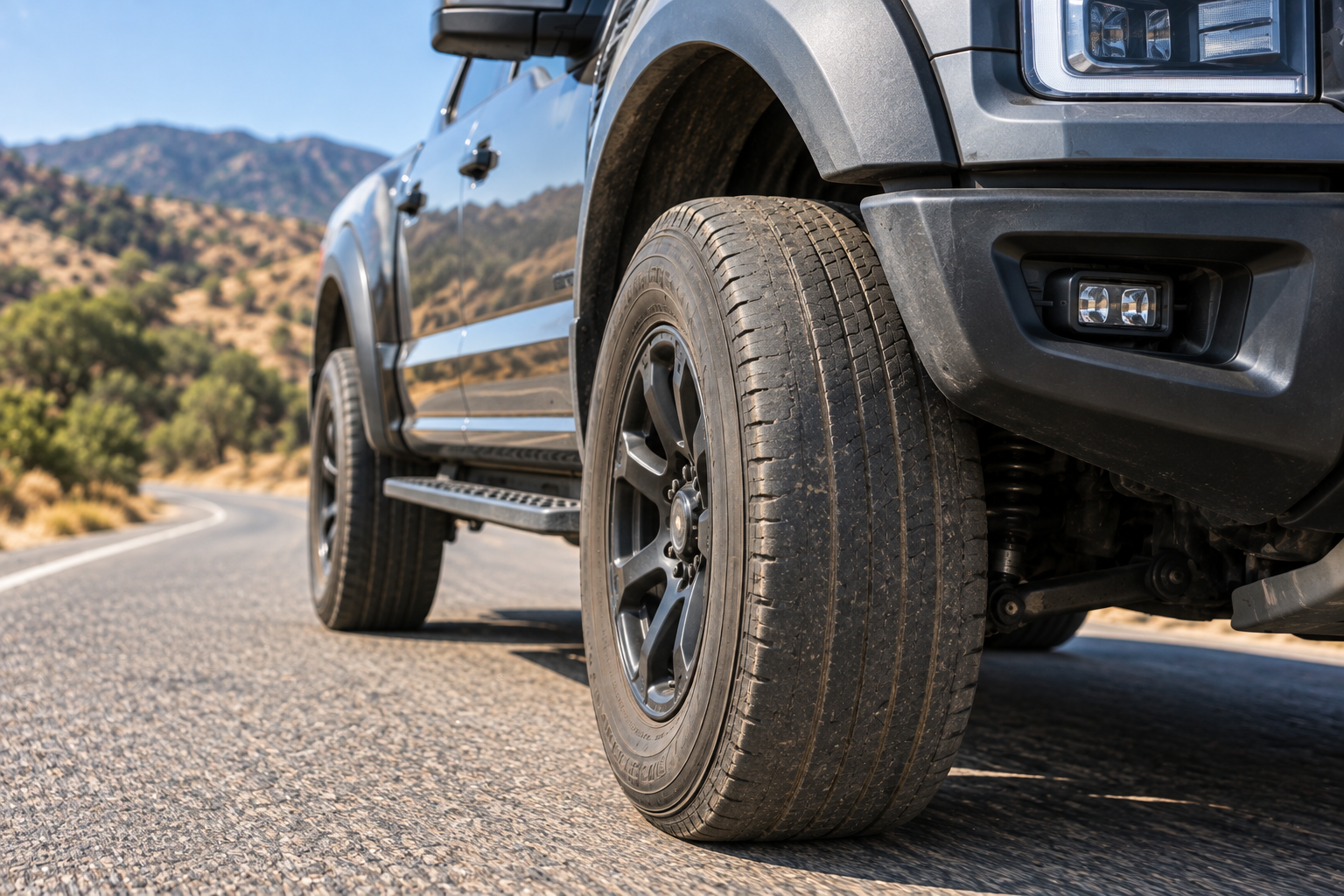
Two drivers can buy similar sets of tires at roughly the same time, put a comparable number of miles on their vehicles, and end up with completely different results. One set may still have plenty of usable tread while the other is already showing worn shoulders, uneven tread, or areas that are approaching replacement depth. That difference is not always about the quality of the tire.
The truth is that tire wear is influenced by the entire vehicle. Alignment, suspension condition, tire pressure, wheel condition, vehicle weight, drivetrain, tire selection, and driving habits can all affect how quickly rubber disappears from the tread. When tires seem to wear unusually fast, simply replacing them without finding the reason can start the same expensive cycle all over again.
At The Wheel Shop, we look beyond the worn tire itself. Because we specialize in tires, alignments, wheel repair, suspension, aftermarket and OEM wheels, and other related services, we can evaluate the systems that influence tire life and help customers determine why their tires are wearing faster than expected.
Some Vehicles Naturally Put More Stress on Their Tires
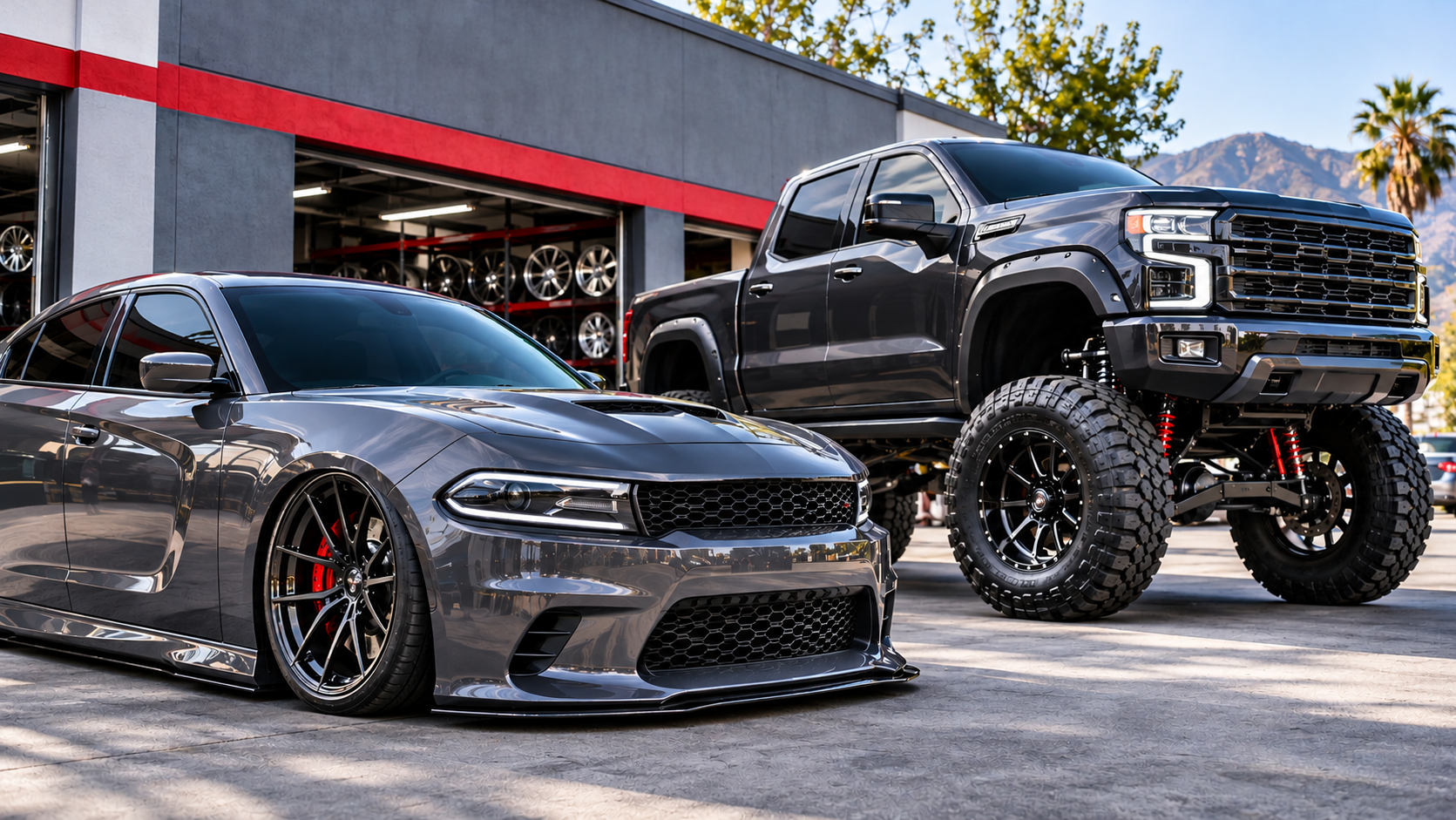
Not every vehicle asks the same thing of its tires. A lightweight commuter car driven primarily on relatively smooth roads places very different demands on its tires than a heavy pickup, performance car, large SUV, or modified vehicle. Vehicle weight alone can increase the forces that tires must handle during acceleration, braking, and cornering.
Power also matters. Vehicles that deliver significant horsepower and torque can place greater stress on their driven tires, particularly when that power is used frequently. Performance vehicles may also use softer tire compounds designed to prioritize grip and handling rather than maximum tread life. In that situation, faster wear does not necessarily indicate that something is mechanically wrong.
Drivetrain configuration can create additional differences. Front-wheel-drive vehicles ask the front tires to handle steering, much of the braking load, and acceleration. Rear-wheel-drive vehicles can place more acceleration-related stress on the rear tires. All-wheel-drive systems distribute power differently, but maintaining appropriate and relatively even tread depth across the tires can be particularly important.
The Wheel Shop can help customers select tires that make sense for the vehicle and the way it is actually driven. The goal is not simply to find a tire that fits the wheel. Tire type, load requirements, performance expectations, vehicle use, and desired tread life should all be part of the decision.
Alignment Can Quietly Destroy a Good Set of Tires
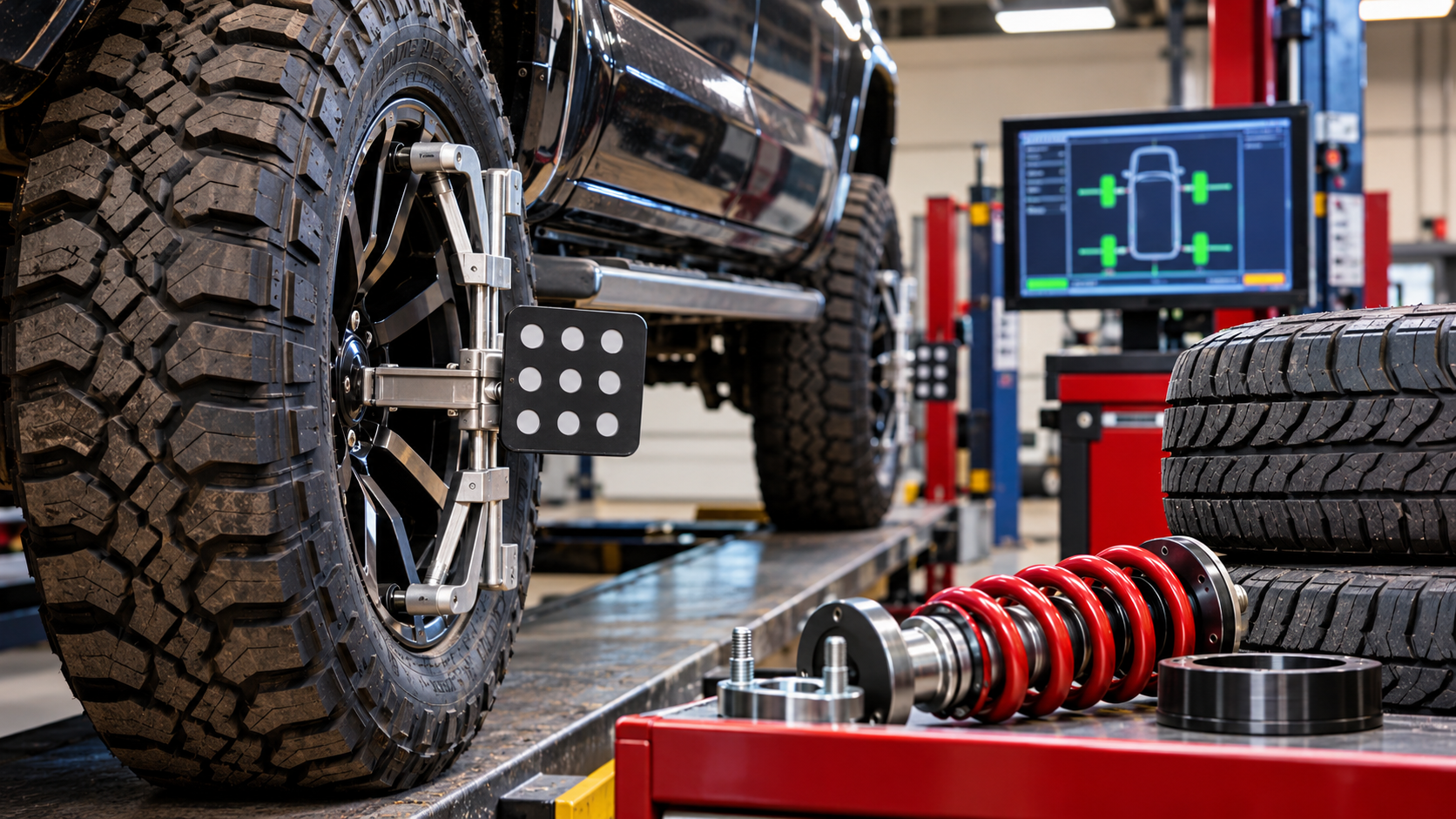
One of the most important causes of premature tire wear is poor wheel alignment. A vehicle does not have to pull dramatically to one side for alignment to be affecting its tires. Relatively small changes in toe, camber, or other alignment settings can alter the way a tire meets the pavement.
Instead of rolling evenly across the road, a misaligned tire may continuously scrub part of its tread against the surface. Thousands of rotations later, that small alignment problem can become significant inner-edge, outer-edge, or irregular wear. By the time a driver notices it visually, a considerable amount of usable tread may already be gone.
Michelin notes that one-sided tire wear can indicate an alignment problem and that feathering can be associated with incorrect toe settings. It also explains that uneven tire wear and changes in steering response are reasons to have alignment inspected. (Michelin)
This is why The Wheel Shop treats alignments as part of tire care rather than simply a steering-related service. If a customer is replacing tires because the old set wore unevenly, checking alignment can help prevent the new tires from developing the exact same problem.
Tire Pressure Has a Bigger Effect Than Many Drivers Realize
Tire pressure is easy to overlook because a tire can be improperly inflated without looking obviously low or overinflated. Yet inflation directly affects the shape of the tire’s contact with the pavement.
Chronic underinflation can contribute to increased wear along the outer portions of the tread, while excessive inflation can contribute to greater wear toward the center. Incorrect pressure can also affect handling, rolling resistance, heat buildup, and overall tire performance.
The National Highway Traffic Safety Administration’s TireWise guidance recommends checking tire pressure at least once a month when the tires are cold. NHTSA also points out that proper inflation, rotation, balance, and alignment can help tires last longer.
Drivers should use the pressure specified by the vehicle manufacturer, generally found on the driver’s-side doorjamb label or in the owner’s manual, rather than simply using the maximum pressure printed on the tire sidewall. If one tire repeatedly loses pressure, that also deserves attention. A puncture, valve issue, wheel problem, or other condition may be responsible.
Suspension Problems Can Show Up in the Tires
Tires do not operate independently of the suspension. Shocks, struts, springs, bushings, control arms, and other suspension components help keep the tire controlled as the vehicle travels over bumps, dips, turns, and changing road surfaces.
When suspension components become worn or damaged, the tire may no longer maintain consistent contact with the road. One possible result is cupping or scalloping, where alternating high and low spots develop around the tread. The driver may eventually notice increased road noise or vibration, but the unusual tread pattern may provide an earlier clue.
Suspension condition can also affect alignment. If a component has excessive movement or is damaged, performing an alignment without addressing the underlying mechanical problem may not provide a lasting solution.
That is one advantage of bringing tire-wear concerns to The Wheel Shop. Since we provide suspension and alignment services in addition to tires, we can look for a cause rather than assuming that every tire problem requires only another set of tires.
Wheels, Balance, and Fitment Can Also Affect Tire Life
The wheel underneath the tire matters as well. A wheel that is bent or out of round can interfere with smooth rotation and may contribute to vibration, balancing difficulties, and irregular tire wear. Potholes, road debris, and hard impacts can cause wheel damage that is not always obvious during a quick visual inspection.
The Wheel Shop provides wheel repair and wheel straightening for situations where damage can safely be corrected. Our wheel repair process uses specialized equipment to restore qualifying wheels rather than simply treating the symptoms caused by the damaged wheel.
Wheel and tire fitment is another consideration, especially on modified vehicles. Wheel width, tire size, offset, suspension modifications, and available clearance all need to work together. The Wheel Shop offers aftermarket and OEM wheels, and we take fitment seriously because a wheel and tire combination should work properly with the vehicle, not simply look good when parked.
Balancing matters too. An imbalance can create vibration and prevent the tire and wheel assembly from rotating as smoothly as intended. Imbalance can contribute to irregular or cupped tread wear, while alignment and balancing address different aspects of how the tire operates.
Rotation Helps Account for Unequal Workloads
Even a mechanically healthy vehicle does not necessarily wear all four tires at exactly the same rate. Tire position changes the work each tire performs. Steering, braking, acceleration, drivetrain layout, and vehicle weight distribution can make certain positions harder on tires than others.
Regular tire rotation helps redistribute those workloads. Instead of allowing one pair of tires to remain in the highest-wear positions throughout its entire service life, rotation gives the tires an opportunity to wear more evenly when the vehicle and tire configuration allow it.
Rotation schedules vary, so drivers should follow their vehicle and tire manufacturers’ recommendations. Depending on the manufacturer, rotation may generally be performed every 5,000 to 8,000 miles or sooner when uneven wear appears. Some vehicles with different front and rear tire sizes may have limited or no traditional rotation options.
Rotation, however, cannot fix an underlying mechanical problem. Moving a tire that is wearing badly because of incorrect alignment simply moves the damaged tire to another position. If The Wheel Shop sees an unusual pattern, identifying what produced that pattern is an important part of protecting the remaining tire life.
Driving Conditions and Habits Make a Difference
The vehicle itself is only part of the equation. How and where it is driven can dramatically change tire life. Frequent hard acceleration, aggressive cornering, abrupt braking, heavy loads, rough roads, potholes, and repeated stop-and-go driving can all increase stress on the tread.
A truck that regularly carries or tows substantial weight, for example, has different tire demands than the same model used primarily for commuting. Likewise, a performance vehicle driven enthusiastically through curves is likely to consume tread differently than one driven conservatively on the highway.
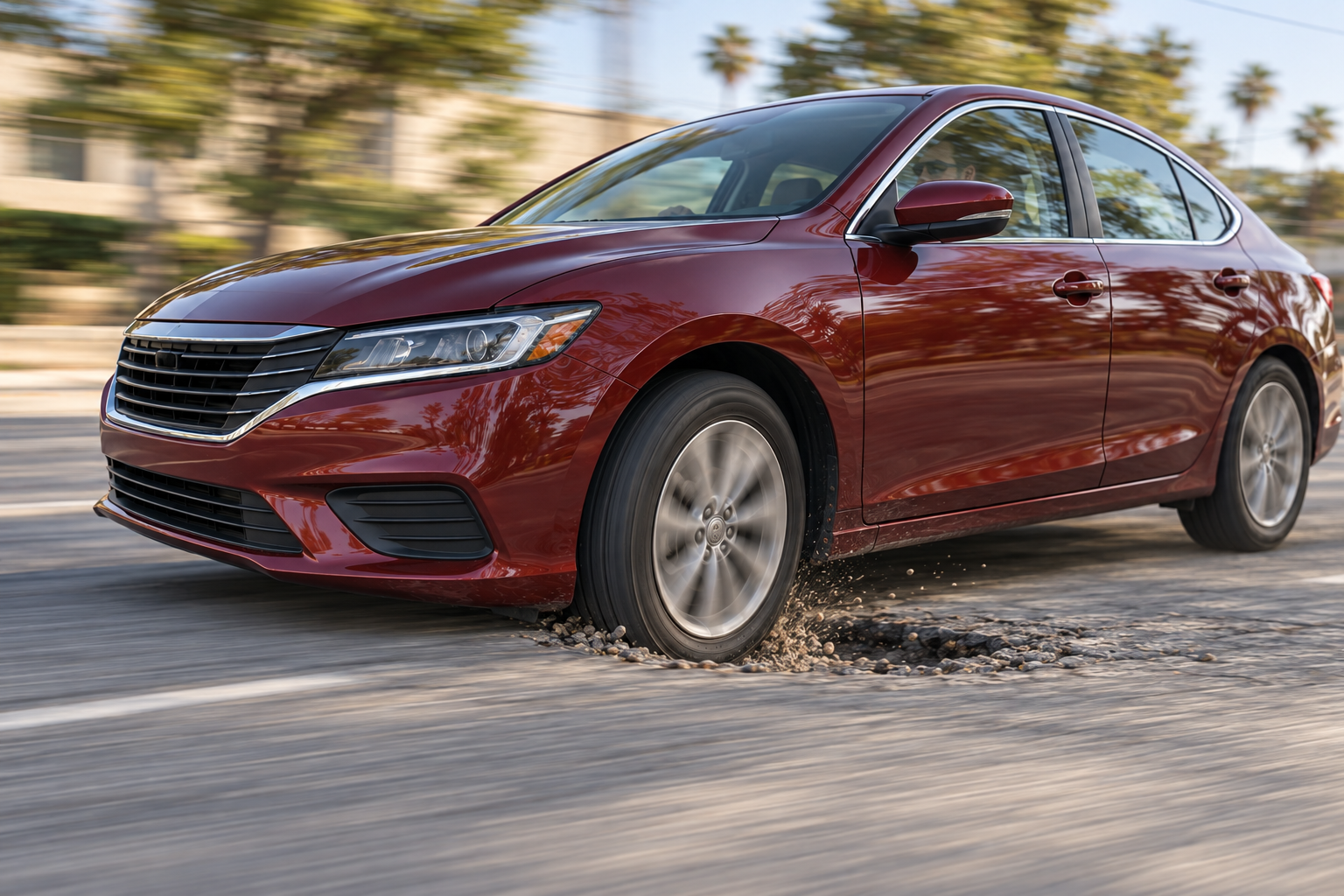
Road impacts can have secondary effects as well. A pothole may not immediately destroy a tire, but it can bend a wheel or alter alignment. That means a single impact can potentially start an uneven-wear problem that becomes visible thousands of miles later.
This is why context matters when we inspect a tire. At The Wheel Shop, understanding the vehicle, its modifications, how it is used, and the wear pattern itself helps us narrow down the likely cause instead of assuming that every driver should get identical mileage from a set of tires.
The Wear Pattern Can Tell Us a Story
When tires wear unusually quickly, the location and shape of the wear can provide valuable clues. Heavy wear on one edge may point toward alignment. Wear on both shoulders may suggest chronic underinflation. Greater wear in the center can be associated with overinflation. Cupping or scalloping may justify looking more closely at balance, alignment, or suspension condition.
The important point is that replacing the tire does not erase the cause. Once abnormal tread wear has occurred, correcting alignment or repairing the suspension will not restore rubber that has already been worn away. It can, however, help stop the condition from continuing and protect replacement tires.
Frequently Asked Questions
Premature tire wear can be frustrating because there is rarely one mileage number that every tire should reach on every vehicle. The following questions address several of the issues we commonly consider when evaluating tire life.
Why are my front tires wearing faster than my rear tires?
Front tires often handle substantial steering and braking forces, and on a front-wheel-drive vehicle they also transmit engine power to the road. That combination can cause the front tires to wear more quickly. Regular rotation, when permitted for the tire and vehicle configuration, can help distribute wear.
However, a dramatic difference between front and rear tread wear may deserve inspection. Alignment, inflation, suspension condition, or another issue could be accelerating the wear.
Why are my new tires wearing out so quickly?
Start by looking beyond the tires themselves. Incorrect pressure, poor alignment, worn suspension components, wheel problems, lack of rotation, aggressive driving, heavy loads, and an inappropriate tire choice can all shorten tread life.
The wear pattern is especially useful. At The Wheel Shop, we can inspect the tires and related components to help determine whether the wear appears consistent with normal vehicle use or indicates a correctable problem.
Will getting an alignment make my tires last longer?
If the vehicle is misaligned, correcting the alignment can help prevent the continuing irregular wear associated with that condition. NHTSA specifically identifies alignment as an important part of maximizing tire life.
An alignment cannot restore tread that has already disappeared, however. That is why addressing uneven wear early is preferable to waiting until the tire is nearly worn out.
How do I know when uneven tire wear needs professional attention?
Do not wait for the tire to become bald. Have the vehicle inspected if you notice significantly different tread depths between tires, excessive inner- or outer-edge wear, cupping, vibration, pulling, an off-center steering wheel, recurring pressure loss, or a sudden change in handling.
According to NHTSA, tires should be replaced when tread reaches 2/32 of an inch, and tires with physical damage or significant irregular wear may also require replacement.
The Wheel Shop Difference
Replacing worn tires solves the immediate problem, but finding out why your tires are wearing fast can help prevent the same problem from returning. At The Wheel Shop, we have been in the wheel and tire industry for more than twenty years, and our Riverside team understands that premature tire wear often requires looking at more than the tread.
Our certified mechanics bring years of experience, specialized training, and industry certifications to every repair and installation. Because we offer tires, alignments, suspension services, wheel repair, aftermarket and OEM wheels, powder coating, calipers, chrome plating, and truck and car accessories, we can take a broader look at the components that influence tire performance. Whether your vehicle needs a straightforward tire replacement or there is an alignment, suspension, wheel, or fitment issue contributing to the wear, our goal is to identify the right solution.
We can also help you choose tires that fit your vehicle and the way you drive. The right tire is not simply the correct diameter. Vehicle type, performance expectations, load requirements, driving habits, and intended use all matter. Combining appropriate tire selection with professional installation and attention to alignment, wheel condition, and suspension can help you get more value from your investment.
If your tires seem to disappear faster than they should, do not automatically assume another set of tires is the entire answer. Contact The Wheel Shop in Riverside at (951) 588-1222 or email save@thewheelshopinc.com to have our experienced team evaluate your vehicle. We can help you understand what your tire wear is telling you and address the underlying issues so your next set has the best opportunity to perform as intended.