The Unseen Hero of Your Vehicle’s Performance
Maintaining the correct tire pressure is one of the simplest yet most overlooked aspects of vehicle care. Properly inflated tires not only extend the life of your tires but also play a critical role in ensuring safety, fuel efficiency, and overall performance on the road. Even a slight deviation from the recommended pressure can lead to uneven wear, reduced handling, and increased risk of accidents. Understanding why tire pressure matters and taking the time to monitor it regularly can save money, improve driving comfort, and provide peace of mind every time you get behind the wheel.
Here’s why maintaining proper tire pressure matters more than you might expect:
- Safety: Prevents dangerous blowouts and maintains optimal handling and braking performance
- Fuel Economy: Improves gas mileage by up to 3.3% – saving you money at every fill-up
- Tire Longevity: Extends tire life by preventing uneven wear that can reduce tread life by 25%
- Performance: Ensures predictable steering response and stability in all driving conditions
The numbers tell a sobering story. According to the U.S. Department of Energy, underinflated tires waste approximately 3.56 million gallons of gas daily across America. Even worse, only 19% of consumers properly check and maintain their tire pressure, while about 25% of all vehicles have at least one significantly underinflated tire.
For busy people like you, this simple 5-minute monthly check can prevent costly repairs, improve safety, and save money on fuel. Tires naturally lose about 1 PSI per month through normal permeation, and temperature changes can cause additional pressure fluctuations of 1 PSI for every 10°F drop.
Finding and Understanding Your Vehicle’s Ideal Tire Pressure
The ideal tire pressure for your vehicle is not a guess; it is the result of precise calculations made by the engineers who designed it. This number represents the balance point where safety, efficiency, and performance meet. Proper tire pressure affects far more than just how your tires look or feel—it directly influences handling, braking distance, fuel economy, and even the overall lifespan of your tires. When you understand that this carefully determined figure is the foundation of your vehicle’s performance, it becomes clear why maintaining proper tire pressure is far more important than many drivers realize.
Your car’s manufacturer considered its weight, suspension, and braking system to determine the recommended PSI (Pounds per Square Inch). This is the sweet spot where your tires grip properly, wear evenly, and help your engine work efficiently.
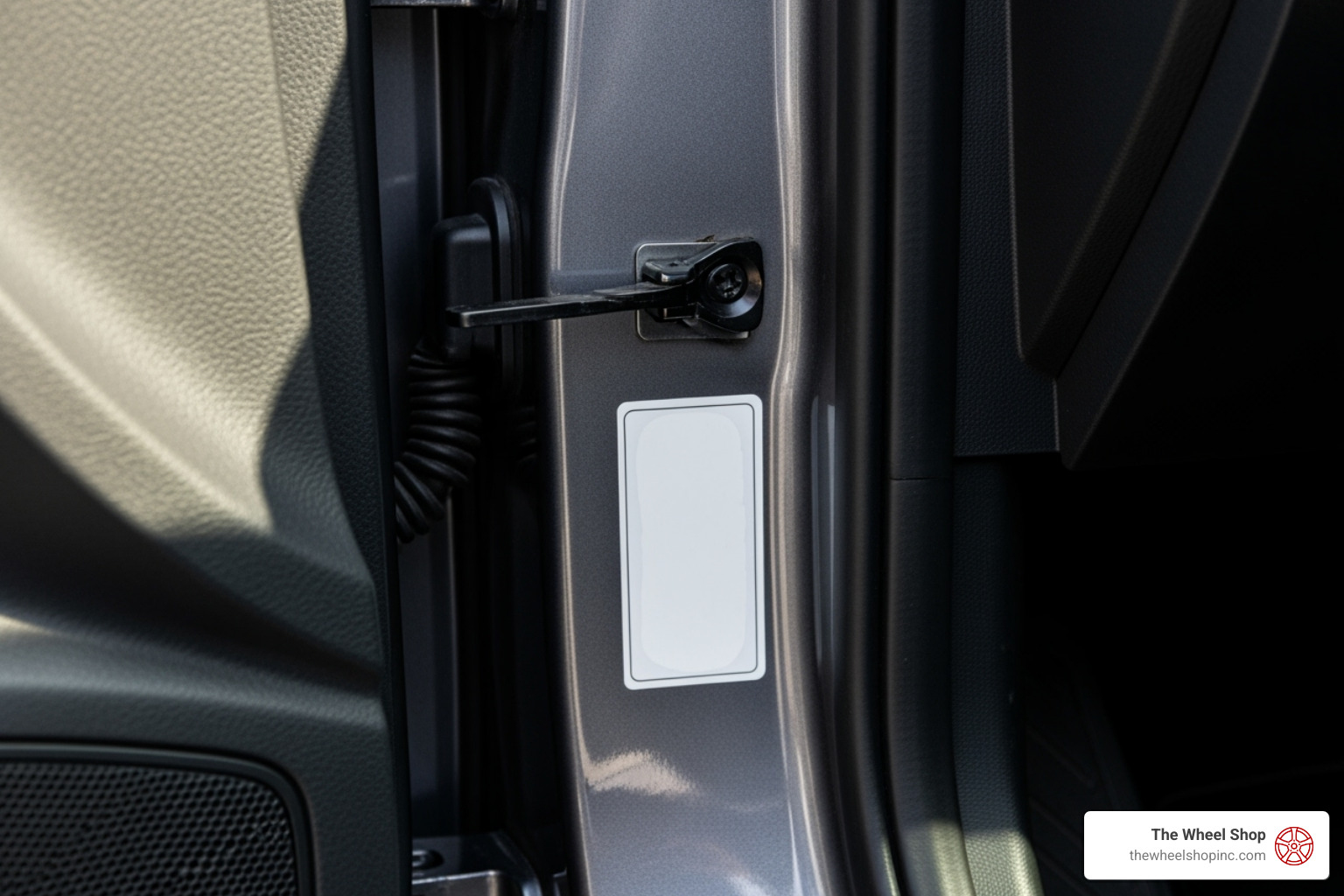
Where to Find the Correct PSI for Your Vehicle
Finding your vehicle’s correct tire pressure is easy. You have two reliable sources, but it’s important to note: don’t use the number on your tire’s sidewall.
- The driver’s side door jamb: Open your driver’s door and look for a sticker on the frame. It lists the recommended PSI for your front and rear tires, and sometimes the spare.
- Your owner’s manual: Your glove box manual contains the same pressure information and is a great backup if the sticker is missing or damaged.
Most cars need between 32 and 35 PSI, but always check your specific vehicle’s recommendation. If you’re curious about the other markings on your tires, see our guide on how to read tire information.
For a visual guide, this resource on how to find the correct tire pressure is helpful.
Why the Sidewall Number is Not the One to Use
Here’s a common point of confusion: the pressure listed on your tire’s sidewall. You might see “MAX PRESS 44 PSI” and assume that’s the target. However, this is a mistake. The sidewall number is the maximum pressure the tire can safely handle, not the recommended pressure for your vehicle.
Your vehicle’s engineers determined the recommended PSI after considering your car’s specific weight, handling, and braking systems. They calculated the exact pressure that creates the perfect contact patch—the part of your tire touching the road—for your car.
Using the maximum sidewall pressure will lead to problems. Your ride will feel harsh, and more importantly, only the center of your tire will properly touch the road. This causes uneven wear and reduces grip when you need it most. While the tire can handle that maximum pressure, your vehicle performs best at its manufacturer-recommended pressure.
The Hidden Costs of Incorrect Inflation: Fuel, Wear, and Tear
Even a small difference of a few PSI in tire pressure can have a significant effect on your expenses. The importance of maintaining proper tire pressure becomes evident when considering the costs of fuel and tire replacement. Tires that are underinflated or overinflated increase rolling resistance, forcing your engine to work harder and consume more fuel. At the same time, uneven pressure accelerates tire wear, reducing their lifespan and leading to more frequent replacements. Paying attention to the correct tire pressure is a simple step that can protect both your wallet and your vehicle.
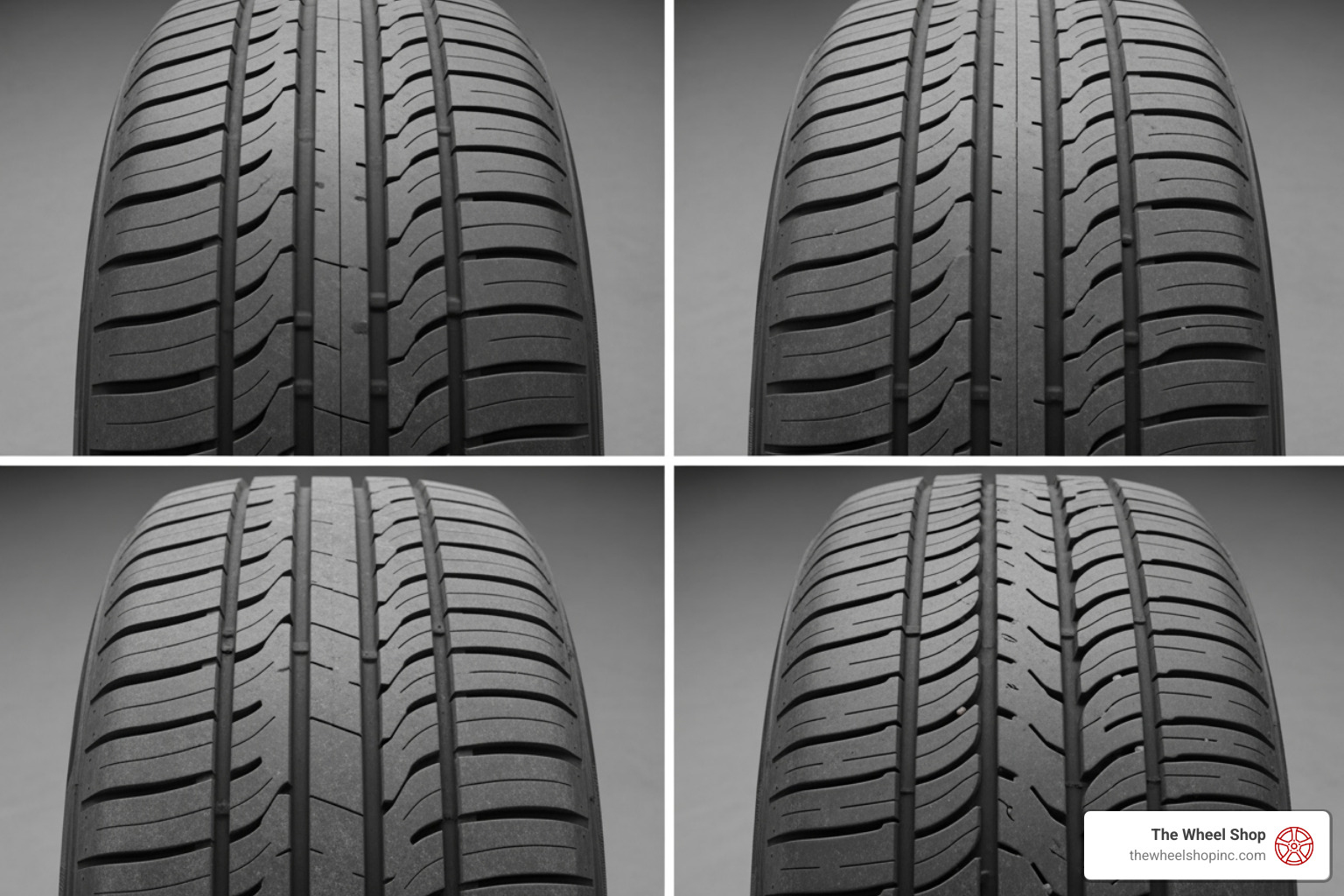
At The Wheel Shop, we’ve seen how this simple maintenance could have saved customers hundreds. Our tips for extending tire life can help you maximize your investment.
How Underinflated Tires Drain Your Wallet
Underinflated tires increase rolling resistance, making your engine work harder. The numbers are clear: for every 1 PSI drop in tire pressure, you lose about 0.2% in fuel efficiency. Keeping tires properly inflated can improve your gas mileage by up to 3.3%, saving you money at the pump.
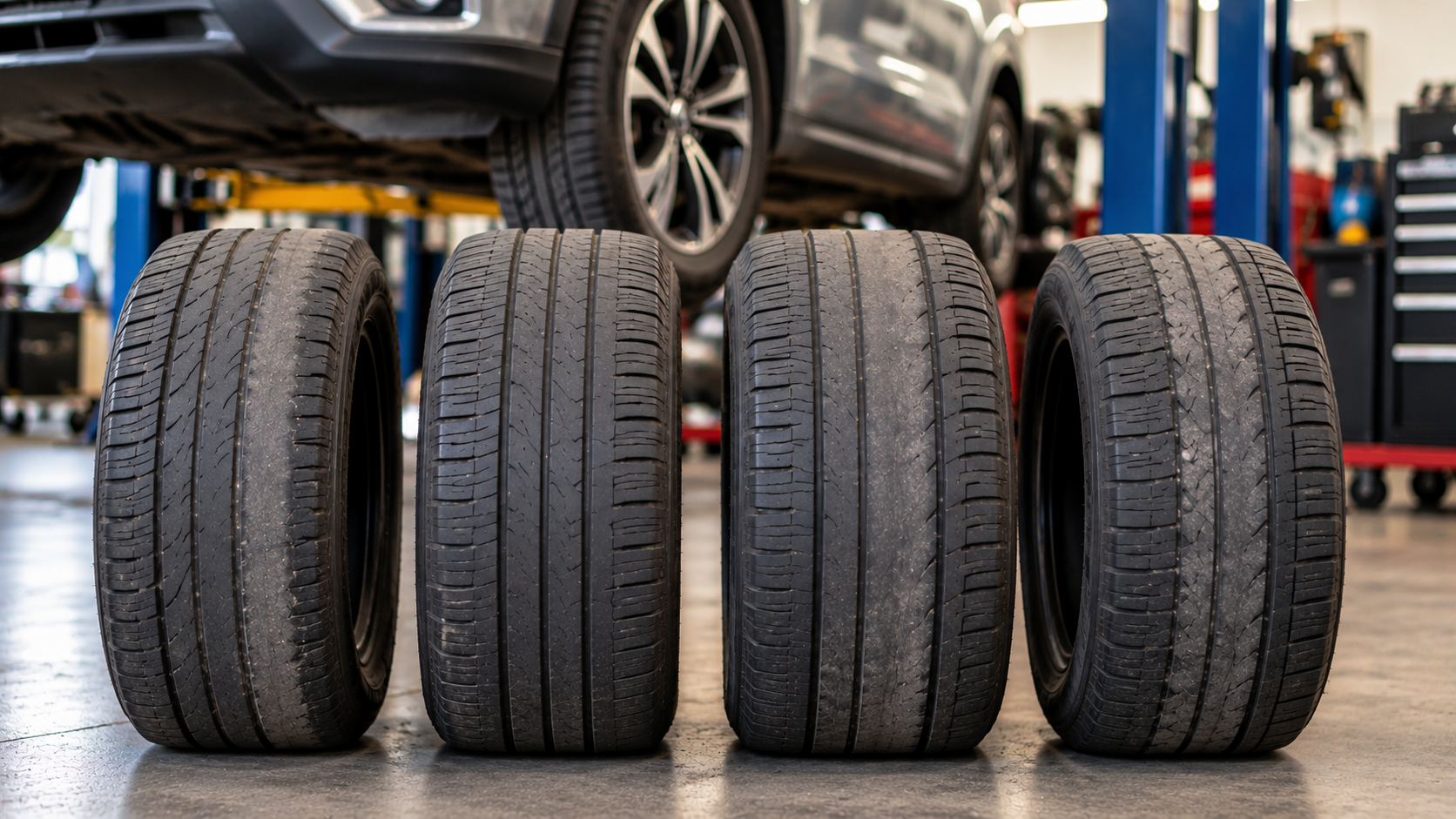
Beyond fuel, underinflation causes the outer shoulders of the tire to wear much faster than the center. This excessive sidewall flex and scrubbing can reduce your tire’s lifespan by up to 25%, forcing you to buy new tires much sooner. The US Department of Energy data on fuel economy confirms these costly consequences.
The Risks of Overinflated Tires
Overinflation is also problematic. When a tire has too much air, it becomes rigid and the contact patch with the road shrinks, leading to several issues:
- Reduced Traction: Less rubber on the road compromises grip, especially in wet conditions.
- Harsh Ride: Stiff tires can’t absorb bumps, leading to a jarring ride and extra stress on your suspension.
- Uneven Wear: Overinflated tires wear out the center of the tread much faster, leading to premature replacement.
- Increased Blowout Risk: A rigid tire is more susceptible to damage from potholes, increasing the risk of a dangerous blowout.
Why Proper Tire Pressure is More Important Than You Think for Vehicle Safety
Beyond saving money, proper tire pressure becomes a matter of life and death on the road. Your tires are the only connection between your vehicle and the pavement. Every turn, stop, and emergency maneuver relies on them. When pressure is wrong, that connection becomes unpredictable.
Properly inflated tires respond better, stop shorter, and grip tighter in corners, giving you the control you need when it matters most.
This link between pressure and safety is critical, just like the connection between tread depth and braking.
The Critical Link Between Tire Pressure, Handling, and Stability
Incorrect tire pressure makes your car handle like wearing shoes that don’t fit. Proper inflation ensures contact patch optimization, creating the perfect footprint on the road for maximum grip.
- Steering response becomes precise and immediate.
- Cornering grip is reliable, allowing the tire to flex correctly and maintain traction.
- Overall stability improves, making the car feel planted and secure.
This stability is also affected by other factors, which we cover in our guide on the importance of wheel alignment for handling.
Why Proper Tire Pressure is More Important Than You Think for Preventing Blowouts
A tire blowout at highway speed is a terrifying event, and incorrect tire pressure is a leading cause. Underinflation is particularly dangerous. As an underinflated tire rolls, its sidewalls flex excessively, generating intense heat buildup. This heat breaks down the tire’s internal structure, causing structural damage you can’t see.
Once this damage occurs, the tire failure risk skyrockets, and a simple pothole can trigger a catastrophic failure. Underinflated tires also increase stopping distances. Overinflated tires are also risky; their rigidity makes them more vulnerable to road hazards. As the NHTSA tire safety information confirms, proper inflation is essential for preventing these failures. This risk is entirely preventable with a few minutes of monthly maintenance.
Your Guide to Regular Tire Pressure Maintenance
Now that we’ve covered the “why,” let’s dive into the “how.” Maintaining proper tire pressure is surprisingly simple – it takes just a few minutes each month but delivers enormous benefits for your safety, wallet, and peace of mind.
The best part? You don’t need expensive equipment or mechanical expertise. A basic tire pressure gauge and a monthly commitment to this small task will keep you rolling safely and efficiently.
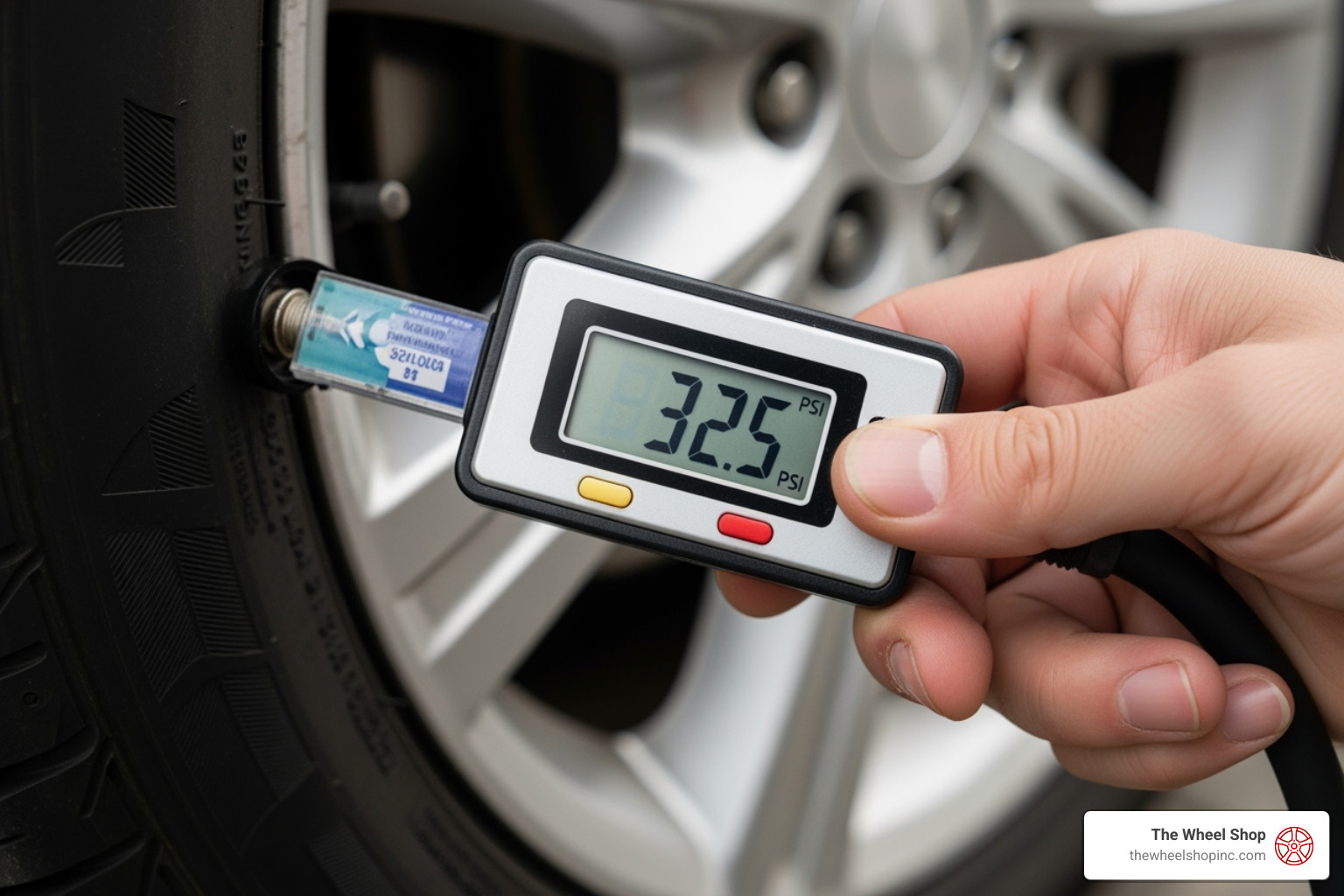
How and When to Check Your Tire Pressure
Think of tire pressure checks as a simple monthly habit that prevents bigger problems down the road. The key is consistency and timing.
Check your tires monthly and always before long trips. Your tires are constantly losing air naturally – about 1 PSI per month through normal permeation – so regular monitoring keeps you ahead of any issues.
Timing matters more than you might think. Always check when your tires are cold, meaning your car hasn’t been driven for at least three hours or has traveled less than a mile at moderate speeds. Why? Heat from driving artificially raises tire pressure, giving you a false reading. That early morning check before your commute is perfect timing.
Here’s your simple step-by-step process:
- Grab your tire pressure gauge – a digital one costs about $15 and is worth every penny for accurate, easy-to-read results
- Double-check your vehicle’s recommended PSI from the door jamb sticker or owner’s manual
- Remove the valve cap from your tire’s valve stem
- Press the gauge firmly onto the valve stem until the hissing stops and you get a steady reading
- Compare to your recommended pressure and adjust accordingly
- Add air if needed using a compressor, or release air by gently pressing the valve stem center
- Replace the valve cap to keep dirt and moisture out
- Repeat for all four tires – don’t forget your spare tire if you have one
The whole process takes less than five minutes but provides weeks of better performance, safety, and fuel economy.
Why Proper Tire Pressure is More Important Than You Think, Even with a TPMS
Your car’s Tire Pressure Monitoring System (TPMS) is a fantastic safety net, but it’s not a substitute for regular manual checks. Understanding its limitations shows exactly why you need to monitor your tire pressure, even with modern technology watching your back.
Temperature changes alone can dramatically affect your tire pressure. For every 10°F temperature drop, you lose about 1 PSI. When autumn arrives and temperatures plummet, your perfectly inflated summer tires might suddenly be running low – but your TPMS won’t necessarily warn you until it’s a serious problem.
Here’s the critical limitation: your TPMS warning light typically activates only when a tire drops 25% below the recommended pressure. If your tires should be at 35 PSI, that warning light won’t illuminate until pressure drops to around 26 PSI. By then, you’re already experiencing reduced fuel economy, compromised safety, and accelerated tire wear.
Think of TPMS as your smoke detector – it alerts you to danger, but you wouldn’t skip regular home maintenance just because you have one. The same principle applies to tire pressure. Manual checks catch problems early, while TPMS catches emergencies.
Your monthly pressure check takes just minutes but ensures your tires perform at their peak every single day – something no warning system can guarantee.
Frequently Asked Questions About Tire Pressure
At The Wheel Shop, we’ve answered countless questions about tire pressure over our twenty years in business. Here are some of the most common ones:
What are the main consequences of ignoring tire pressure recommendations?
Ignoring tire pressure leads to serious consequences:
- Financial Cost: You’ll spend more on fuel due to lower efficiency and have to replace tires sooner because of uneven wear.
- Reduced Safety: Your vehicle’s handling, braking, and stability are all compromised, increasing accident risk.
- Blowout Risk: The most severe consequence is a tire blowout, often caused by heat buildup in underinflated tires, which can lead to a loss of control.
Can I just rely on my car’s Tire Pressure Monitoring System (TPMS)?
No. Your TPMS is an emergency warning system, not a maintenance tool. The warning light typically only activates when a tire’s pressure is 25% or more below the recommended level. By that point, your safety and efficiency are already compromised. Regular manual checks with a gauge are the only way to maintain optimal pressure.
Why is the pressure on my tire’s sidewall different from the one on my door sticker?
This is a critical distinction. The number on the tire’s sidewall is the MAXIMUM pressure the tire can safely hold. The number on your vehicle’s door sticker is the RECOMMENDED pressure, calculated by engineers for your specific car’s weight and handling. For optimal safety, performance, and tire life, always use the pressure on your vehicle’s door sticker.
The Wheel Shop Difference
Incorrect tire pressure costs you money whether it’s too high or too low. Underinflated tires can reduce your fuel economy by up to 3.3% while shortening tire life by 25%. Overinflated tires create their own problems with harsh ride quality, reduced traction, and uneven wear patterns.
That’s where we come in. At The Wheel Shop, we’ve spent over twenty years perfecting our craft in wheel and tire services. Our team understands that your tires are just one part of a complex system that includes wheel alignment, suspension components, and overall vehicle dynamics. We don’t just inflate tires; we ensure your entire wheel and tire system works together harmoniously.
Whether you need precision alignments, specialty wheel repair, or just want the peace of mind that comes with professional tire inspection, we’re here to help. Our commitment to top-tier craftsmanship and exceptional customer service means you can trust us with one of your vehicle’s most critical safety components.
Ready to give your vehicle the professional attention it deserves? We invite you to schedule professional tire services with our experienced team. Let us help you maximize your safety, performance, and savings – because your tires deserve more than just a quick glance at the gas station.