Why Electric Vehicles Demand Specialized Wheels
Electric vehicles (EVs) demand specialized wheels because their design and performance characteristics differ significantly from traditional gas-powered cars. EVs carry large, heavy battery packs, which add substantial weight to the vehicle. Standard wheels may not be engineered to handle this additional load, potentially leading to accelerated wear, reduced handling performance, or safety concerns. Additionally, EVs deliver power differently—with instant torque from a standstill—placing more stress on the wheels and tires during acceleration and braking.
Beyond strength, EV wheels are also designed with efficiency in mind. Reducing aerodynamic drag is critical for maximizing driving range, so EV wheels often feature unique shapes, lightweight materials, or smooth finishes that help minimize air resistance. They may also incorporate noise-reducing designs to complement the quiet operation of electric drivetrains. In short, EV wheels are not just aesthetic choices—they are essential components engineered to balance safety, performance, and energy efficiency in a way that standard wheels cannot.
| Factor | Why It Matters for EVs |
|---|---|
| Rolling resistance | Tires consume ~16% of EV energy vs. 5% in gas cars |
| Wheel weight | Heavier wheels drain battery faster, especially in stop-and-go |
| Aerodynamics | Non-aero wheel designs reduce efficiency by 3-5% |
| Load capacity | EV battery packs add hundreds of pounds of extra vehicle weight |
| Noise | Silent cabins make road noise from tires far more noticeable |
The short answer: EVs are much more sensitive to wheel and tire choices than gas cars. The wrong setup can cost you 40+ miles of range. The right setup keeps your battery working efficiently mile after mile.
Here’s why that gap is so big.
Gas engines are loud and inefficient enough that small losses from wheels barely register. But an EV runs on a fixed battery — every watt matters. That means wheel weight, tread design, aerodynamics, and rolling resistance all have a direct, measurable impact on how far you can drive.
Add in two other EV-specific realities — instant torque delivery that stresses tires hard from a standstill, and battery packs that often weigh as much as a full-size gas truck engine — and it’s clear that choosing wheels for an electric vehicle is a completely different decision than it is for a conventional car.
When we talk about why EVs need specialized gear, we have to look at the scales. A typical EV battery pack is not just a small component; it often weighs significantly more than a standard internal combustion engine. This extra weight means the wheels and tires are under constant, heavy pressure. If you use a wheel or tire not rated for that specific load, you risk premature failure or poor handling.
Furthermore, electric powertrains generate torque immediately. There is no “revving up” like a gas engine. The moment you touch the pedal, the motor tries to twist the wheels with maximum force. This makes the science behind proper tire fitment more than just size; it’s about ensuring the wheel-to-tire connection can handle that aggressive launch without slipping or wearing down instantly.
Managing Weight and Instant Torque
One of the biggest shocks for new EV owners in Riverside is how quickly they need their first set of replacement tires. Because of the heavy battery and that instant-on torque, EV tires can wear out 20% faster than those on a gas car.
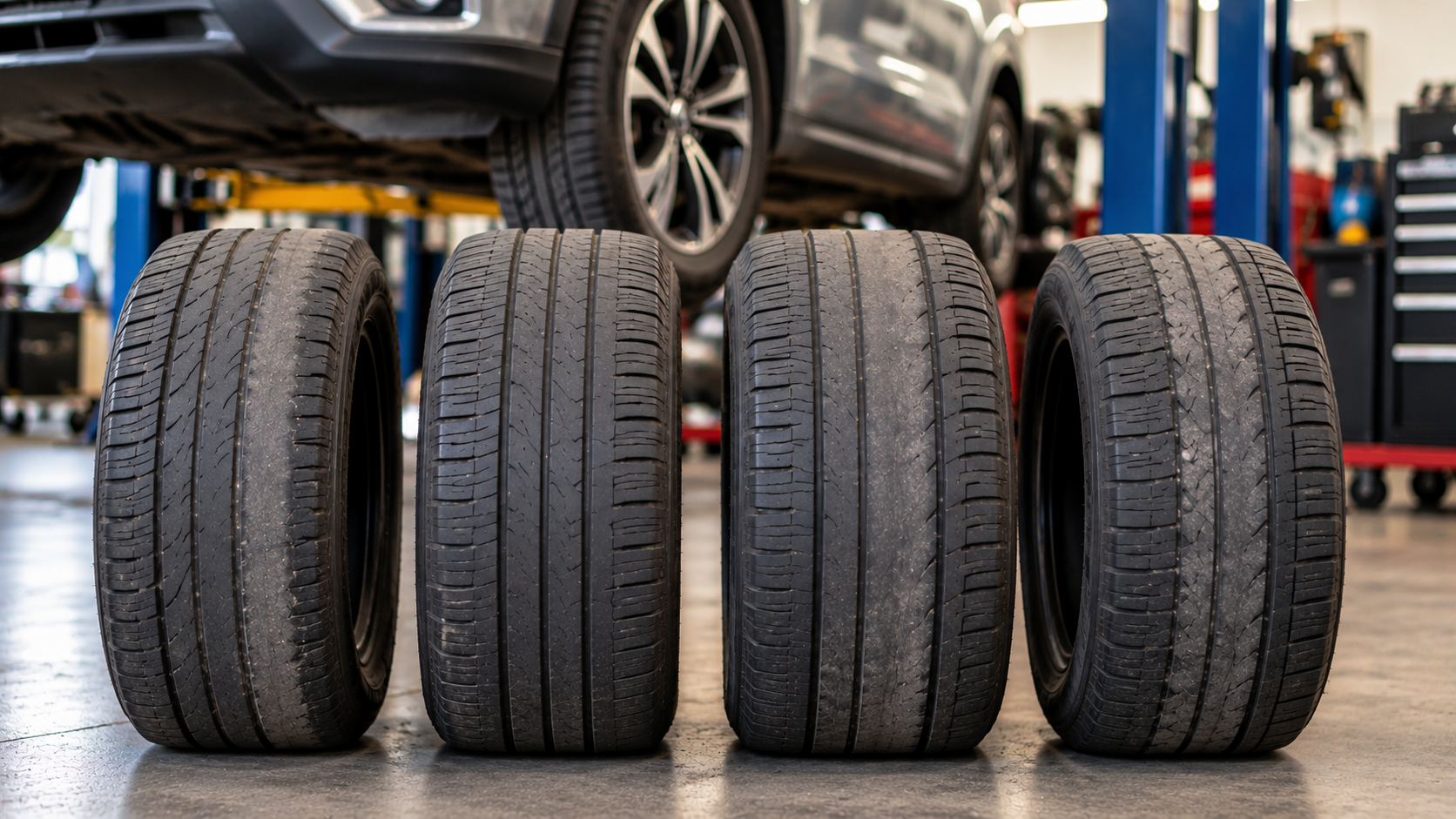
To combat this, EV-specific wheels and tires are built with higher structural integrity. The sidewalls are reinforced to prevent “squishing” under the heavy weight of the car during cornering. If the sidewall is too soft, the tire deforms, increasing friction and killing your range. We also see unique edge wear patterns on EVs because the center of gravity is so low. Proper wheel selection helps distribute this weight more evenly across the contact patch.
Noise Reduction in a Silent Cabin
Without a rumbling engine to mask the sound, every hum, click, and road roar is amplified. This makes noise reduction a top priority when choosing wheels for electric vehicles.
Many EV-specific tires actually contain specialized polyurethane foam inserts inside the tire carcass. When a tire manufacturer talks about the options for noise-cancellation, they are usually referring to these “hush” layers that absorb vibrations before they reach the cabin. The wheel design itself also plays a role—smoother wheel faces create less wind turbulence, which translates to a quieter ride at highway speeds.
The Science of Range: Aerodynamics and Rolling Resistance
In EVs, “rolling resistance” is the enemy. This is the energy lost as the tire deforms while hitting the road. Because tires consume about 16% of an EV’s total energy (compared to just 5% in a gas car), reducing this resistance is the easiest way to gain “free” miles.
A 15% difference in range can exist simply by switching from a high-performance, “sticky” tire to a low-rolling-resistance (LRR) tire. LRR tires use specialized silica compounds that stay cooler and stiffer, allowing the car to glide further with less effort. However, there’s always a trade-off: stiffer tires can sometimes mean slightly less grip in the rain, though modern tech is closing that gap.
Aerodynamics and Choosing Wheels for Electric Vehicles: What’s Different?
When you’re driving at 65 mph, about 70% of your energy is spent just pushing air out of the way. The wheels are one of the most “turbulent” areas of a car because they are spinning circles inside a moving box.
This is why many EVs come with “flat-face” or “turbine” wheel designs. By closing off the gaps between the spokes, manufacturers reduce the drag coefficient significantly. While a wide-open, five-spoke wheel looks cool, it acts like a fan, churning up the air and creating drag. Switching to an aero-optimized wheel can provide a 3-5% efficiency gain.
Choosing Wheels for Electric Vehicles: What’s Different?
If you are looking to customize your ride, you need to be careful with sizing. Our guide to upsizing custom wheels explains the physics, but for EVs, the stakes are higher.
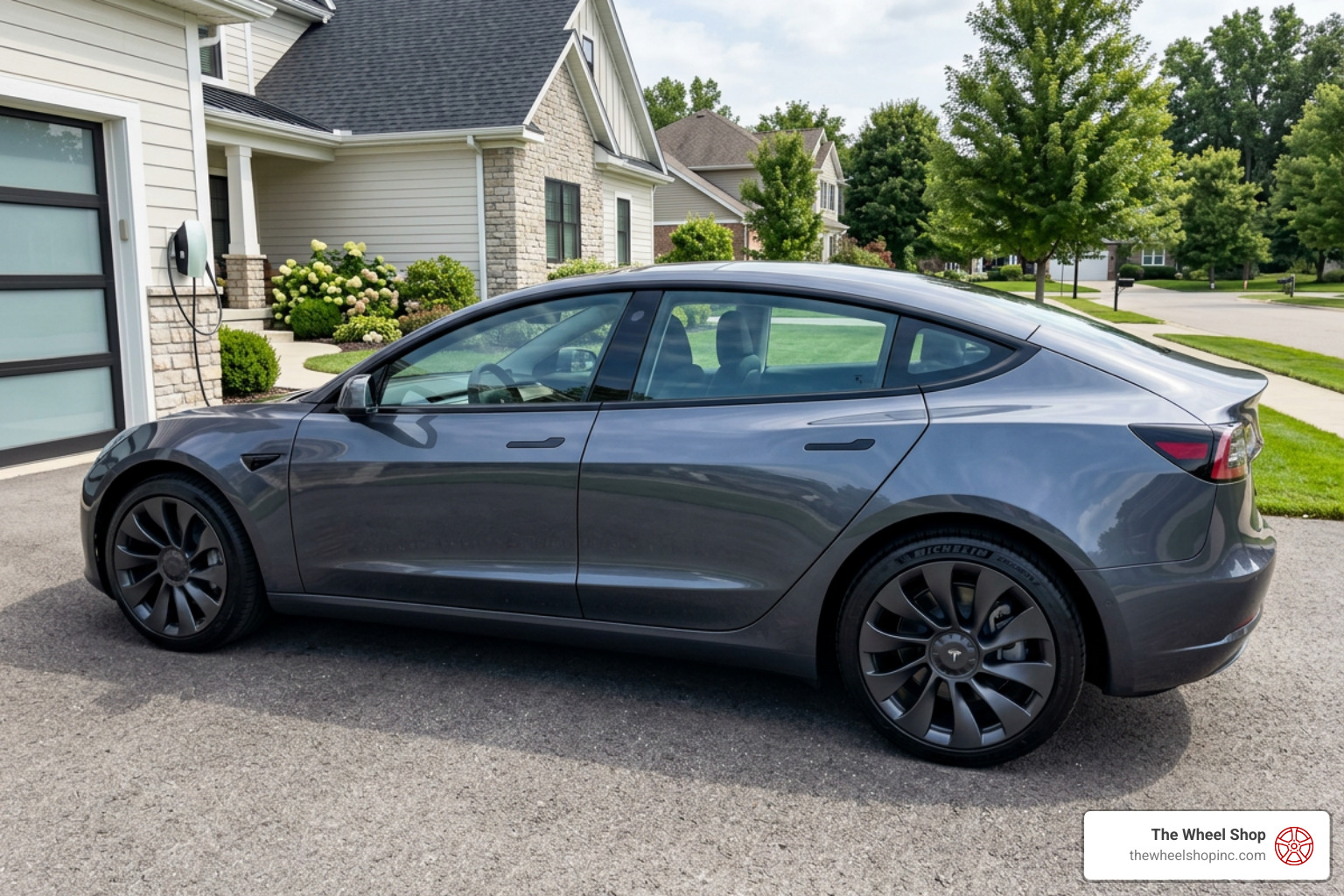
Let’s look at the data for a popular EV like the Tesla Model 3. Switching from the standard 18-inch wheels to 20-inch wheels can result in a massive range penalty.
| Wheel Size | Estimated Range Impact | Why? |
|---|---|---|
| 18-inch (Aero) | Baseline (Max Efficiency) | Lightweight, high sidewall, low drag |
| 19-inch (Sport) | -15 to -20 miles | Increased weight and drag |
| 20-inch (Performance) | -40 to -45 miles | High rotational mass and thinner sidewalls |
Why does this happen? It’s all about rotational mass. When you increase the wheel diameter, you are usually moving the heaviest part of the wheel (the outer rim) further away from the center. This requires significantly more energy to spin up and slow down. So, does wheel weight really matter? In an EV, it’s the difference between making it to your destination or hunting for a charger 30 miles early.
Material Innovations: Carbon Fiber and Flow-Formed Alloys
To combat the weight of those heavy batteries, we are seeing incredible innovations in wheel materials.
- Flow-Formed Alloys: These are stronger and lighter than traditional cast wheels. They are created by spinning a cast “blank” and using hydraulic rollers to stretch the rim to its final shape.
- Forged Aluminum: The gold standard. Forged wheels are machined from a single block of 6061-T6 aluminum, offering a 40% weight reduction over standard wheels while being much stronger.
- Advanced Composites: Some manufacturers are experimenting with Polycarbonate and carbon fiber reinforced polymers. A carbon fiber wheel can weigh as little as 6 kg, which drastically reduces the energy needed to accelerate.
Aftermarket Upgrades and Maintenance for EVs
Can you put aftermarket wheels on an EV? Absolutely! But you have to choose wisely to preserve your range. We often recommend flow-formed or forged wheels for our Riverside customers because they offer the best strength-to-weight ratio.
If you do go the custom route, keep an eye out for the curb. EVs often have wheels that sit flush with the tire to improve aerodynamics, making them magnets for scratches. If you find yourself dealing with curb rash on a tesla, don’t sweat it—professional reconditioning can bring them back to life.
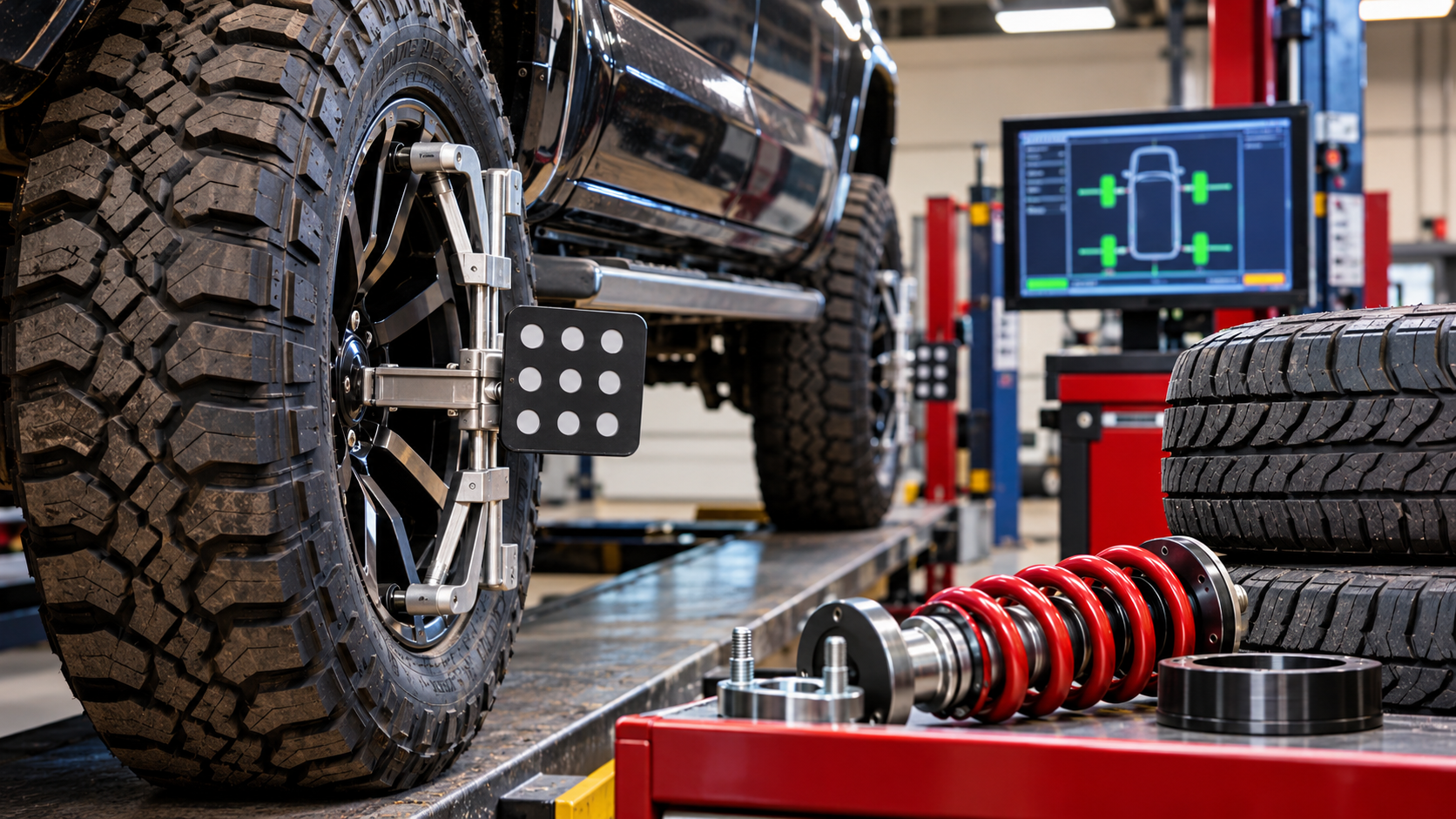
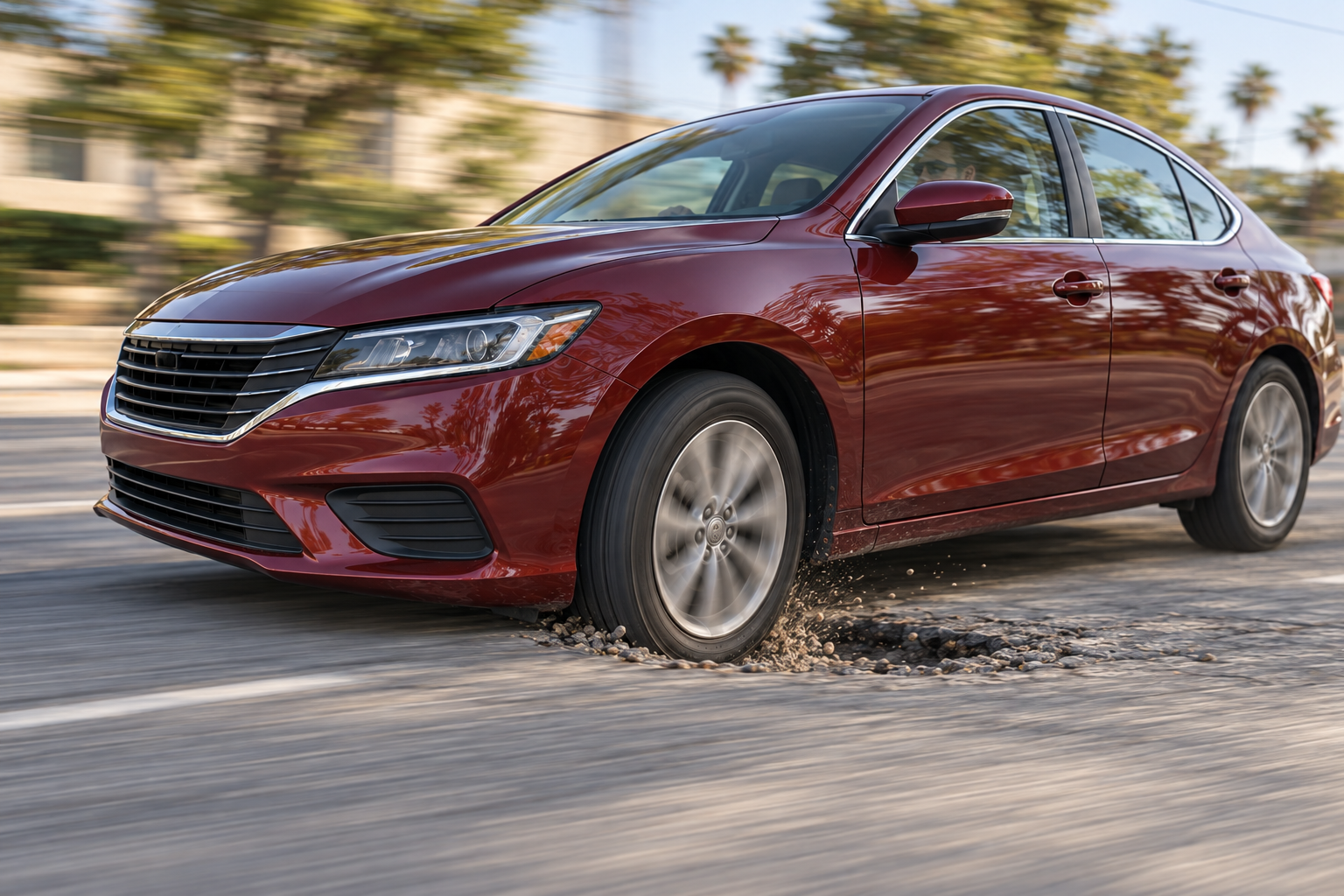
Also, because EVs are so heavy, your suspension and alignment are under constant stress. This is why proper wheel alignment is crucial; even a slight “toe-out” can increase rolling resistance by 20%, killing your efficiency and eating your tires for breakfast.
Maintenance Tips for Choosing Wheels for Electric Vehicles: What’s Different?
Maintenance on an EV is generally easier, but the wheels need more love than you might think.
- Rotate Frequently: Tesla recommends a rotation every 6,250 miles. Because the rear wheels often handle more of the drive torque, they wear differently than the fronts.
- Watch the PSI: A 20% drop in tire pressure can lead to a 5-8% loss in range. EVs often require higher PSI (around 42-45) to support the weight.
- Alignment is Key: If you notice your tires wearing faster than seems reasonable, check your alignment immediately.
- Regenerative Braking: This actually helps your tires wear more evenly because it slows the car down using the motor rather than slamming the friction brakes, but it still puts load on the tread.
Frequently Asked Questions
Do I need EV-specific tires?
While not strictly “mandatory” for the car to move, they are highly recommended. EV-specific tires are designed with a higher load index to support heavy batteries and low rolling resistance to maximize range. Using a standard gas-car tire may result in a noisier ride, worse range, and a tire that wears out in half the time. As a note, some warranties may even require tires that meet the original equipment (OE) load specifications.
How much range do I lose with larger wheels?
As we noted earlier, the jump from an 18-inch to a 20-inch wheel can cost you upwards of 40 miles per charge. This is due to increased rotational inertia—the motor has to work harder to turn a larger, heavier circle. Another calculation suggests that every 1 lb of added weight on the wheel is equivalent to adding about 20 lbs to the cabin in terms of performance impact.
Why do EV tires wear out 20% faster?
It’s a combination of “The Big Two”: Weight and Torque. The average EV is 10-20% heavier than its gas counterpart. When you combine that extra mass with a motor that delivers 100% of its power the instant you touch the pedal, the friction at the road surface is immense. Many drivers find themselves replacing tires after just 12 to 18 months if they have a “lead foot.”
The Wheel Shop Difference
At The Wheel Shop, we’ve spent over twenty years perfecting the art of the wheel. Whether you’re looking for a custom suspension setup to make your EV stand out in Riverside, or you need precision wheel reconditioning after a run-in with a curb, we’ve got the expertise to help.
With more than twenty years of experience serving drivers in Riverside, California, The Wheel Shop team specializes in matching the right wheels to each vehicle’s specifications, driving habits, and performance goals. Their services extend beyond installation to include specialty wheel and rim repair, caliper and wheel powder coating, custom suspension installations, and precision alignments. By addressing every aspect of the upgrade process, The Wheel Shop ensures that your investment not only enhances visual appeal but also delivers measurable improvements in performance, longevity, and overall return on investment.
Ready to transform your ride? For expert advice and a wide selection of Aftermarket Wheels & Tires, contact us today. Let’s find the perfect wheels to lift your driving experience.
We are passionate about equipping your vehicle with the right tires for your needs in Riverside, CA, and beyond.
Explore our expert wheel and tire services today and experience the difference of a proper tire fitment.
Ready to optimize your electric ride? Visit us for a precision alignment or to browse our selection of EV-friendly aftermarket wheels and tires. Let’s keep those miles rolling!