Why Your Tire’s Tread Matters More Than You Think

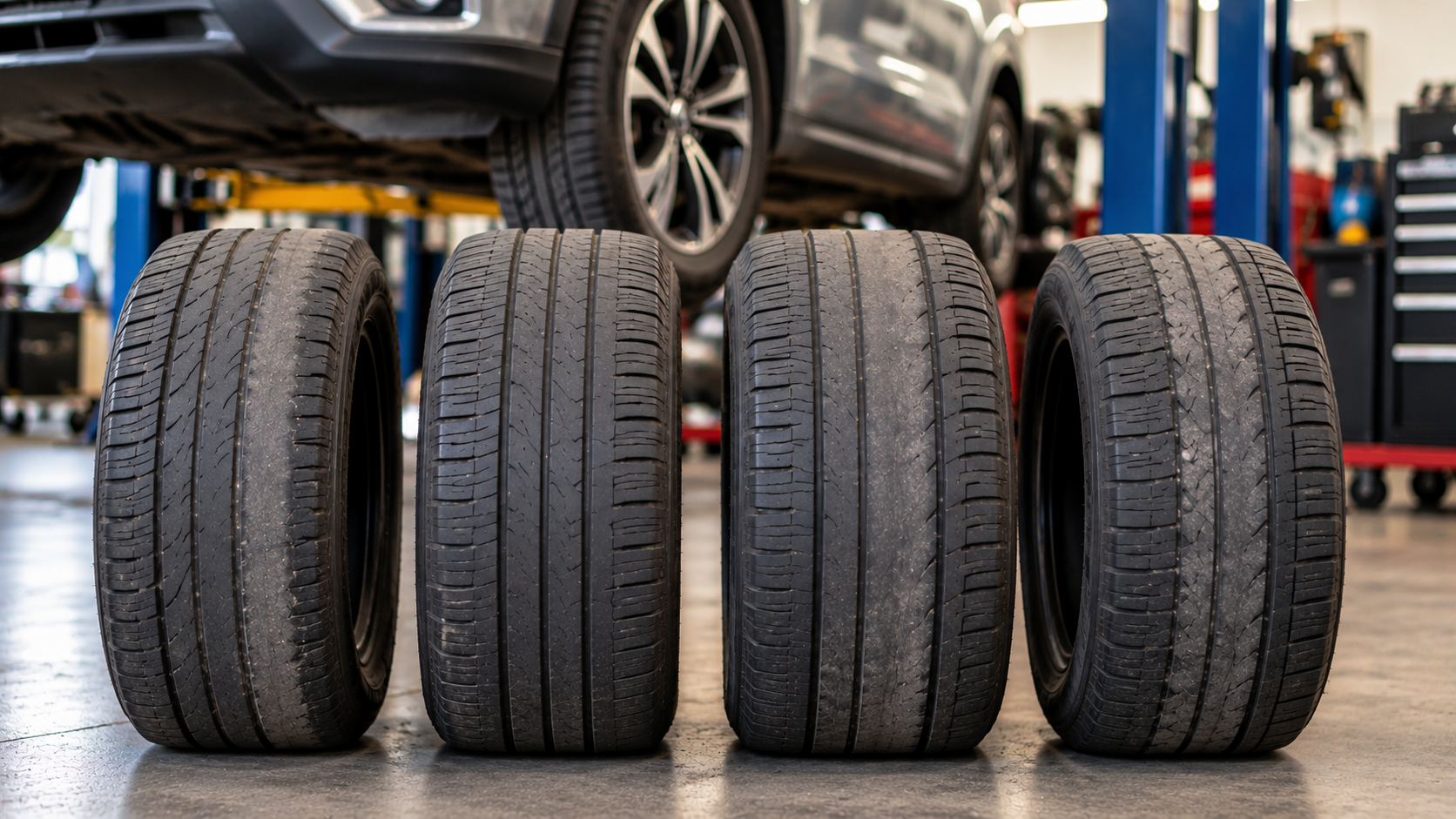
Your tires do more than just keep your car rolling—they tell a story about the health of your vehicle. Uneven tire wear, unusual tread patterns, or premature bald spots can all point to underlying issues with your alignment or suspension. Paying attention to these signs early can save you from costly repairs and help maintain safe handling on the road.
By learning how to read your tire tread, you can spot problems before they escalate. From misaligned wheels to worn suspension components, understanding what your tires are telling you is a simple yet powerful step in keeping your vehicle in top condition.
Quick Answer: What Your Tire Wear Means
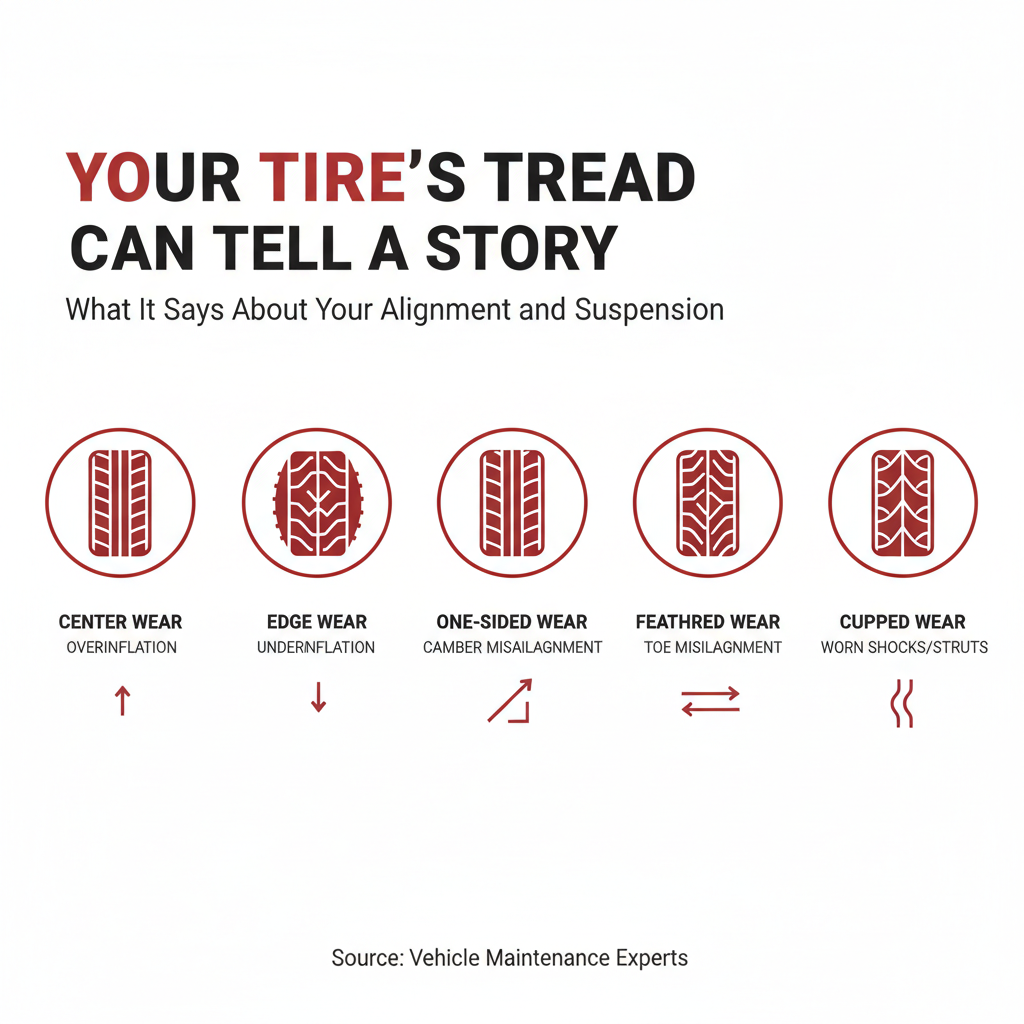
- Center Wear → Your tires are overinflated
- Edge Wear (Both Sides) → Your tires are underinflated or you corner aggressively
- One-Sided Wear → Your wheel alignment is off (camber issue)
- Feathering → Your toe alignment needs adjustment
- Cupping/Scalloping → Your shocks or struts are worn out
Uneven tire wear costs you money by reducing fuel efficiency, shortening tire lifespan, and compromising safety. Small alignment issues from potholes can cause uneven wear within a few thousand kilometers. The good news is that proper maintenance, like a wheel alignment, can extend tire life by up to 20%.
The Language of Tire Tread: What to Look For
Your tire’s tread isn’t just a design feature; it’s a highly specialized tool with three essential functions. It provides grip and traction, channels water to prevent hydroplaning, and directly influences your stopping distance. As tread wears down, your tires lose their ability to hold the road and push water aside, potentially adding several car lengths to your stopping distance in an emergency.
Uneven tread wear is often the first clue that something else in your vehicle needs attention. Your tire’s tread tells a story—by understanding its patterns, you can uncover what your alignment and suspension might be trying to communicate, helping you catch problems before they become costly repairs.
How to Check Your Tread Depth
Checking your tire tread depth is a simple yet essential part of vehicle maintenance that can prevent accidents and extend the life of your tires. One of the most common methods is the penny test. Insert a penny into the tread groove with Lincoln’s head facing down. If you can see the top of Lincoln’s head, your tread is worn below 2/32 of an inch—the legal minimum in many states—and it’s time to replace your tires. For a more precise measurement, you can use a tread depth gauge, which allows you to check multiple points across the tire for even wear.
When measuring tread depth, it’s important to check all four tires and multiple spots on each tire. Tires can wear unevenly due to alignment issues, suspension problems, or improper inflation. Measuring at several points across the tread, including the inner, center, and outer edges, helps you identify patterns that may indicate underlying vehicle issues. Consistently low tread in certain areas is a signal to inspect alignment, suspension, or tire rotation practices.
Regularly checking your tread depth isn’t just about meeting legal requirements—it’s about safety. Tires with insufficient tread struggle to grip wet roads, increasing the risk of hydroplaning and lengthening stopping distances. By making tread inspections a routine part of your vehicle maintenance, you can catch potential problems early, ensure safer handling, and get the most out of your tires before replacement is necessary.
The legal minimum tread depth is typically 1.6 mm (2/32 of an inch). However, winter tires should be replaced when they reach 4 mm, as their performance on snow and ice drops significantly below this depth. If you’re unsure, our guide on How Often Should You Replace the Tires on Your Car? can help.
The Role of Tire Inflation
Tire pressure has a massive impact on tire wear and vehicle handling. When properly inflated, the tire’s contact patch spreads evenly across the tread.
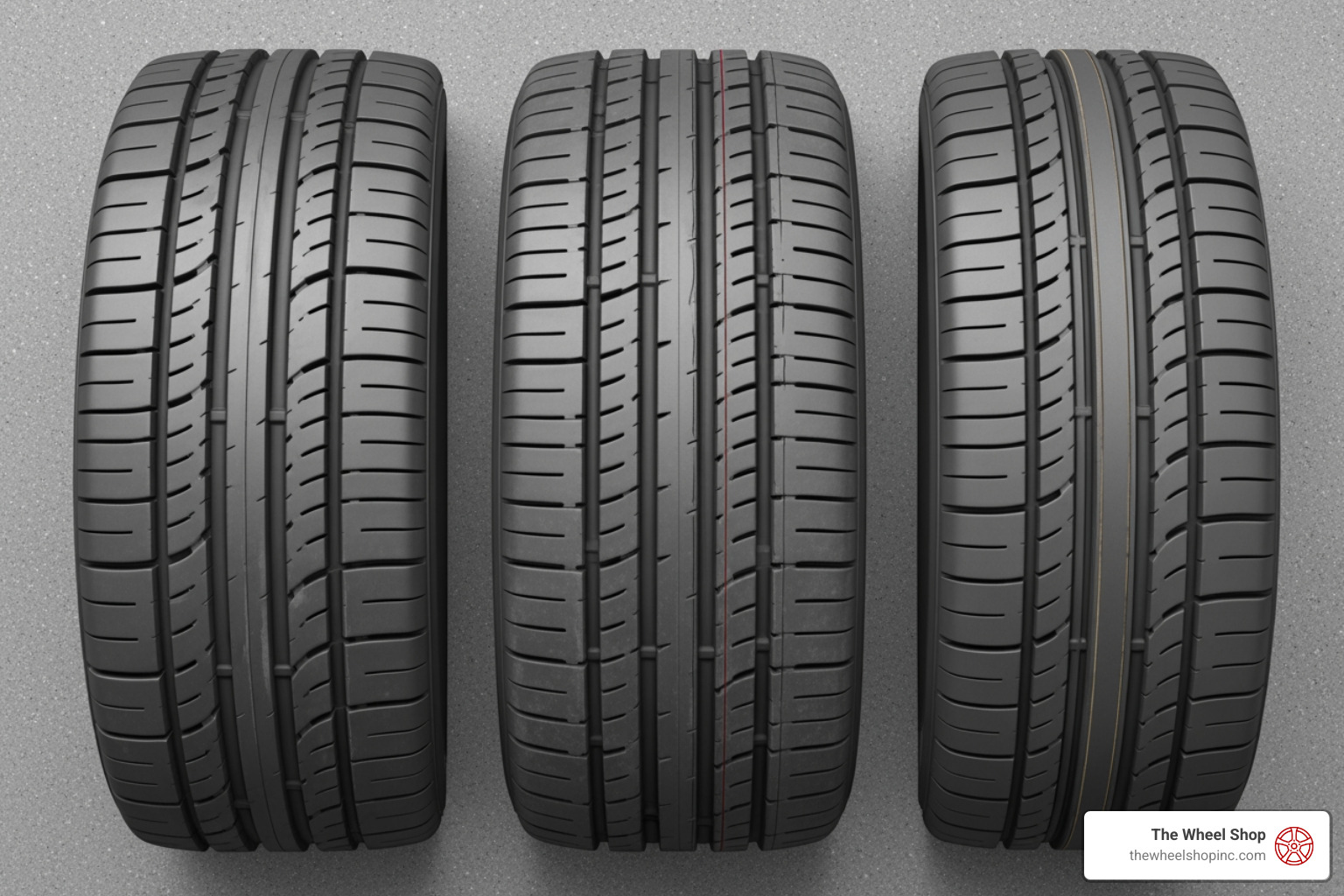
Overinflated tires bulge at the center, causing excessive wear down the middle, a harsher ride, and reduced grip. Underinflated tires cause the outer edges to wear faster, generate more heat, and waste fuel by increasing rolling resistance.
Proper tire inflation is closely linked to both alignment and suspension health, making it a key factor in interpreting tread wear. Tires that are underinflated or overinflated rarely wear evenly, which can mimic or mask alignment and suspension issues. For example, overinflated tires bulge at the center, causing excessive wear down the middle, a harsher ride, and reduced grip. Underinflated tires cause the outer edges to wear faster, generate more heat, and waste fuel by increasing rolling resistance. By maintaining the manufacturer-recommended tire pressure, you ensure that any uneven wear patterns you observe are more likely to reflect true alignment or suspension concerns rather than simple inflation problems.
Inflation also affects how your suspension components perform. Underinflated tires can put extra stress on shocks, struts, and bushings, potentially accelerating wear and changing how weight is distributed across the wheels. Over time, this can contribute to irregular tread patterns that might be mistaken for alignment problems. Keeping tires properly inflated helps your suspension work as designed, making it easier to spot genuine issues in tread wear.
Finally, checking tire pressure regularly gives you a clearer picture of overall vehicle health. Consistent inflation allows you to accurately monitor tread patterns across all tires, making it easier to detect misalignment, worn suspension parts, or other underlying problems. By combining regular inflation checks with careful observation of tread wear, you can catch issues early, maintain safer handling, and extend the life of both your tires and your suspension system.
Decoding Common Tire Wear Patterns
Each wear pattern on your tire is a clue pointing to a specific problem, from incorrect tire pressure to failing suspension components. Your tire’s tread can tell a story — what it says about your alignment and suspension becomes clear once you know what to look for. Catching these patterns early can save you from expensive repairs.
Start with a visual inspection, looking for shiny or smooth areas. Then, run your palm across the tread surface. This tactile check can reveal subtle issues like feathering or cupping that your eyes might miss.
| Wear Pattern | Primary Cause(s) |
|---|---|
| Center Wear | Overinflation |
| Edge Wear (Both) | Underinflation, aggressive cornering |
| One-Sided Wear | Camber alignment issues, bent suspension components |
| Feathering | Toe alignment issues |
| Cupping/Scalloping | Worn shocks/struts, unbalanced tires, loose suspension |
Let’s break down what each pattern means.
Center Wear

Center wear, where the middle strip of the tire is more worn than the edges, is caused by overinflation. Too much air pressure makes the tire’s center bulge, forcing it to carry the vehicle’s weight on a smaller contact patch. This reduces traction and creates a harsh ride. The fix is to adjust your tire pressure to the manufacturer’s recommendation.
Edge Wear (Both Edges)
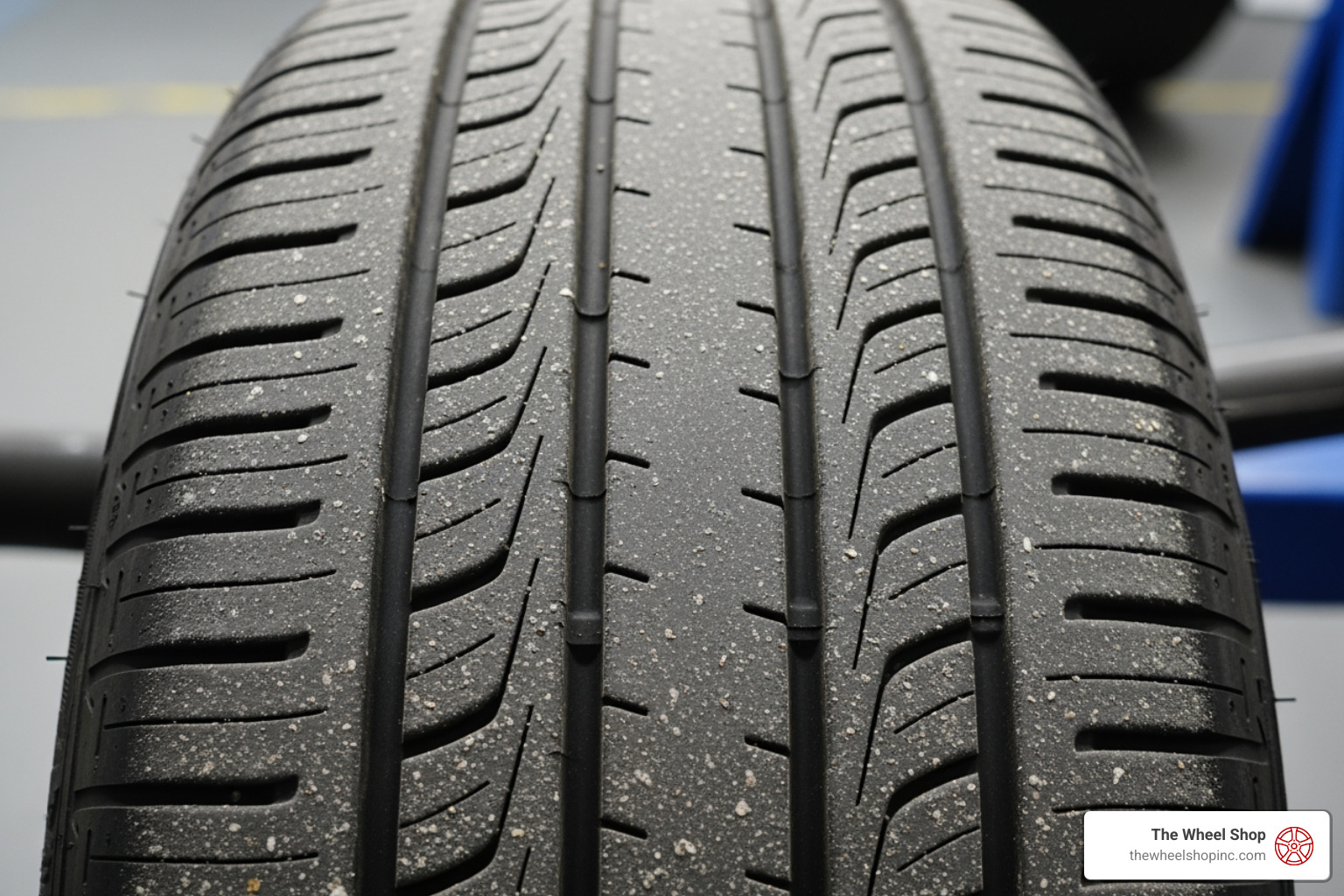
Edge wear on both the inner and outer shoulders typically indicates underinflation. Not enough air pressure causes the tire’s sidewalls to flex excessively, putting the load on the edges. This generates heat, wastes fuel, and can lead to tire failure. Aggressive cornering can also contribute to this pattern. Learn more about How Your Driving Style Impacts Your Tires.
One-Sided Wear (Inner or Outer Edge)
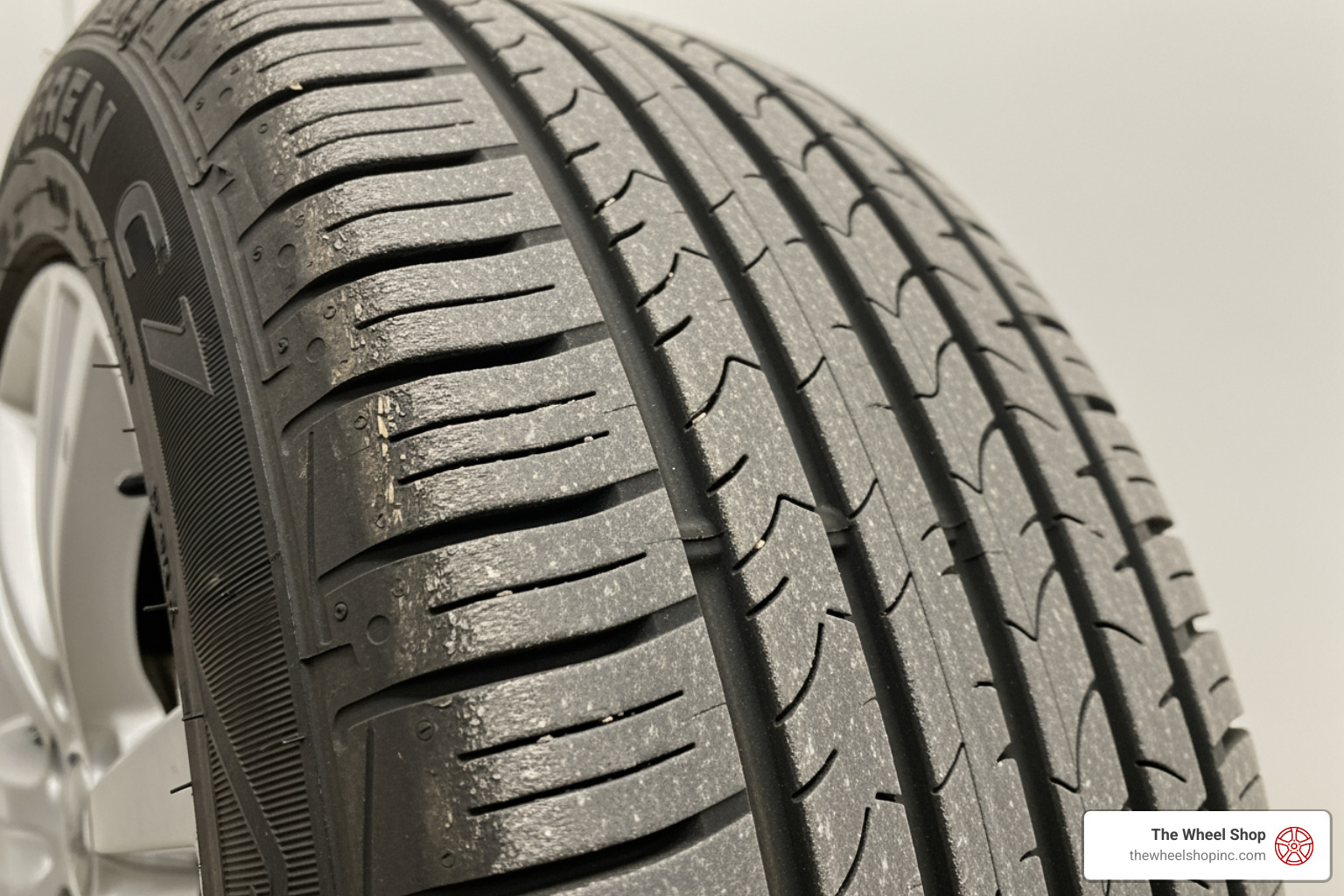
One-sided wear is a red flag for wheel alignment issues, specifically an incorrect camber angle. Camber is the inward or outward tilt of the tire. If it’s off, one edge of the tire scrubs against the road, causing rapid wear. This can also be caused by bent suspension components from hitting a pothole or curb. Improper alignment compromises handling and safety, which is why we stress Why Proper Wheel Alignment Is Crucial.
Feathering

Feathering creates a saw-tooth pattern on the tread blocks, which you can feel by running your hand across the tread. This is caused by incorrect toe alignment, where the tires are not pointing straight ahead. Instead, they scrub sideways as they roll, increasing rolling resistance, hurting fuel economy, and wearing out the tires prematurely.
Cupping or Scalloping

Cupping or scalloping appears as dips or scoops around the tire’s circumference. This pattern indicates a problem with your suspension, most often worn shocks or struts. When these parts fail, they can’t keep the tire firmly on the road, causing it to bounce. Each time the tire lands, it scuffs the tread, creating a cupped depression. Unbalanced tires or loose suspension parts can also cause this. Learn more about Suspension Upgrades: When and Why They Make a Difference.
Your Tire’s Tread Can Tell a Story — What It Says About Your Alignment and Suspension
When you understand tire wear, you’re learning to read how your tire’s tread can tell you a lot about your alignment and suspension. Uneven wear is almost always triggered by a specific event, like hitting a pothole or bumping a curb. These impacts can instantly knock your alignment out of spec. In Riverside, rough roads make this a common issue. Learn more about How Potholes Affect Wheels.
It’s also normal for front and rear tires to wear differently. Front tires handle steering and most braking forces, so they wear faster. This is why regular tire rotation is crucial. For more diagnostic insights, industry resources like Diagnose Tire Wear Problems can be helpful.
How Alignment Angles Affect Your Tires
Wheel alignment consists of three precise angles. When they’re off, your tires suffer.
Camber angle is the tire’s inward or outward tilt when viewed from the front. Incorrect camber causes one-sided wear and can make your vehicle pull to one side. This is why we explain Why Proper Wheel Alignment Is Crucial.
Toe angle is whether your tires point slightly in or out when viewed from above. Incorrect toe causes the tires to drag sideways, creating a distinctive feathering pattern across the tread blocks.
Caster angle is the forward or backward tilt of the steering axis. It’s crucial for steering stability and helps your wheel return to center after a turn. Caster rarely causes tire wear but is vital for predictable handling.
How Your Tire’s Tread Can Tell a Story — What It Says About Your Alignment and Suspension Components
Sometimes, the problem isn’t just the alignment angles but the parts that hold them.
Worn shocks and struts are the primary cause of cupping or scalloping. When they fail, they can’t control wheel movement, causing the tire to bounce on the road and wear unevenly. This also leads to a bouncy, unstable ride.
Damaged bushings, the rubber cushions in your suspension, can cause big problems. When they tear, they allow too much play, causing your alignment to shift as you drive and leading to irregular wear.
Bent control arms or ball joint failure are more serious issues. These parts connect your wheels to the frame. If they are damaged or worn, your wheel cannot hold the correct alignment angles. The faulty component must be replaced before a proper alignment can be performed.
Proactive Care to Extend Tire Life
Extending the life of your tires goes beyond simply replacing them when they wear out. Proactive care—regular inspections, proper inflation, timely rotations, and attention to alignment and suspension—can prevent uneven wear and keep your tires performing safely and efficiently. By understanding what your tire tread is telling you and taking early action, you not only protect your investment but also maintain smoother handling, better fuel efficiency, and a safer driving experience.
Regular inspections are key. Once a week, walk around your vehicle and look for uneven wear, bulges, or low pressure. This quick check can catch problems early.
For alignment frequency, we recommend a check once a year or every 10,000 to 15,000 miles. However, you should get an alignment check immediately after hitting a hard pothole, installing new tires, or if you notice your steering pulling to one side.
Tire rotation and balancing are equally important. Rotating your tires every 8,000 to 10,000 kilometers distributes wear evenly across all four. Balancing ensures your tires spin smoothly without wobbling, which prevents vibrations and patchy wear. Proper maintenance can extend tire life by up to 20%. Learn more in our article Do You Need a Tire Balance or a Wheel Alignment?.
Other Warning Signs of Trouble
Beyond tire wear, your vehicle sends other signals when alignment or suspension is off. Look out for these warning signs:
- Vehicle pulls to one side on a straight, level road.
- Steering wheel vibrates, especially at highway speeds.
- Steering wheel emblem is crooked when driving straight.
- Squealing or thumping noises from your tires.
- Loose or vague steering feel, or the wheel doesn’t return to center easily after a turn.
Ignoring these signs can lead to more serious issues. For more details, see our guide on The Importance of Proper Wheel Alignment and How Often You Need It. Catching problems early is always easier and less expensive.
Frequently Asked Questions about Tire Wear and Vehicle Health
At The Wheel Shop in Riverside, CA, we often answer questions about the link between tire wear and vehicle health. Here are the most common ones.
How often should I get a wheel alignment?
We recommend an alignment at least once a year or every 10,000 to 15,000 miles. However, you should get an immediate check after hitting a pothole, when installing new tires, or when symptoms appear, such as the car pulling to one side or uneven tire wear. Regular alignments are crucial for safety and tire longevity. We cover this in our article on The Importance of Proper Wheel Alignment and How Often You Need It.
What’s the difference between wheel alignment and tire balancing?
These two services address different issues. Wheel alignment adjusts the angles of your wheels (camber, caster, and toe) to ensure they are pointed correctly. Misalignment causes pulling and uneven wear. Tire balancing corrects weight distribution around the tire and wheel assembly to prevent vibrations and choppy wear. In short, alignment ensures your wheels point straight, while balancing ensures they spin smoothly. Our guide on Wheel Balancing and Alignment explains this further.
The Wheel Shop Difference
Proactive maintenance is key. Regular alignments, tire rotations, and proper balancing are investments in your vehicle’s performance. These steps can extend tire life by up to 20% and improve fuel efficiency, handling, and braking.
When you spot signs of trouble like one-sided wear or a pulling steering wheel, it’s time to seek professional help. At The Wheel Shop in Riverside, CA, we have over twenty years of experience in precision alignments and suspension work. We diagnose problems thoroughly and explain exactly what your tires are telling us.
Don’t wait for wear patterns to become a safety hazard. Schedule a professional alignment service with The Wheel Shop today and ensure your vehicle is telling a story of excellent care and optimal performance.