Why Wheel Offset Is the Most Overlooked Factor in Vehicle Stability
When it comes to vehicle stability, most drivers focus on factors such as tire quality, suspension components, or alignment. While these elements certainly play a critical role, one of the most influential yet frequently overlooked factors is wheel offset. This single measurement, which determines how far the wheel sits inward or outward relative to the hub, has a direct impact on how a vehicle handles, corners, and maintains traction on the road.
Wheel offset quietly affects everything from steering response to load distribution across the suspension system. An improper offset can lead to increased stress on components, reduced stability at higher speeds, and even uneven tire wear over time. Despite its importance, many vehicle owners remain unaware of how this specification influences overall performance. Understanding wheel offset is essential for anyone looking to improve handling, ensure safety, and make informed decisions when upgrading or replacing wheels.
Here’s the quick answer:
- Positive offset (mounting surface toward the front of the wheel): pushes the wheel inward, common on most modern cars and front-wheel-drive vehicles
- Negative offset (mounting surface toward the rear of the wheel): pushes the wheel outward, widening your track width and improving cornering stability
- Zero offset: mounting surface sits exactly at the centerline — neutral positioning
What this means for stability and handling:
| Offset Type | Track Width | Cornering Grip | Suspension Stress | Best For |
|---|---|---|---|---|
| More Positive | Narrower | Lower | Lower | FWD cars, daily drivers |
| Zero | Neutral | Moderate | Moderate | Older vehicles, some trucks |
| More Negative | Wider | Higher | Higher | Off-road, performance builds |
A wider track width — achieved through lower (more negative) offset — reduces lateral load transfer, which means better grip and less body roll in corners. But go too far in either direction and you risk tire rubbing, premature bearing wear, and unpredictable steering.
Even a 10–15mm change in offset can noticeably alter how your vehicle steers, brakes, and corners. Most experts recommend staying within 5mm of your factory specification for daily driving.
This guide breaks down exactly what happens — mechanically and dynamically — when offset changes, and how to make smart choices for your vehicle.
Understanding Wheel Offset: Definitions and Measurements
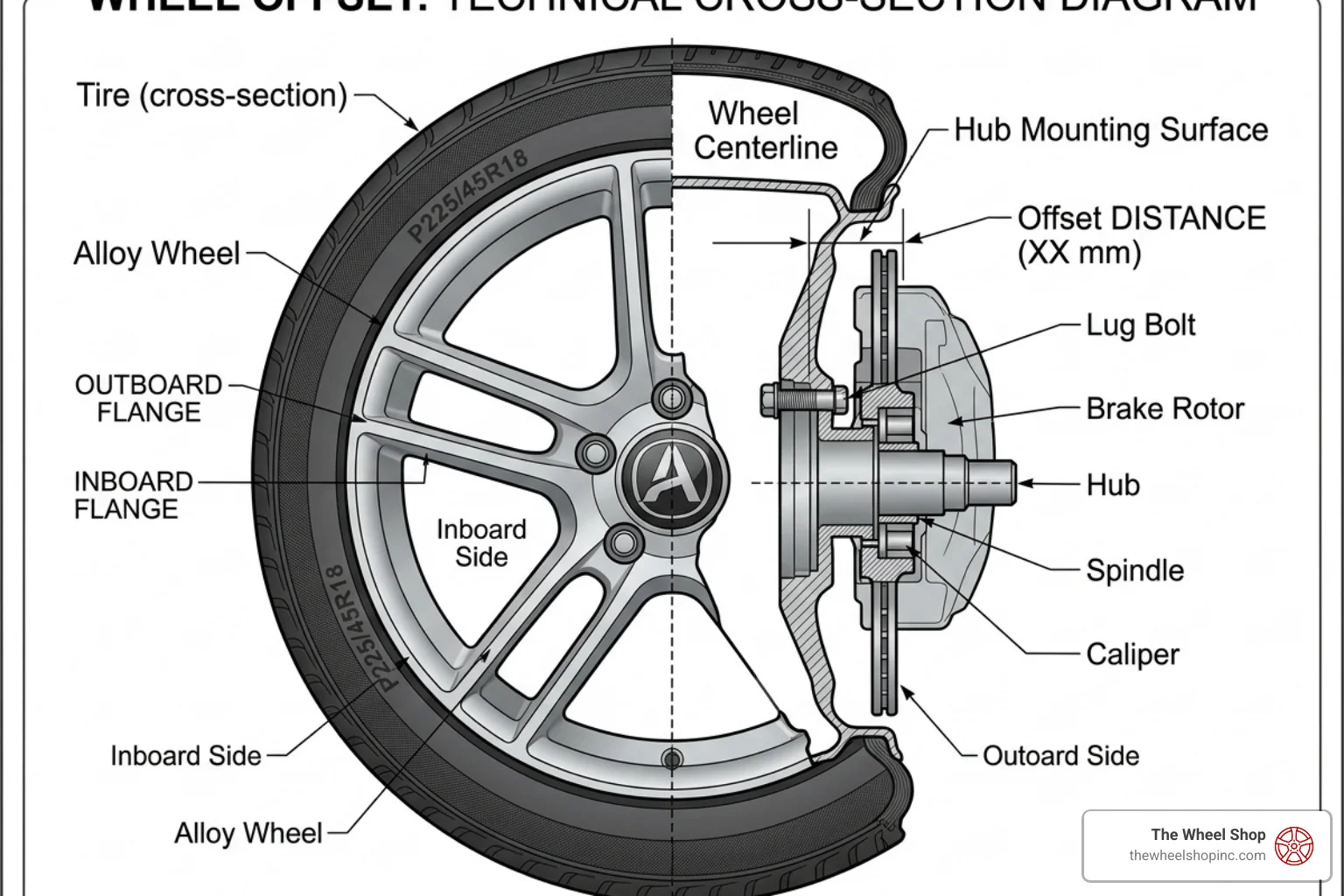
To understand how wheel offset affects vehicle stability and handling, we first need to speak the language of the wheel. At its simplest, offset is the distance from the wheel’s mounting surface (where it bolts to the hub) to the actual centerline of the wheel.
When you look at a wheel, imagine an invisible line running right down the middle of the barrel. This is your centerline. The hub mounting surface is the flat part of the wheel that touches your car’s rotor or drum. The distance between these two points is measured in millimeters and is often stamped on the back of the wheel as the ET value (short for Einpresstiefe, which is German for “insertion depth”).
It is important to note that offset is independent of wheel width. If you change to a wider wheel but keep the same offset, your track width remains the same, but the wheel will grow equally toward the inside and outside of the car. However, wheel offset is often confused with backspacing. Backspacing measures the distance from the mounting surface to the very back edge of the wheel. While offset is centered on the middle of the wheel, backspacing tells you how much “stuff” is behind the mounting face, which is critical for clearing suspension components.
Positive, Negative, and Zero Offset Characteristics
Every vehicle is engineered with a specific offset to balance steering feel and mechanical longevity.
- Positive Offset: The mounting surface is located toward the “street side” or front face of the wheel. This creates an inward tuck, pulling the wheels closer to the suspension. This is the standard for almost all modern front-wheel-drive (FWD) cars and many newer SUVs.
- Negative Offset: The mounting surface is closer to the back (brake side) of the wheel. This results in an outward poke, pushing the wheel away from the chassis. This is common on deep-dish wheels and lifted trucks to provide a wider, more aggressive stance.
- Zero Offset: The mounting surface is exactly even with the centerline. This provides a neutral alignment and was very common on older muscle cars and trucks.
Choosing between these styles is about more than just “the look.” As we discuss in A Beginners Guide To Aftermarket Wheels Fitment Styles And Materials, the fitment style you choose dictates how the car will communicate with you through the steering wheel.
Measuring Offset and Backspacing for Custom Fitment
If you are planning to upgrade your rims here in Riverside, you need to know your current specs. You can perform a manual measurement by laying the wheel flat on the ground (face down, on a soft surface!). Place a straightedge across the back of the wheel and measure down to the hub surface; this is your backspacing.
To find the offset, take that backspacing number and subtract half of the total wheel width. For example, if you have an 8-inch wide wheel (which actually measures about 9 inches from edge to edge), the centerline is at 4.5 inches. If your backspacing is 5.5 inches, you have roughly an inch (25.4mm) of positive offset.
The Science of How Wheel Offset Affects Vehicle Stability and Handling
When we change the offset, we are effectively changing the vehicle’s track width—the distance between the centerlines of the tires on the same axle. Physics tells us that a wider track width reduces lateral load transfer.
In plain English: when you take a sharp turn, the weight of the car wants to “toss” itself toward the outside tires. By pushing the wheels further out (using negative offset), you create a wider base. This lowers the effective center of gravity relative to the width of the car, providing more cornering grip and a more stable stance. According to research, a wider track creates a more engaging, stable drive, especially in performance or off-road scenarios.
How Wheel Offset Affects Vehicle Stability and Handling in Cornering
The balance of your car depends on how the front and rear axles interact. If you add negative offset only to the rear wheels, you increase the rear track width, which generally increases rear grip and can lead to understeer (the car wants to go straight when you turn). Conversely, widening the front track can make the car point into corners more aggressively, but may increase body roll if the suspension isn’t tuned to handle the extra leverage.
As we explain in our look at how wheel size impacts ride quality, handling, and fuel economy, every millimeter counts. A car that feels “darty” or unstable during mid-corner bumps often has an offset that has strayed too far from the factory-engineered weight distribution.
How Wheel Offset Affects Vehicle Stability and Handling During Braking
Stability isn’t just about going around corners; it’s about stopping in a straight line. Improper offset can negatively impact straight-line stability during hard braking. If the offset is too low (too much negative), it can induce toe-out effects under braking, making the car feel like it wants to wander or “hunt” for a direction.
Furthermore, pushing the wheel further out increases the load leverage on the suspension. This can actually make your suspension feel “softer” because the wheel has a longer lever arm to push against the springs and shocks. If not accounted for, this can increase stopping distances as the nose of the car dives more than intended. Understanding these nuances is a key part of proper wheel fitment and safety.
Steering Geometry: Scrub Radius and Handling Dynamics

One of the most technical ways how wheel offset affects vehicle stability and handling is through the scrub radius. This is the distance between the point where the steering axis (the line the suspension pivots on) hits the ground and the center of the tire’s contact patch.
Scrub Radius and Steering Behavior
When you change your offset, you move the tire centerline, which directly alters the scrub radius.
- Positive Scrub Radius: The tire centerline is outside the steering axis. This can provide better feedback but increases steering effort and can lead to torque steer in front-wheel-drive cars.
- Negative Scrub Radius: The tire centerline is inside the steering axis. This is often engineered into modern cars because it helps the car stay stable if a tire blows out or if you hit a puddle on one side.
If you add spacers or wheels with heavy negative offset, you push the scrub radius toward the positive side. This acts like a “pry bar” on your steering system. You might feel every pebble in the road, and the steering wheel might jerk more violently when hitting bumps (known as bump steer). Experts generally recommend keeping the scrub radius change under 40mm to maintain optimal handling stability.
Impact on Turning Radius and Agility
A wider track width generally increases your turning radius, meaning it takes more space to make a U-turn. Because the wheels are pushed further out, they have to travel a longer arc to reach full lock. While this can improve high-speed stability, it may reduce the maneuverability and response time of a car in tight, low-speed situations. Tuning your offset is a delicate dance between high-speed confidence and parking lot agility.
Mechanical Stress, Clearance, and Component Longevity
Changing your offset doesn’t just change how the car moves; it changes how the parts wear out. When you push the wheel further out, you are increasing the leverage on your wheel bearings, ball joints, and tie rods.
| Feature | High Positive Offset | High Negative Offset |
|---|---|---|
| Bearing Load | Low/Standard | High (Increased Leverage) |
| Steering Effort | Lighter | Heavier |
| Fender Clearance | High (Tucked) | Low (Risk of Rubbing) |
| Suspension Stress | Factory Standard | Accelerated Wear |
Even a 10–15mm change can significantly shorten the life of your wheel bearings. This is because the weight of the vehicle is no longer centered over the bearing race, creating a “bending” force that the part wasn’t designed to handle. We see this often at The Wheel Shop when inspecting vehicles for handling and suspension health.
Clearance Issues and Tire Rubbing
The most immediate problem with incorrect offset is clearance.
- Too much positive offset: The tire or the inside of the rim may hit the brake calipers or the suspension struts. This is especially dangerous as it can lead to sudden tire failure or brake damage.
- Too much negative offset: The tire is likely to hit the fender liners or the outer fender lip, particularly during full lock turns or when the suspension compresses over a bump.
Ensuring proper tire fitment is about more than just checking if the wheel bolts on; it’s about ensuring the wheel can move through its entire range of motion without touching anything it shouldn’t.
Long-term Effects on Tire Wear
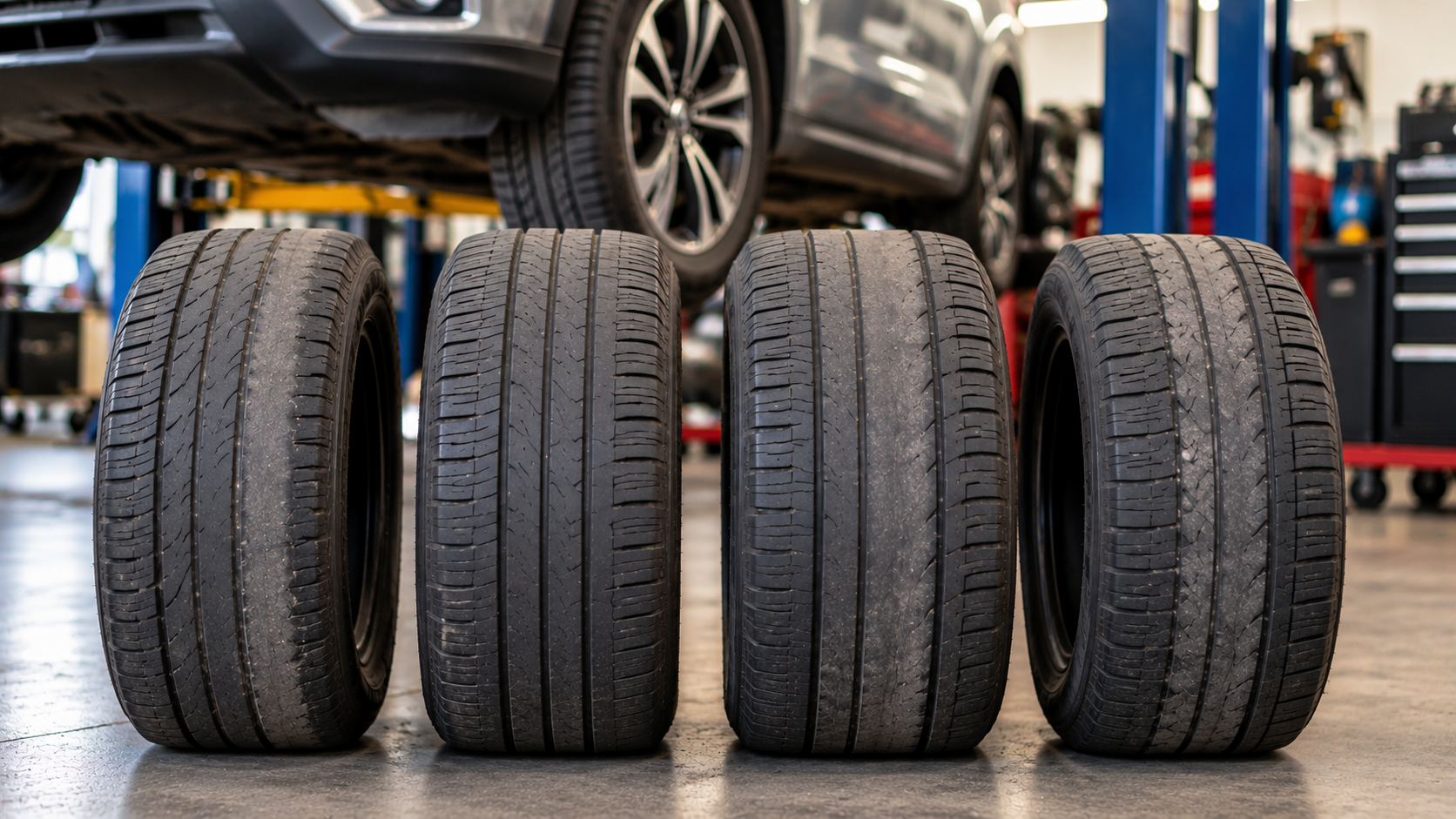
Because offset changes the way the tire sits on the road, it can lead to uneven tread wear. If the offset is significantly different from factory specs, it can alter the effective camber (the tilt of the tire). Too much negative offset often leads to “outer edge” wear, while excessive positive offset can scrub the inner edges. Regular rotation patterns and checking your alignment settings are non-negotiable if you’ve moved away from OEM offset.
Best Practices for Selecting and Testing Wheel Offset
At The Wheel Shop, we’ve spent over twenty years helping drivers in Riverside find the perfect balance. If you are looking to change your stance, follow these best practices:
- Stick to the 5mm Rule: For daily drivers, try to stay within 5mm of your factory offset. This preserves the engineered safety margins of your bearings and steering geometry.
- Account for Wheel Width: If you are buying wider wheels, you usually need a lower offset number to keep the inner rim from hitting the suspension.
- Professional Test Fitting: Never just “send it.” Always perform a dry fit of the wheel (without the tire first, if possible) to check for brake caliper interference. Once the tire is mounted, check for clearance at full steering lock and under load.
- Precision Alignment: Any time you change your track width or scrub radius, you must get a precision wheel alignment. This ensures your toe and camber are adjusted to compensate for the new geometry.
Selecting Offset for Different Vehicle Types
Different vehicles have different needs:
- Passenger Cars: Usually benefit from positive offset (+35mm to +45mm) to maintain light steering and fuel efficiency.
- Off-Road Trucks: Often use negative offset (-12mm to -44mm) to clear larger tires and provide stability on uneven trails. However, this requires heavy-duty ball joints to handle the stress.
- Performance Builds: Often use staggered setups (wider wheels/lower offset in the rear) to maximize traction for rear-wheel-drive power.
Post-Installation Checks and Alignments
After installing new wheels, we recommend a “break-in” period. Re-torque your lug nuts after the first 50 miles. Listen for any faint rubbing sounds when backing out of driveways or turning sharply. If you feel a vibration or the car “pulls,” it’s time for a professional geometry analysis to ensure your new offset hasn’t thrown your alignment out of spec.
Frequently Asked Questions about Wheel Offset
Can I adjust my wheel offset without changing the wheels?
Yes, you can use wheel spacers. A spacer sits between the hub and the wheel, effectively lowering your offset (pushing the wheel out). For example, a +45mm wheel with a 10mm spacer has an effective offset of +35mm. Risks: Spacers can be safe if they are hub-centric and high-quality, but they add another failure point. They also increase the load on your wheel studs, so you may need extended studs to ensure enough thread engagement.
What are the risks of using too much negative offset?
The primary risks include premature bearing failure, fender damage from rubbing, and significantly heavier steering. In some regions, there are also legal restrictions regarding “poke”—if your tires stick out past the fenders, you may be required to install fender flares to remain road-legal.
How does wheel offset impact off-road performance?
In off-roading, a wider stance is your best friend for trail stability, preventing rollovers on side-slopes. It also provides better mud clearance by keeping the tires away from the inner wheel wells. The trade-off is increased CV axle strain, especially on independent front suspension (IFS) vehicles like the Toyota 4Runner or Tacoma.
The Wheel Shop Difference
At The Wheel Shop in Riverside, CA, we’ve spent over twenty years helping drivers stay safe on the road. Our team doesn’t just sell tires—we provide peace of mind. Our expert technicians take the time to thoroughly check your tread depth across the entire tire surface, identify any uneven wear patterns that might point to alignment or suspension issues, and help you find the perfect replacement tires for your specific vehicle and driving needs.
We take pride in proper installation, balancing, and alignment because we know these details make all the difference in how your vehicle performs when it matters most. Our comprehensive suspension services work hand‑in‑hand with our tire expertise to ensure your entire vehicle functions as a unified system for maximum safety and performance.
It’s worth remembering that your tires represent your vehicle’s only contact with the road. No safety system—not antilock brakes, not stability control, not even the most advanced collision avoidance technology—can work effectively without adequate tire traction. When you invest in proper tire maintenance and timely replacement, you’re making one of the most important safety decisions possible as a driver.
We’d love to help you maintain that safety margin. Stop by The Wheel Shop for a free tire inspection and tread depth check. No pressure, no upselling—just honest assessments and clear recommendations from friendly folks who genuinely care about keeping you and your family safe on the road.
Drive safe, check your tread regularly, and remember that when it comes to tire tread, the legal minimum is just that—a minimum, not a target. Your safety is worth so much more.
Ready to optimize your ride? Visit us for professional wheel and suspension services and let our experts help you achieve the perfect fitment.